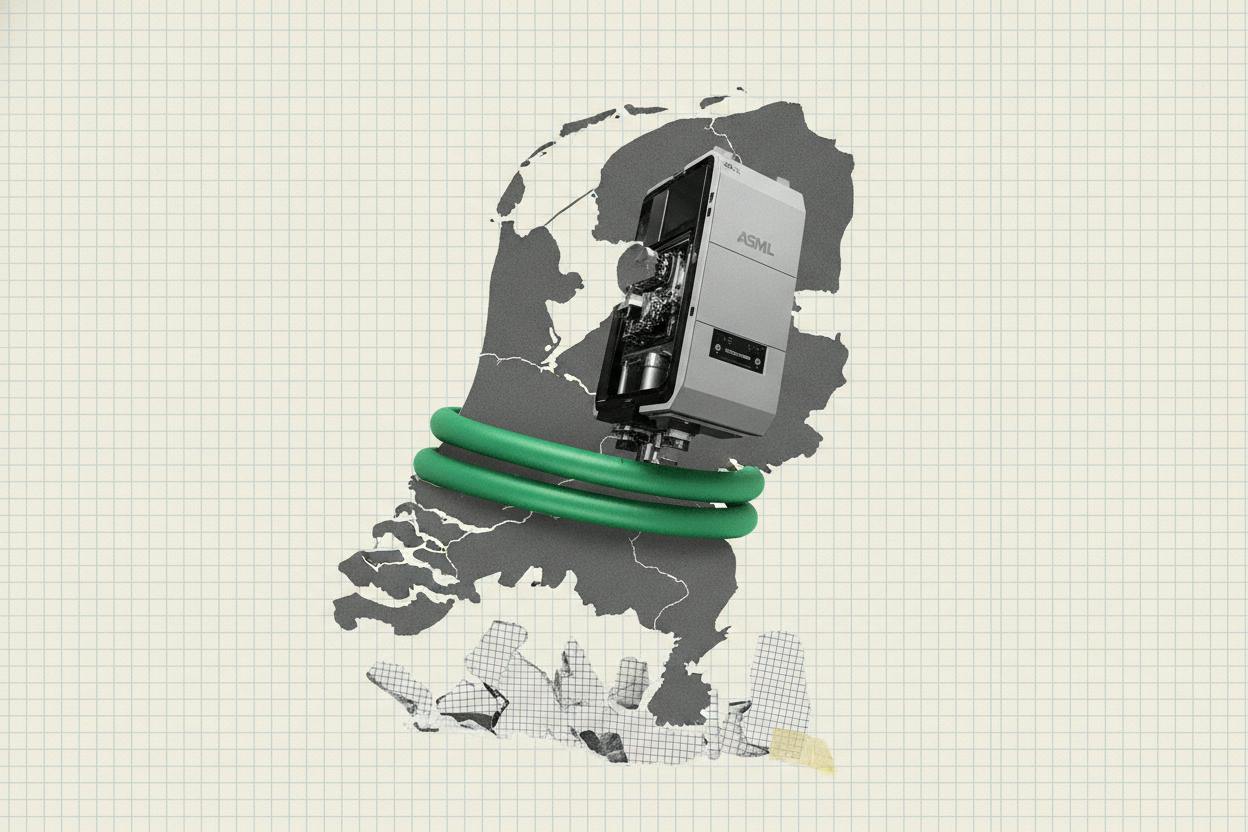
ASML, the Dutch company that makes the world's most advanced chip-making machines, is becoming an increasingly large piece of the Netherlands' economic pie. According to a new estimate from Dutch bank ING, the company could directly account for up to 1.6% of the country's gross domestic product (GDP) this year. That figure underscores how much one firm can now influence national growth.
ASML is not a household name for most people, but its technology is everywhere. The company produces the ultra-precise lithography machines used to manufacture the most advanced semiconductors—the tiny chips that power smartphones, computers, cars, and increasingly, artificial intelligence systems. Because ASML is one of the few companies in the world capable of making these machines, it sits at a critical bottleneck in the global tech supply chain.
More than just one company's sales
ING's analysis suggests the Netherlands benefits from ASML in more ways than just its direct revenue. The company supports a whole "ecosystem" of local research, production, and a network of suppliers that grows alongside it. Universities train engineers with skills tailored to the semiconductor industry, and specialized parts makers cluster around ASML's operations. This ecosystem amplifies the company's economic footprint.
ASML is also planning to expand its capacity, including a major expansion at its headquarters in Eindhoven. However, the company faces a significant hurdle: a shortage of skilled workers. Finding enough qualified engineers and technicians could limit how quickly ASML can scale up its operations, even with strong demand for its machines.
The risks of relying on one giant
While ASML's success is a boon for the Dutch economy, ING warns about the dangers of concentration. When a single company becomes so dominant, a company-specific shock can spill over into the broader economy. ING points to Finland's experience with Nokia, the mobile phone giant. Around 2000, Nokia accounted for about 3.8% of Finland's economy, but a decade later that share had fallen to just 0.5%. A 2023 study linked to the OECD suggested that this decline contributed to slower productivity growth across the Finnish economy.
The lesson is that when a dominant firm pulls in talent and specialized suppliers, the economy becomes more dependent on that firm's fortunes. For ASML, several risks could trigger such a shock. The company is sensitive to US-led restrictions on sales to China, a major market for its machines. It also relies on critical components from foreign suppliers, which could be disrupted by global supply chain problems. And as noted, hiring constraints at home could slow its growth.
What it means for investors
For everyday investors, ING's estimate is a reminder that a single stock can sometimes behave like economic infrastructure. When a company becomes large enough to move national output, its performance matters beyond its own earnings reports. If ASML faces headwinds—whether from export rules, supply chain issues, or labor shortages—the effects could ripple through the wider Dutch tech and manufacturing network, showing up in the country's growth data sooner than a typical big-company slowdown would.
This dynamic is not unique to the Netherlands. Other economies have seen similar patterns with dominant companies, such as SLB in the energy services sector or major freight railroads in the US. Investors should watch how ASML navigates these challenges, as its success is increasingly tied to the health of the Dutch economy as a whole.
For now, ASML's growth is a positive story for the Netherlands, but the concentration risk is real. As ING's analysis shows, the very factors that make ASML a powerhouse—its technological edge, its ecosystem, and its scale—also make the country more vulnerable to a downturn in the semiconductor industry. The next few years will test whether the Netherlands can manage that dependence while continuing to benefit from ASML's success.