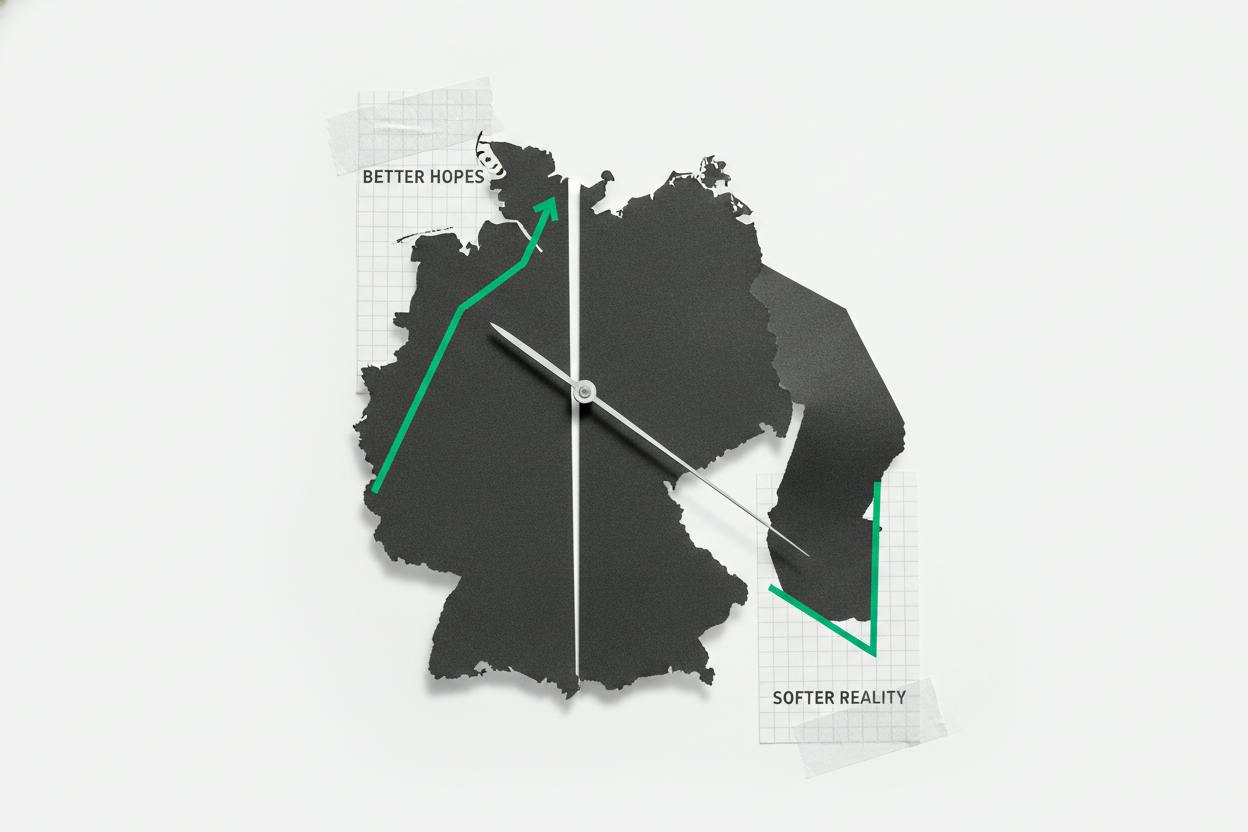
German business sentiment improved for a sixth straight month in October, with the Ifo Institute's closely watched business climate index reaching its highest level in more than three years. The headline reading climbed to 90.2 from 89.9 in September, signaling that companies are increasingly optimistic about the months ahead.
However, the details behind the headline tell a more nuanced story. The improvement was driven entirely by expectations—a measure of how firms view the next six months—which jumped to 91.6 from 90.4. In contrast, the "current situation" index slipped to 88.8 from 89.5, suggesting that businesses are less satisfied with conditions on the ground today.
ING, a Dutch bank, noted that this pattern could reflect higher energy costs and still-high interest rates weighing on day-to-day activity, even as companies look forward to a brighter horizon.
Manufacturing rebounds, services stumble
Inside the report, the manufacturing sector showed notable improvement. Its index rose to 1.2 from -2.7, with both current conditions and expectations moving back above zero for the first time in more than three years. That suggests export-oriented factories are beginning to feel more confident, possibly helped by improving global demand and easing supply chain pressures.
But the services sector moved in the opposite direction, with its index falling to -1.2 from 0.7. This decline is a reminder that parts of the economy tied to domestic demand are still under pressure. Consumer-facing businesses, from retailers to hospitality, continue to grapple with cautious spending and lingering cost pressures.
The split between manufacturing and services mirrors a broader trend seen across Europe. While industrial activity has shown signs of stabilizing, the services sector has been more sluggish, reflecting weaker consumer confidence and tighter financial conditions.
What it means for investors
For markets, the Ifo report offers a mixed signal. The headline number points to improving hopes, but the softer reality of current conditions means investors are unlikely to read it as an all-clear for the euro area economy.
When expectations rise but the current situation weakens, it often suggests that growth might improve later without proving that the economy is strong enough today to push interest-rate expectations sharply higher. This can create a push-pull between German cyclical stocks, which are sensitive to the six-month outlook, and German government bonds (Bunds), which react more to the near-term growth pulse.
The drop in services sentiment adds another brake. If the consumer-facing part of the economy is wobbling, investors may be slower to treat the report as a signal that the European Central Bank can begin cutting interest rates soon. Indeed, Germany's October PMI also showed services slowing, reinforcing the idea that the recovery is uneven.
For everyday investors, the key takeaway is that Germany—and by extension the euro zone—is not out of the woods yet. While the export sector is showing signs of life, domestic demand remains fragile. This could mean continued volatility in European stocks and bonds as markets weigh the balance between optimism and reality.
Investors with exposure to German equities or European funds should watch for further data on consumer spending and inflation. Consumer sentiment elsewhere has also been mixed, with inflation worries lingering. The path forward for the European Central Bank will depend on whether the improvement in expectations translates into actual economic activity in the coming months.
As always, it's important to remember that a single survey is just one piece of the puzzle. The Ifo index is a sentiment gauge, not a hard economic indicator. Still, its consistency over the past six months suggests that the worst of Germany's downturn may be behind it, even if the recovery is likely to be gradual and uneven.