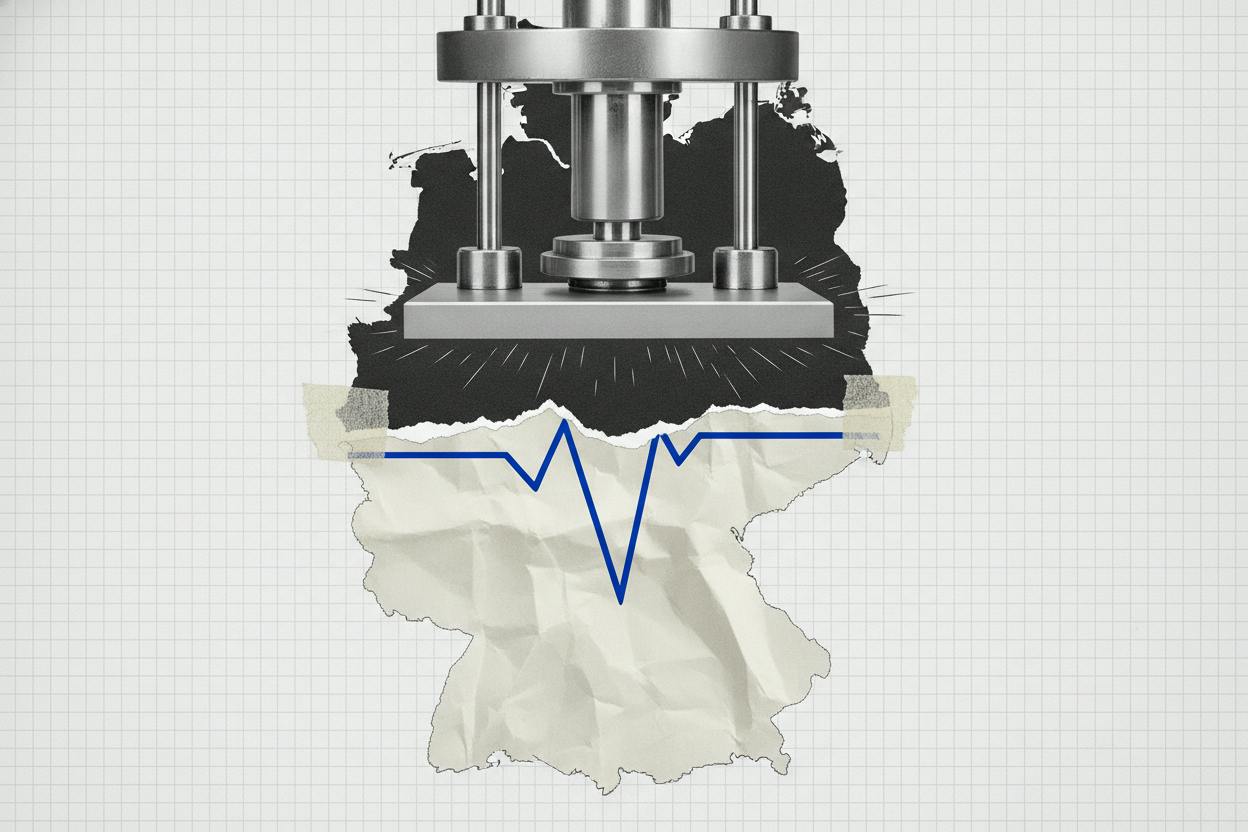
Germany's private sector lost a bit of steam in October, according to a closely watched business survey. S&P Global's flash composite purchasing managers' index (PMI) slipped to 52.8 from 53.8 in September. While the reading still points to growth, the slowdown was driven by services, which eased as customers held back. Manufacturing, by contrast, hit a two-month high of 54.2, keeping factories busy.
What the numbers say
The composite PMI is a single number that combines activity in both services and manufacturing. A reading above 50 means the economy is expanding; below 50 signals contraction. At 52.8, Germany's private sector is still growing, but at a slower pace than the month before.
Services, which tend to reflect domestic demand, saw their PMI fall to 51.7. That suggests consumers and businesses are being more cautious with spending, delaying decisions and watching budgets. Manufacturing, on the other hand, moved in the opposite direction, rising to 54.2 as output remained strong. However, the survey noted that order growth cooled and leaned more on exports, meaning domestic demand is not carrying as much weight.
The report also hinted at easing inflation pressure, with companies' pricing power weakening. That could be a welcome sign for the European Central Bank, which has been wrestling with inflation that, while down from peaks, remains above its 2% target.
Why it matters for investors
For everyday investors, the PMI is a useful early gauge of economic health. It's a survey of purchasing managers at hundreds of companies, and it tends to move before official GDP data. A slowing composite reading can signal that growth is peaking, while a pickup can hint at acceleration.
Germany is the eurozone's largest economy, so its health matters beyond its borders. A softer services sector could weigh on European stocks, especially those tied to domestic consumption. Meanwhile, a resilient manufacturing sector—often more export-oriented—could support industrials and auto makers, which are heavily represented in Germany's DAX index.
The mixed picture also complicates the ECB's job. If inflation is cooling, the central bank may feel more comfortable cutting interest rates. But if services remain sticky, it might hold off. Rate decisions have a direct impact on bond yields, mortgage rates, and the value of the euro, all of which ripple through global markets.
Context: Europe's patchwork
Germany's slowdown comes as other parts of Europe show divergent trends. French business activity slipped back into contraction in October, while Australia's private sector also contracted. In contrast, India's October flash PMIs are expected to show steady growth, highlighting the uneven global recovery.
Investors have also been watching France's bond spread over Germany hit a 15-year high on fiscal worries, which adds to the eurozone's fragility. Meanwhile, Adidas's profit surprise lifted Germany's DAX recently, showing that corporate earnings can still move markets even when the macro picture is mixed.
What to watch next
The flash PMI is an early estimate, and the final reading could be revised. Investors will also be watching the ECB's next policy meeting for clues on rate moves. If inflation continues to ease, a rate cut could provide a boost to European stocks and bonds. But if services inflation proves stubborn, the central bank may keep rates higher for longer.
For now, the takeaway is that Germany is still growing, but the pace is moderating. That's not necessarily a red flag, but it does suggest the economy is losing some momentum. For investors, it's a reminder to keep an eye on economic data, as it can influence everything from stock valuations to bond yields.
As always, no single data point tells the whole story. But the October PMI adds to a picture of a global economy that is cooling unevenly, with some sectors and regions faring better than others.