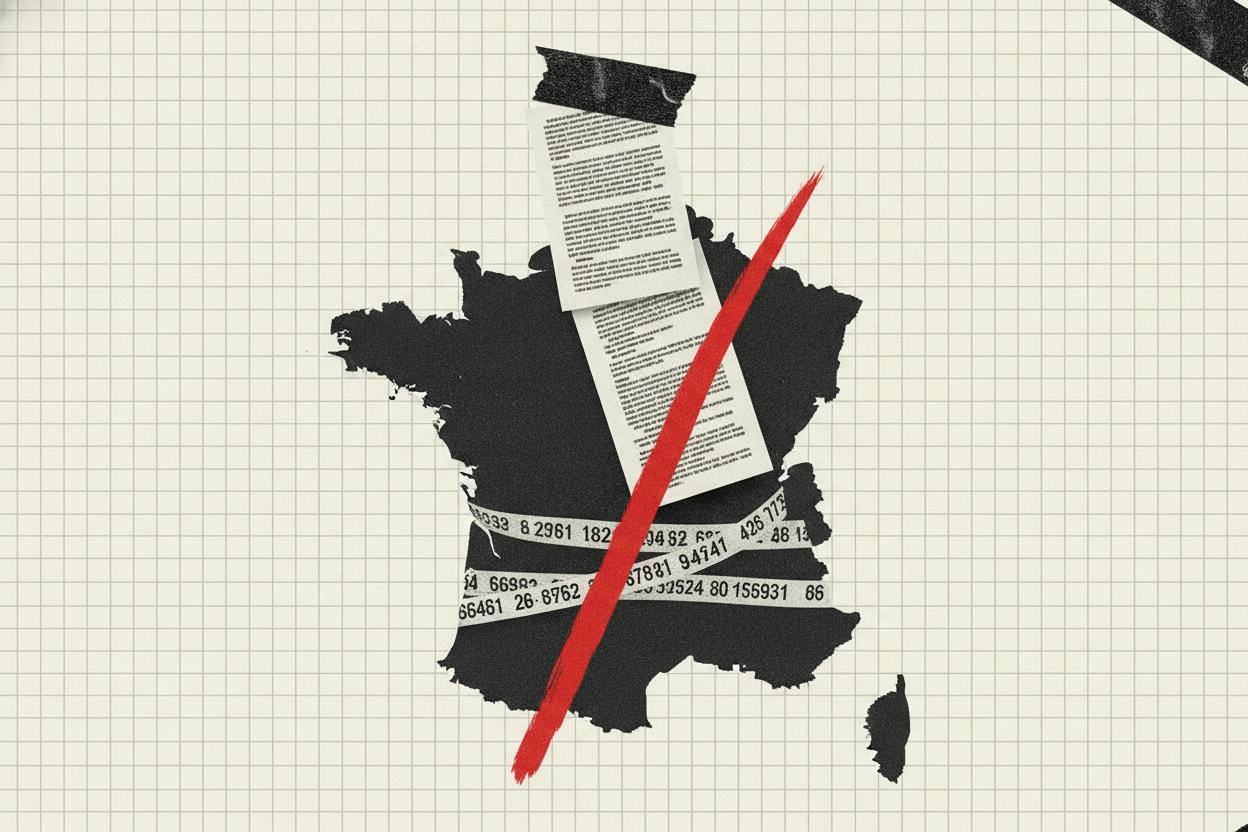
France's private sector has slipped back into contraction this month, according to a closely watched business survey. S&P Global's flash purchasing managers' index (PMI) fell to 48.4 in October from 51.1 in September, dipping below the 50 mark that separates growth from shrinkage. The reading, cited by Reuters, signals that the brief rebound seen in September did not last.
The slowdown was broad-based. Services activity, which had been a bright spot, slipped back into contraction, while manufacturing lost further momentum. Respondents to the survey also reported the sharpest drop in new orders since May, blaming a combination of weaker demand, political uncertainty, and tighter financial conditions.
What is the PMI and why does it matter?
The PMI is a monthly survey of purchasing managers at companies across the private sector. It asks them about new orders, output, employment, and prices. A reading above 50 indicates that activity is expanding compared with the previous month, while a reading below 50 signals contraction. The flash estimate is an early snapshot, based on around 85-90% of final responses, and is often seen as a reliable leading indicator of economic momentum.
For everyday investors, the PMI matters because it offers an early read on the health of the economy. When the index falls, it often suggests that corporate earnings could come under pressure, which may weigh on stock prices. It can also influence central bank decisions on interest rates, as weak growth might prompt policymakers to ease monetary policy.
What is driving the weakness?
The survey points to several headwinds. Political uncertainty in France has been a recurring theme, with the government's fiscal position and policy direction under scrutiny. Tighter financial conditions—meaning higher borrowing costs and reduced access to credit—are also squeezing businesses and consumers. These factors have combined to dampen demand, both at home and abroad.
This is not an isolated story. Similar PMI readings have been seen in other major economies. For instance, Australia's private sector also slipped back into contraction in October, and India's flash PMIs are expected to show steady growth, highlighting a divergence in global economic momentum. In Europe, the manufacturing sector has been particularly weak for some time, and the latest data suggests that services are now joining the downturn.
What it means for investors
For investors, the return to contraction in France is a reminder that the eurozone's second-largest economy is struggling to gain traction. This could have implications for European equities, particularly those with heavy exposure to French domestic demand. Companies in sectors like retail, hospitality, and construction may feel the pinch if the slowdown persists.
However, it's important to keep the data in perspective. A single month's PMI reading does not make a trend, and the flash estimate is subject to revision. Still, the sharp drop from 51.1 to 48.4 is a notable deterioration, and it suggests that the recovery in the eurozone remains fragile.
Investors will be watching the final PMI readings later this month, as well as other economic indicators such as inflation and employment data. The European Central Bank's next moves on interest rates will also be closely monitored, as policymakers balance the need to control inflation against the risk of stifling growth.
For those with diversified portfolios, the news is a reminder of the value of spreading investments across regions and asset classes. While France's slowdown is concerning, other parts of the global economy are still expanding, and global stocks have recently risen on strong earnings, though bond markets remain jittery.
In the meantime, investors should keep an eye on French corporate earnings, especially from companies that have already reported mixed results. L'Oreal and Rexel have shone in French Q3 earnings, while Kering lags, showing that even in a weak economy, some companies can outperform.
Overall, the October PMI is a caution flag for the French economy, but not a signal of imminent collapse. It underscores the challenges facing policymakers and businesses alike, and it will be important to see whether the weakness persists in the coming months.