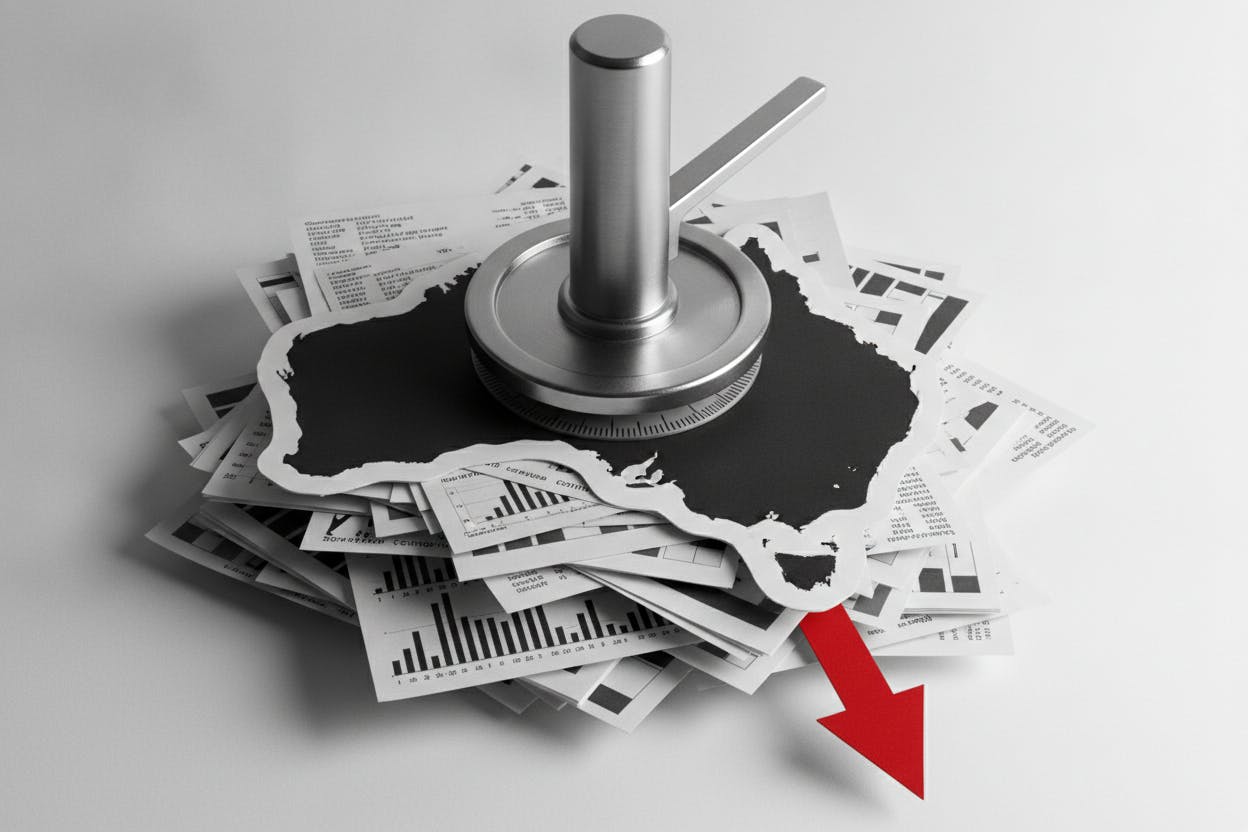
Australian shares closed lower on [day], with the S&P/ASX 200 falling 1.1%, even as fresh data showed the economy grew at a resilient pace in the second quarter. The reason: investors kept pricing in a near 60% chance that the Reserve Bank of Australia (RBA) will raise interest rates later this month.
The disconnect between solid growth and falling stocks might seem odd at first glance. But for markets, the stronger-than-expected GDP print didn't calm nerves—it changed the story. If the economy is holding up, the RBA has more room to keep tightening policy to bring inflation down. That prospect of higher rates is what spooked investors.
Why strong growth can be bad for stocks
When the economy grows faster than expected, it can be a double-edged sword for share prices. On one hand, it suggests corporate earnings could be healthier. On the other, it gives central banks more confidence to raise interest rates, and higher rates tend to hurt stock valuations.
That's because investors value stocks by discounting future profits back to today's dollars. When interest rates rise, the "discount rate" goes up, which reduces the present value of those future earnings. This math hits hardest on companies where a larger share of profits is expected far in the future—think technology and growth stocks—but it drags on the broader market too.
With markets pricing close to a 60% chance of a hike at the RBA's next meeting, that pressure was front and centre. The rate-hike bets have been building for weeks, and today's GDP data only reinforced them.
What the GDP report showed
The second-quarter growth figure came in resilient, meaning the economy expanded at a pace that was better than many had feared. That's a positive sign for the overall economy, but it also means the RBA may not need to hold off on tightening to protect growth.
Australia's economy has been navigating a tricky path: inflation remains above the RBA's target range, while households are feeling the pinch of higher living costs. The June quarter growth picked up, but households stayed cautious, which suggests the recovery is uneven.
Still, the fact that growth is holding up gives the central bank cover to act. As one market watcher put it, "The RBA's job is to balance inflation and growth. If growth is solid, they can focus on inflation."
What it means for investors
For everyday investors, the key takeaway is that interest rates are still the dominant force driving Australian shares. When rate-hike expectations rise, it's common to see the market pull back, as it did today.
Higher rates also tend to weigh on certain sectors more than others. Financial stocks, for example, can be sensitive to rate expectations because they affect lending margins and economic activity. The September hike odds have been climbing, and that has already pushed some financial shares lower.
On the flip side, sectors like energy and materials can sometimes benefit from a stronger economy, as demand for commodities tends to rise. But today, the broad sell-off suggests the rate worry outweighed any growth optimism.
Looking ahead
All eyes will now turn to the RBA's meeting later this month. If the central bank does hike, it would be the latest in a series of moves aimed at cooling inflation. If it holds, markets could breathe a sigh of relief.
Investors should also keep an eye on global factors. Oil prices have been volatile recently, with Asia stocks sliding as oil jumped on geopolitical tensions. That can feed into inflation and influence central bank decisions worldwide.
For now, the message from the market is clear: growth is good, but not if it means higher rates. Until the RBA's path becomes clearer, expect volatility to remain a feature of Australian shares.
This article is for informational purposes only and does not constitute financial advice. Always do your own research before making investment decisions.



