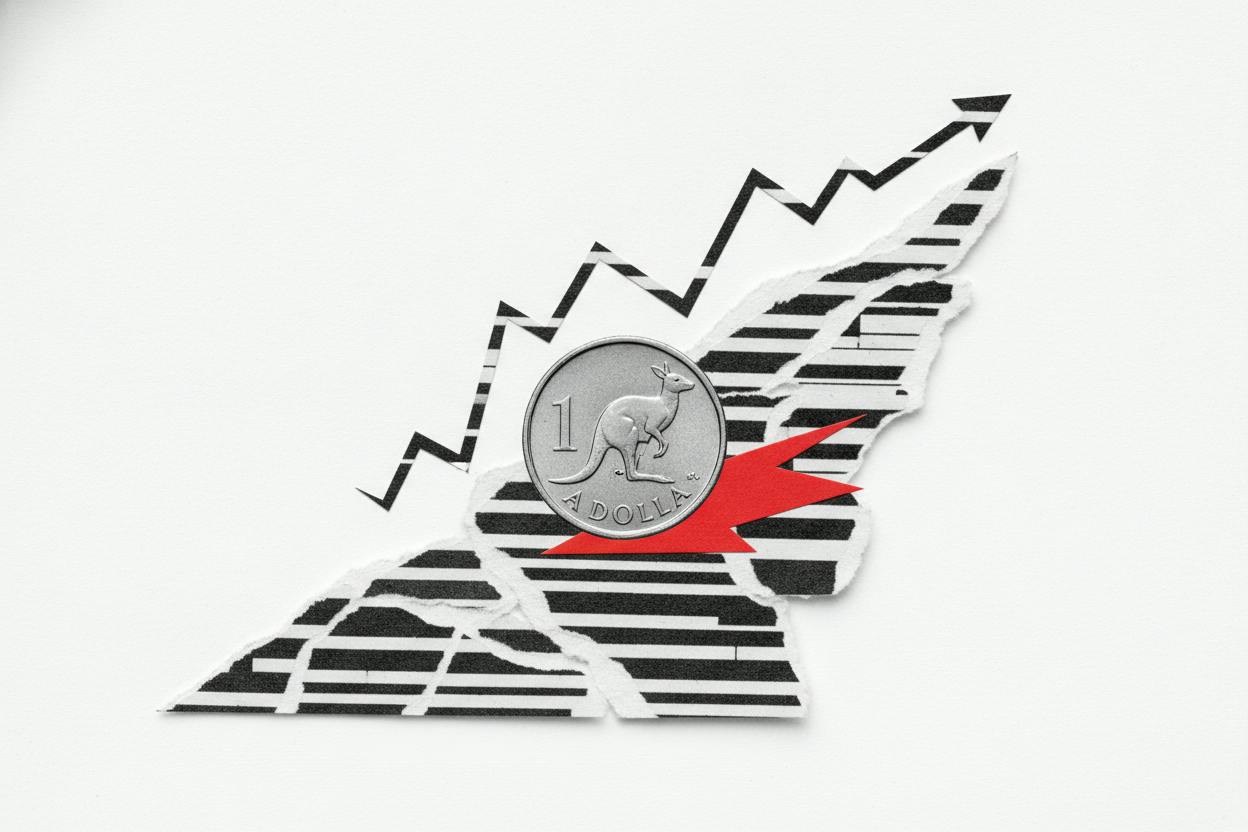
The Australian dollar has tumbled to its weakest level in seven months, caught between disappointing domestic data and a fresh burst of inflation pressure in the United States. The currency's slide reflects a familiar dynamic: when US inflation runs hot, US Treasury yields climb, the US dollar strengthens, and currencies like the Aussie lose ground.
What happened
Two forces combined to drag the Aussie lower. First, a pair of Australian surveys released this week pointed to softening business and consumer confidence, suggesting the local economy is losing momentum. Second, US core consumer price index (CPI) figures came in hotter than economists had expected, reigniting concerns that the Federal Reserve may need to keep interest rates higher for longer.
Core CPI strips out volatile food and energy prices and is closely watched by central banks as a gauge of underlying inflation. A hotter-than-expected reading raises the odds that the Fed will hold rates at elevated levels or even hike again, which in turn pushes US government bond yields up. Higher yields make US assets more attractive to global investors, boosting demand for the US dollar.
For the Australian dollar, that combination is doubly painful. Weak local data reduces the case for the Reserve Bank of Australia (RBA) to raise its own rates, while a firmer US dollar and higher US yields widen the interest rate gap between the two countries. That gap is a key driver of currency moves, as investors seek the higher returns available in US bonds.
Why it matters for investors
A weaker Aussie dollar has mixed implications for everyday investors. On one hand, it can be a tailwind for Australian exporters, whose goods become cheaper for overseas buyers. Companies in sectors like mining and agriculture often benefit from a softer currency. On the other hand, it makes imported goods more expensive, which can feed into domestic inflation and squeeze household budgets.
For Australian investors with exposure to US assets, the currency move cuts both ways. A lower Aussie dollar means that returns from US stocks or bonds, when converted back into Australian dollars, are worth more. But it also raises the cost of buying US assets in the first place.
The broader market context is also relevant. The ASX has been under pressure recently, with miners weighing on the index even as some banks report strong profits. A weaker currency could provide some support to export-oriented stocks, but it also reflects a global environment where inflation is proving stubborn.
Inflation and the Fed
The US inflation data has reset expectations for Federal Reserve policy. Earlier this year, many investors hoped the Fed would begin cutting rates soon. But a series of hot inflation readings has pushed those bets back. Some market participants are now even discussing the possibility of another rate hike, a scenario that seemed unlikely just a few months ago.
As sticky core inflation revives odds of a half-point Fed hike, the dollar has strengthened broadly. The Canadian dollar, or loonie, has also felt the pressure, hitting a multi-year low against the greenback. Commodity-linked currencies like the Aussie and the loonie are particularly sensitive to shifts in US rate expectations because they are often used as higher-yielding, risk-on investments.
The hot US inflation data has boosted the dollar and pressured assets like oil and gold, which are priced in dollars and become more expensive for foreign buyers when the greenback rises. Higher Treasury yields also make non-yielding assets like gold less attractive.
What to watch next
Investors will be watching two key things in the coming weeks. First, whether US inflation continues to run hot or begins to cool. The Fed has signalled it wants to see a sustained trend of lower inflation before it feels comfortable cutting rates. Any further upside surprises could push yields and the dollar even higher.
Second, the health of the Australian economy. The weak survey data that contributed to the Aussie's slide raises questions about the RBA's next move. The central bank has been cautious, but if confidence continues to deteriorate, it may be forced to consider rate cuts sooner than previously expected. That would likely put further downward pressure on the currency.
For now, the Australian dollar's path is closely tied to the tug-of-war between US inflation and domestic weakness. As hot inflation lifts Treasury yields and drags tech stocks lower, the ripple effects are being felt across global markets. The Aussie's seven-month low is a reminder that currency moves are often a barometer of broader economic forces.
For everyday investors, the key takeaway is that inflation remains the dominant force in global markets. It is driving central bank policy, bond yields, and currency values. Understanding how those pieces fit together can help make sense of the daily noise in financial headlines.