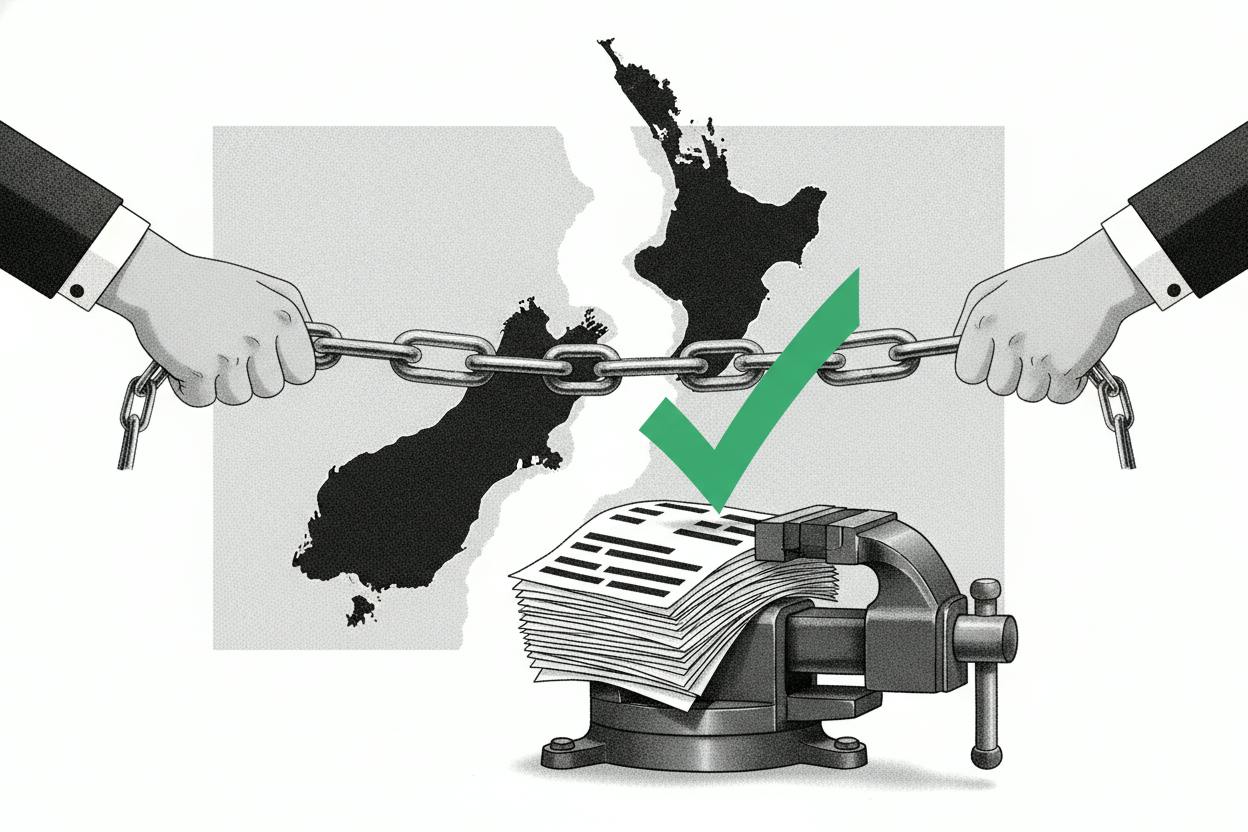
Australia and New Zealand's bank regulators have given the region's biggest lenders a vote of confidence, saying they could keep lending even if an oil-price spike and broader shocks tipped both economies into a deep recession. The finding comes from the first joint stress test between the two countries since 2017, a coordinated exercise designed to see how the trans-Tasman banking system would hold up under severe strain.
What the stress test involved
Stress tests are a standard tool regulators use to gauge how banks would cope with extreme but plausible economic scenarios. They are not predictions of what will happen, but rather a way to check whether banks have enough financial cushioning to absorb heavy losses and still function.
In this case, Australia's banking regulator, the Australian Prudential Regulation Authority (APRA), and the Reserve Bank of New Zealand (RBNZ) modeled a downturn severe enough to hit bank profits while also making it harder for banks to access cash and funding. The scenario was deliberately built to squeeze two key measures of bank health at the same time: capital and liquidity.
Capital is the loss-absorbing buffer that protects depositors and keeps a bank solvent if loans go bad. Liquidity refers to ready cash and easily sold assets that a bank can tap quickly to meet short-term obligations. A bank can be profitable on paper but still fail if it runs out of cash, so regulators watch both closely.
Why the oil-price shock matters
The scenario centered on an oil-price shock, which would ripple through the economy by raising costs for businesses and households, squeezing spending, and potentially triggering a wave of loan defaults. For Australia and New Zealand, both major commodity exporters, an oil spike would also complicate the picture by affecting trade balances and inflation.
Despite the severity of the modeled downturn, the regulators said the banks would remain resilient and continue extending credit. That is a reassuring signal for everyday borrowers and businesses, because it suggests that even in a deep recession, the plumbing of the financial system would keep working.
What it means for investors
For investors, the key takeaway is that the region's largest banks are seen as well-capitalized enough to weather a severe economic storm. That reduces the risk of a banking crisis of the kind seen in other parts of the world, where weak banks have needed government bailouts or have sharply cut lending, deepening a downturn.
However, the test also highlights that a recession would still put real pressure on bank profits. Lower profits could mean smaller dividends or less capacity for share buybacks, which are important for income-focused investors who hold bank stocks. The regulators' findings do not mean banks are immune to pain—only that they are unlikely to collapse.
For the broader economy, the result supports confidence in the financial system, which is crucial because banks are the main source of credit for households and small businesses in both countries. If banks keep lending during a downturn, it can soften the blow of a recession and help speed up a recovery.
Context: a global focus on bank resilience
The joint test comes at a time when regulators around the world are paying close attention to bank resilience. In recent years, authorities have run similar exercises in the United States and Europe, and have also begun scrutinizing newer risks, such as how banks use artificial intelligence and how they handle debanking risks. The Australian and New Zealand exercise fits into that broader pattern of regulators stress-testing their financial systems against a range of possible shocks.
It also follows a period of heightened concern about the health of banks globally, after a series of high-profile failures in 2023. Those events underscored how quickly confidence in a bank can evaporate, and why regulators want to ensure that banks hold enough capital and liquidity to survive sudden stress.
What investors will watch next
Investors will likely focus on how the stress test results influence bank capital requirements. If regulators decide that banks need to hold more capital, that could reduce the amount banks have available to return to shareholders. Conversely, if the test shows banks have ample buffers, it could support current payout policies.
They will also watch for any signs of weakness in the banks' loan books, particularly in areas like commercial real estate or consumer credit, which are often the first to deteriorate in a downturn. The oil-price shock scenario is a reminder that energy price spikes can have broad economic effects, and investors may keep an eye on commodity markets as a leading indicator.
For now, the regulators' verdict is a positive one: the region's banks are built to withstand a severe recession. That is a rare piece of good news in a world where financial stability often seems fragile.