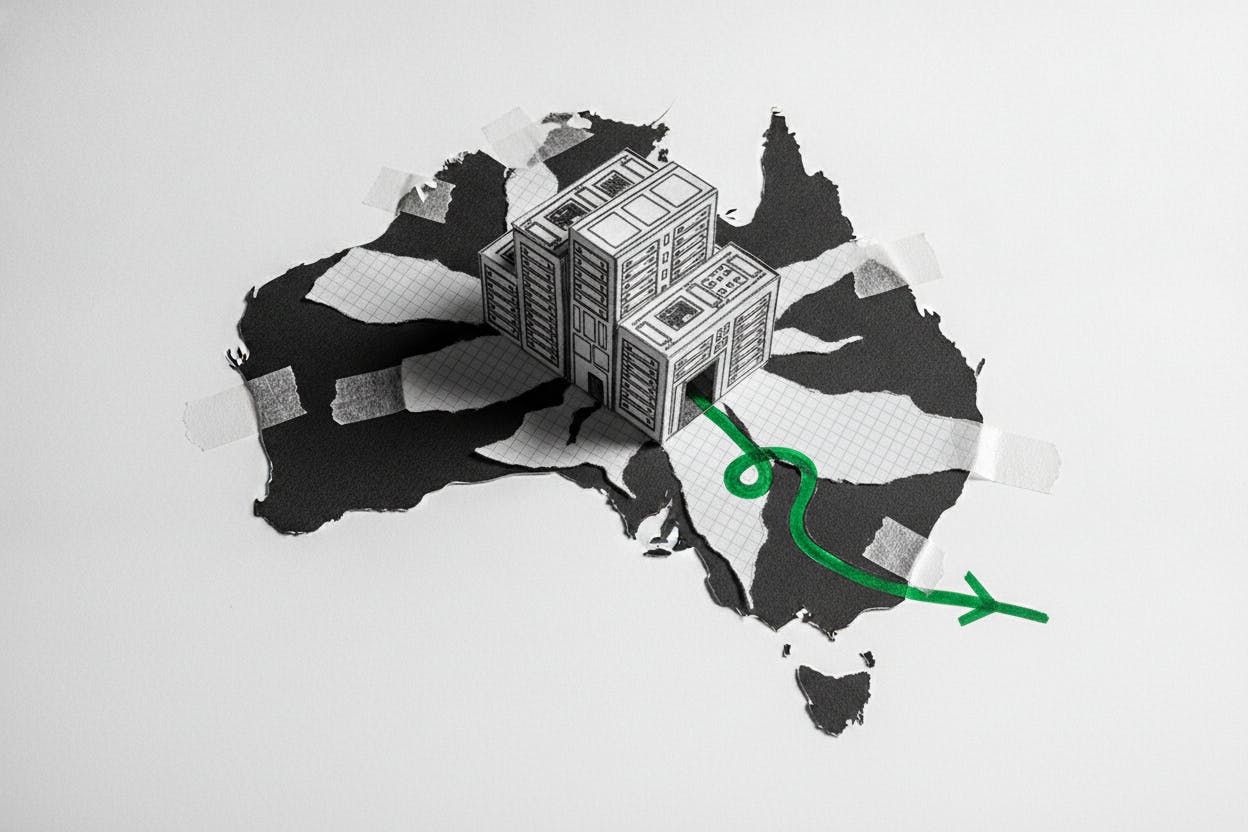
Australia is on the cusp of a data center construction boom that could significantly reshape the country's investment landscape, according to a new estimate from Commonwealth Bank of Australia (CBA). The bank projects a pipeline of about AU$150 billion in data center projects by 2030, a figure that could add roughly six percentage points to real business investment growth in 2026.
What's driving the build-out?
Data centers are the physical warehouses that house the servers powering cloud computing, artificial intelligence, and digital services. As more businesses and governments move their operations online, demand for these facilities has surged globally. Australia is no exception, with tech giants and local firms racing to build capacity.
CBA's analysis suggests that this wave of construction could become one of the biggest contributors to business spending in the coming years. The bank estimates the build-out could add about five percentage points to real business investment growth in 2027 as well, and contribute around 0.2 percentage points to real economic growth in each of those years.
Why it matters for the economy
Business investment is a key engine of economic growth. When companies spend on new buildings, equipment, and technology, it creates jobs, boosts productivity, and supports broader demand. A AU$150 billion pipeline is substantial for an economy the size of Australia's, which has a gross domestic product of roughly AU$2.6 trillion.
The data center boom also reflects a structural shift toward digital infrastructure, similar to how past waves of investment in roads, ports, or telecommunications transformed the economy. For everyday investors, this means the companies involved in construction, energy, and technology could see increased demand for their services.
What it means for investors
For investors, the data center build-out presents both opportunities and risks. On the positive side, it could lift earnings for construction firms, electrical equipment makers, and energy providers that supply power to these facilities. It could also support the broader Australian stock market, which has been sensitive to global tech trends.
However, investors should be cautious about overhyped projections. Data center projects can face delays due to planning approvals, power availability, and rising construction costs. The AU$150 billion figure is an estimate, not a guarantee, and actual spending could fall short if economic conditions weaken.
Moreover, the investment growth boost is expected to be concentrated in a few years, which could lead to a temporary spike rather than a sustained trend. Investors should watch how the pipeline develops and whether companies can execute on their plans.
Broader market context
The data center outlook comes at a time when global markets are grappling with inflation and interest rate uncertainty. In Australia, the central bank has kept rates relatively high to tame price pressures, which could affect the financing costs for these large projects. Still, the structural demand for digital services is likely to persist, making data centers a long-term growth area.
For those tracking Australian shares, the data center story is one to monitor alongside other market drivers. Recent sessions have seen Australian shares slip on US inflation fears, but domestic investment trends could provide a counterbalance.
What to watch next
Investors should keep an eye on announcements from major data center developers, as well as government policies on energy and infrastructure. The availability of renewable power and grid connections will be critical, as data centers are energy-intensive. Any bottlenecks could slow the build-out and reduce the projected economic impact.
Also, watch for earnings reports from companies in the construction and technology sectors, which may provide clues about the pace of spending. The CBA estimate is a forward-looking view, but actual investment data will be released quarterly by the Australian Bureau of Statistics.
The bottom line
Australia's data center build-out has the potential to be a significant driver of investment and economic growth over the next few years. While the AU$150 billion figure is an estimate, the trend toward digital infrastructure is clear. For investors, understanding this shift can help in making informed decisions about sectors that stand to benefit.
As with any major investment theme, it's important to diversify and not put all your eggs in one basket. The data center boom is promising, but it's just one part of a complex economic picture.