Australians no longer see a separate surcharge when they tap their card at the register, but that doesn't mean the cost of accepting cards has disappeared. With the Reserve Bank of Australia's (RBA) ban on payment-method surcharges now in effect, many cafes and bars are quietly moving those fees into the prices printed on their menus.
The change, which took effect Thursday, outlaws the 0.5% to 1.5% checkout fees that merchants could previously add for debit and credit card payments. The RBA also lowered the interchange fees that banks charge each other for processing card transactions. The goal, according to the central bank and the center-left Labor government, is to ease cost-of-living pressure in a country where cards are the default way to pay for almost everything.
What the ban means for businesses
For small businesses, the ban removes a visible fee but not the underlying cost. Accepting cards still involves merchant service fees, terminal rental, and other processing charges. With no separate line item allowed, merchants have to absorb those costs or build them into their prices.
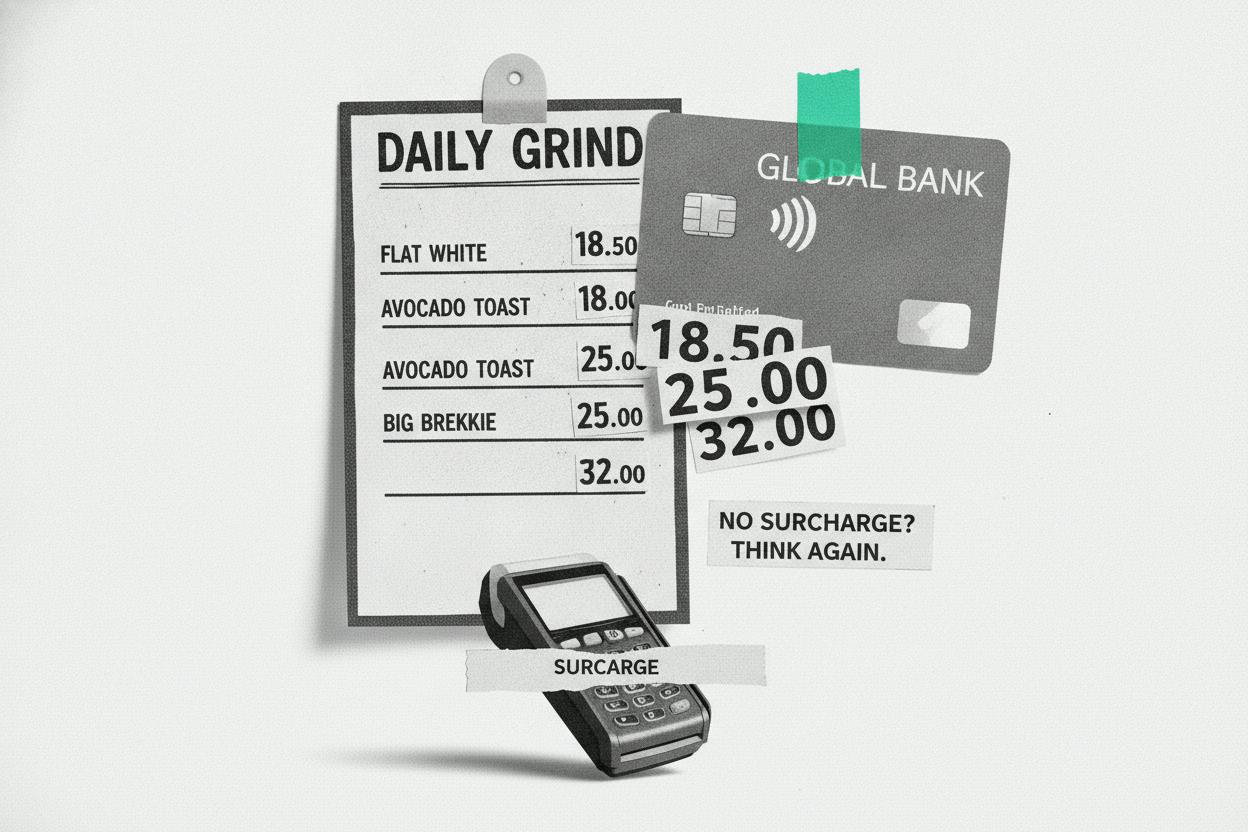
That's exactly what some are doing. One Sydney cafe owner told Reuters he raised food and cold-drink prices by about A$2 on average. A bar owner said he expects to pass on the full cost of card acceptance, on top of other rising expenses like alcohol taxes that are indexed to inflation.
The hospitality sector has little room to absorb these costs. Industry data cited by Reuters puts restaurant and cafe margins at roughly 2.8% to 3.1% on about A$66 billion in annual revenue. That's a thin cushion, and any new cost is likely to flow straight through to the customer.
What it means for your wallet
For everyday Australians, the ban changes where you see the cost, not whether you pay it. Before, a card user might see a 1% surcharge added at the bottom of the bill. Now, that cost is baked into the menu price, so everyone pays it—whether they use a card or cash.
That can make cash feel less like it comes with a hidden discount, while card payments become more predictable at the register. The checkout surprise should fade, but your cafe bill may get a small bump instead.
The RBA expects the measured inflation impact to be small—around 0.1%—partly because surcharges weren't counted in the consumer price index (CPI) in the first place. When a fee that used to sit outside the CPI is folded into posted menu prices, the index can show a one-off step-up even if many households' total spending doesn't change much.
What it means for banks and investors
The ban also hits banks where it hurts: their revenue. Macquarie, one of Australia's largest investment banks, estimates the change could trim about A$900 million from banking-sector revenue in 2027. That's a meaningful dent, though Macquarie expects weaker credit-card rewards to offset some of the hit—banks may cut perks to make up for lost interchange income.
For investors, this is a reminder that regulatory changes can reshape revenue streams in unexpected ways. Banks that rely heavily on card fees may see margins compress, while those with diversified income may be less affected. The broader economic backdrop remains uncertain, with inflation still above the RBA's target range and rate hikes a live possibility. Australia's inflation ticked up to 4% recently, driven by fuel and housing costs, and the RBA has signaled it won't hesitate to act if needed.
The ban is part of a wider push to reduce costs for consumers and businesses. The government says Australians will save A$1.6 billion a year, including about A$910 million for businesses. But those savings may not show up in your wallet as lower prices—they may just show up as slightly smaller increases than would otherwise have occurred.
What to watch next
Investors and consumers alike will be watching how quickly and broadly merchants adjust their pricing. If cafes and bars across the country follow the Sydney owner's lead, menu prices could rise more than the RBA's 0.1% estimate suggests. The RBA's own analysis assumes most businesses will absorb some of the cost, but thin margins in hospitality argue otherwise.
Also worth watching: how banks respond. If they cut credit-card rewards to offset lost interchange revenue, that could change consumer behavior and further pressure bank earnings. The RBA's move is a clear example of how regulatory decisions can ripple through the economy, affecting everything from your morning coffee to the banks in your portfolio.
For now, the takeaway is simple: the ban on card surcharges is a win for transparency at the register, but it's not a free lunch. The cost of accepting cards hasn't gone away—it's just moved.