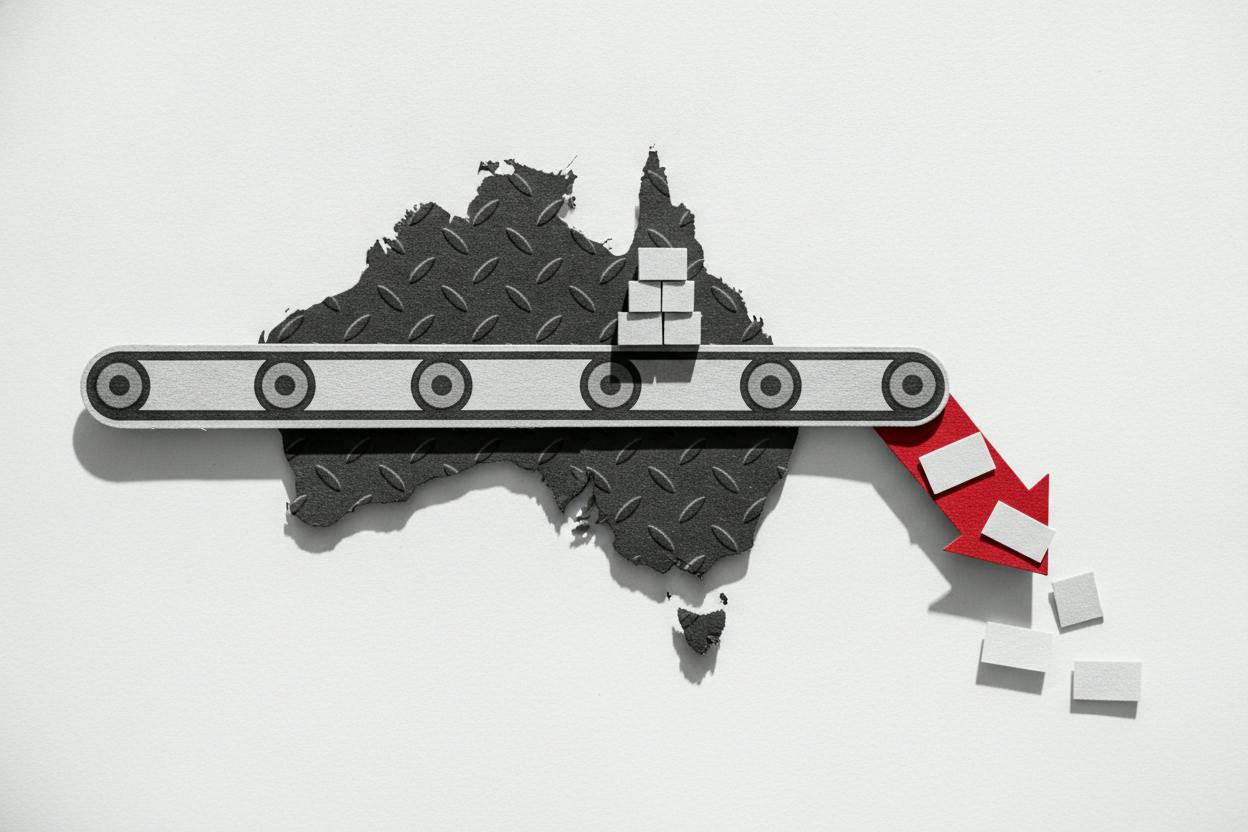
Australia's manufacturing sector has slipped back into contraction, according to the latest survey from S&P Global. The purchasing managers' index (PMI) for manufacturing fell to 49.6 in September, down from 52 in August. Any reading below 50 signals that activity is shrinking, while a reading above 50 points to expansion.
The drop marks the sharpest monthly decline in 21 months, and the culprit appears to be demand. New orders fell again, dragging output lower and pushing factories to cut production at the fastest pace since December 2024. When order books thin out, manufacturers typically protect cash flow by trimming output first, then pulling back on hiring and purchases of raw materials to avoid building up inventory they can't sell. That's exactly what the survey showed.
What's behind the slowdown?
The manufacturing PMI is a closely watched gauge of business conditions, compiled from surveys of purchasing managers at factories across the country. It captures changes in new orders, production, employment, supplier delivery times, and stock levels. A reading below 50 means that, on balance, conditions are deteriorating.
September's contraction follows a brief rebound in August, when the index had climbed back above the 50 mark. The latest data suggests that recovery was short-lived. The weakness in new orders is particularly concerning because it points to softer demand both at home and abroad. Australian manufacturers have been grappling with a sluggish domestic economy, high interest rates, and uncertain global trade conditions.
The Reserve Bank of Australia (RBA) has kept interest rates elevated to combat inflation, which has made borrowing more expensive for businesses and consumers alike. That tends to weigh on spending on big-ticket items, which in turn hits manufacturers. Inflation in Australia recently ticked up to 4%, driven by fuel and housing costs, which complicates the RBA's path. While some investors had hoped for rate cuts, the latest inflation data has cooled those expectations, as Australian stocks jumped on softer inflation data earlier this year, but the picture has since become murkier.
What it means for investors
For everyday investors, the manufacturing PMI is a useful barometer for the broader economy. When factories are cutting output, it often signals that economic growth is slowing. That can affect corporate earnings, particularly for companies with exposure to industrial production, materials, and transport.
It's also worth noting that Australia's manufacturing sector is relatively small compared to services, but it punches above its weight in terms of exports, especially in resources and agricultural processing. A prolonged contraction could weigh on the Australian dollar and on the earnings of listed manufacturers.
The news also comes against a backdrop of mixed signals from other economies. China's factory activity returned to growth in September, helped by new credit support, and export orders surged, which could provide some tailwind for Australian exporters. However, the domestic demand picture remains soft.
Investors will be watching the RBA's next moves closely. If inflation continues to run hot, the central bank may be forced to keep rates higher for longer, which would likely keep pressure on manufacturers. On the other hand, if the economy weakens further, the RBA might eventually pivot to rate cuts, which could provide some relief.
For now, the message from the factory floor is clear: demand is fading, and businesses are hunkering down. That's a signal worth heeding, even if it's just one month's data.