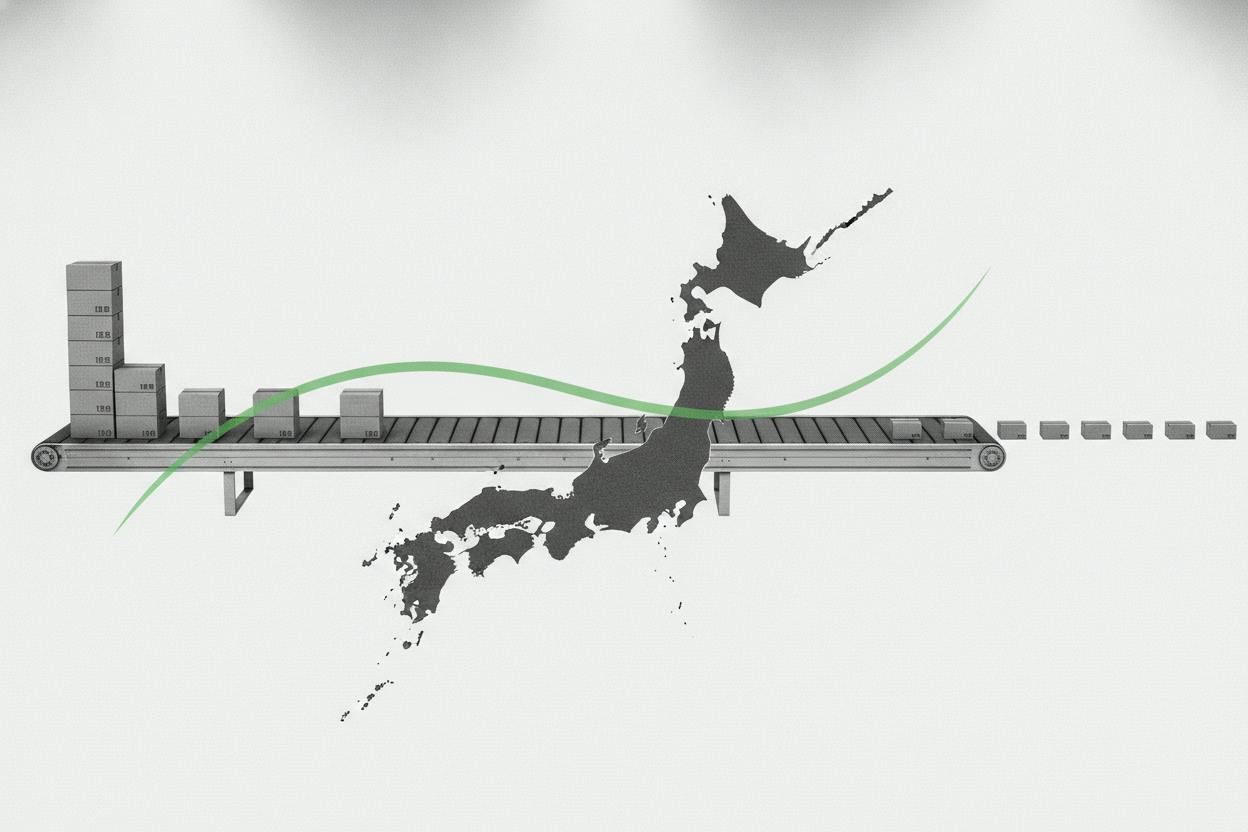
Japan's manufacturing sector continued to expand in September, but the pace of growth lost some steam. The S&P Global Manufacturing Purchasing Managers' Index (PMI) slipped to 54.1 from 54.9 in August, a reading that still signals solid expansion but points to a cooling trend.
A PMI above 50 indicates that the sector is growing, while a reading below 50 points to contraction. Japan's factories have now stayed above that threshold for nine consecutive months, so the latest figure is not a sign of trouble. Instead, it suggests that the rapid rebound seen earlier in the year is settling into a more moderate, sustainable pace.
What's behind the slowdown?
The dip in the headline number was driven by softer growth in both output and new orders. According to S&P Global Market Intelligence economist Annabel Fiddes, some manufacturers reported that customers were drawing down inventories they had built up earlier in the year. That inventory correction helps explain why total new order growth was the weakest in four months.
Inventory cycles can amplify swings in factory activity. When customers stop restocking and start using up what they already have, the extra catch-up orders that had been boosting production quickly disappear. That dynamic tends to hit new orders first, before showing up in output and, eventually, in broader economic growth.
Despite the cooling, exports were a standout. Overseas orders rose for a ninth straight month, helped by demand from Asia and improved sales to the United States. That resilience in foreign demand is a key reason why the overall picture remains positive.
What it means for investors
For investors, the September PMI matters less for the headline "above 50" and more for what's underneath. The talk of an inventory unwind is a signal that the restocking tailwind that had been supporting factory activity is fading. That could mean slower momentum in industrial production and, by extension, GDP growth in the coming months.
PMI new orders often lead official industrial production data by a few months, so a still-expanding PMI can coexist with cooling momentum in the next leg of output. This tends to show up most in cyclical manufacturers whose volumes depend on fresh orders at the margin, even if export demand remains comparatively resilient.
On the positive side, firms continued to add staff in September, though slower sales meant backlogs grew only modestly. Cost pressures eased a bit but stayed high, allowing manufacturers to keep raising prices. That pricing power could support profit margins, even as volume growth slows.
For everyday investors, the key takeaway is that Japan's factory sector is still growing, but the pace is moderating. This is not a red flag, but it does suggest that the strong rebound from earlier in the year is giving way to a more normal, less explosive phase. Keep an eye on whether the inventory correction deepens, as that could weigh on industrial production and corporate earnings in the months ahead.
For broader context, similar trends are visible in other economies. For instance, Irish factory growth recently hit its fastest pace since March 2022, while Australia's factory activity slipped back into contraction as demand faded. These divergent paths highlight how different regions are navigating the same global challenges of inflation, supply chains, and shifting demand.
Investors should also watch how Japan's data fits into the broader global picture. With European stocks slipping as UK growth cools and oil prices climb, the global manufacturing cycle is clearly in a delicate phase. The resilience of Japanese exports, particularly to the US and Asia, is a positive sign, but it may not be enough to offset the drag from domestic inventory adjustments.
In the end, the September PMI is a reminder that economic data rarely moves in a straight line. The expansion is intact, but the pace is moderating. For investors, that means staying alert to the underlying drivers—like inventory cycles and export demand—rather than just the headline number.