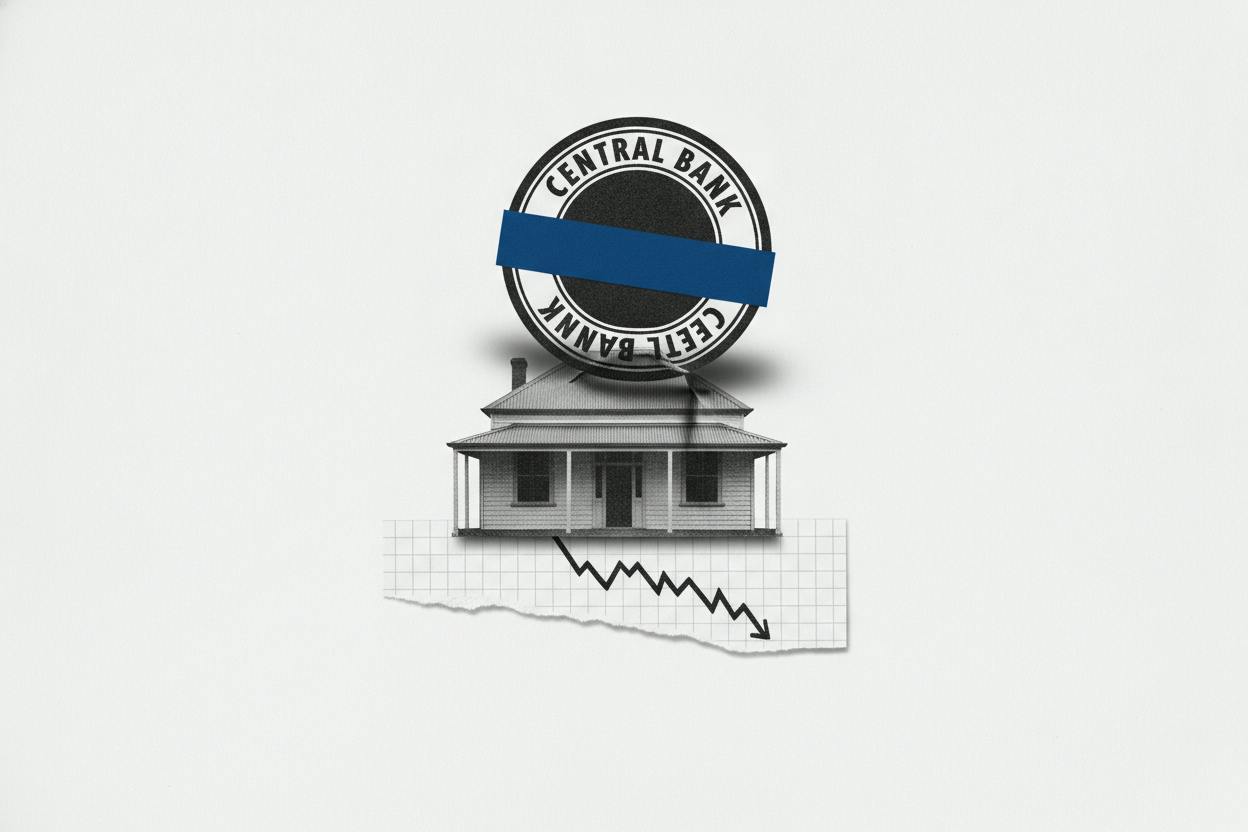
Australia's housing market is cooling again, but don't expect that to stop the central bank from raising interest rates to a 15-year high next week. According to Reuters, the Reserve Bank of Australia (RBA) is widely expected to lift its policy rate to 4.6% at its upcoming meeting, even as home prices continue to slide.
In previous downturns, a weaker housing market often did some of the RBA's inflation-fighting work for it. When home values fall, households tend to feel less wealthy and spend less, which helps cool price pressures. That dynamic has historically given the central bank room to ease off on rate hikes or even cut rates sooner.
But this time, policymakers are signaling that falling home prices alone won't bring quick relief. The RBA is facing a different kind of inflation problem—one that isn't as sensitive to interest rates.
Why housing weakness isn't enough this time
The RBA's concern is that the current inflation pressures are coming from multiple sources that don't respond much to higher borrowing costs. For one, there are supply-side shocks, such as higher energy costs and disruptions to global trade. These push up prices directly, and rate hikes can't easily reverse them.
There's also strong spending in parts of the economy that are less affected by interest rates. For example, investment in AI-linked data centers is booming, government spending remains robust, and immigration is running high. These factors keep demand and prices elevated even as the housing market weakens.
In simple terms, the RBA is saying that a drop in home prices is not a one-size-fits-all solution to inflation. It might help cool some consumer spending, but it won't address the cost pressures coming from energy, trade, or the tech-driven investment boom.
What this means for homeowners and investors
For everyday Australians, this signals that mortgage rates are likely to stay higher for longer. If the RBA follows through with the hike to 4.6%, it will be the highest level in 15 years, adding more pressure on borrowers who are already feeling the pinch.
For investors, the message is clear: don't expect a quick pivot to rate cuts just because house prices are falling. The RBA is focused on bringing inflation back to its target range, and it's willing to tolerate a housing slump to get there.
That said, the housing market's decline could eventually feed into weaker consumer spending and slower economic growth, which might prompt the RBA to change course later. But that's not the base case right now.
Broader context and what to watch
The RBA's stance is part of a global trend. Central banks around the world are grappling with sticky inflation and are keeping rates higher for longer. In Japan, for instance, 10-year bond yields recently hit a 30-year high as global rates surge. That's a reminder that the era of ultra-low interest rates is firmly in the rearview mirror.
Closer to home, Australia's labor market is showing some cracks. The jobless rate has risen to 4.6% as more people seek work, which could eventually weigh on consumer confidence and spending. But for now, the RBA seems more worried about inflation than unemployment.
Investors will be watching the RBA's statement and press conference for any hints about future moves. The key question is whether this is the peak for rates, or if more hikes are on the table. The bank has signaled that it's data-dependent, so upcoming inflation and jobs reports will be crucial.
For those with savings, higher rates are a silver lining, as they mean better returns on cash deposits. But for borrowers and property investors, the outlook is more challenging.
The bottom line
Australia's housing slump is real, but it's not going to stop the RBA from hiking rates next week. The central bank is facing a more complex inflation environment, where falling home prices alone won't do the heavy lifting. For investors, that means staying patient and not betting on a quick rate cut. The path forward will depend on how inflation and the broader economy evolve in the coming months.