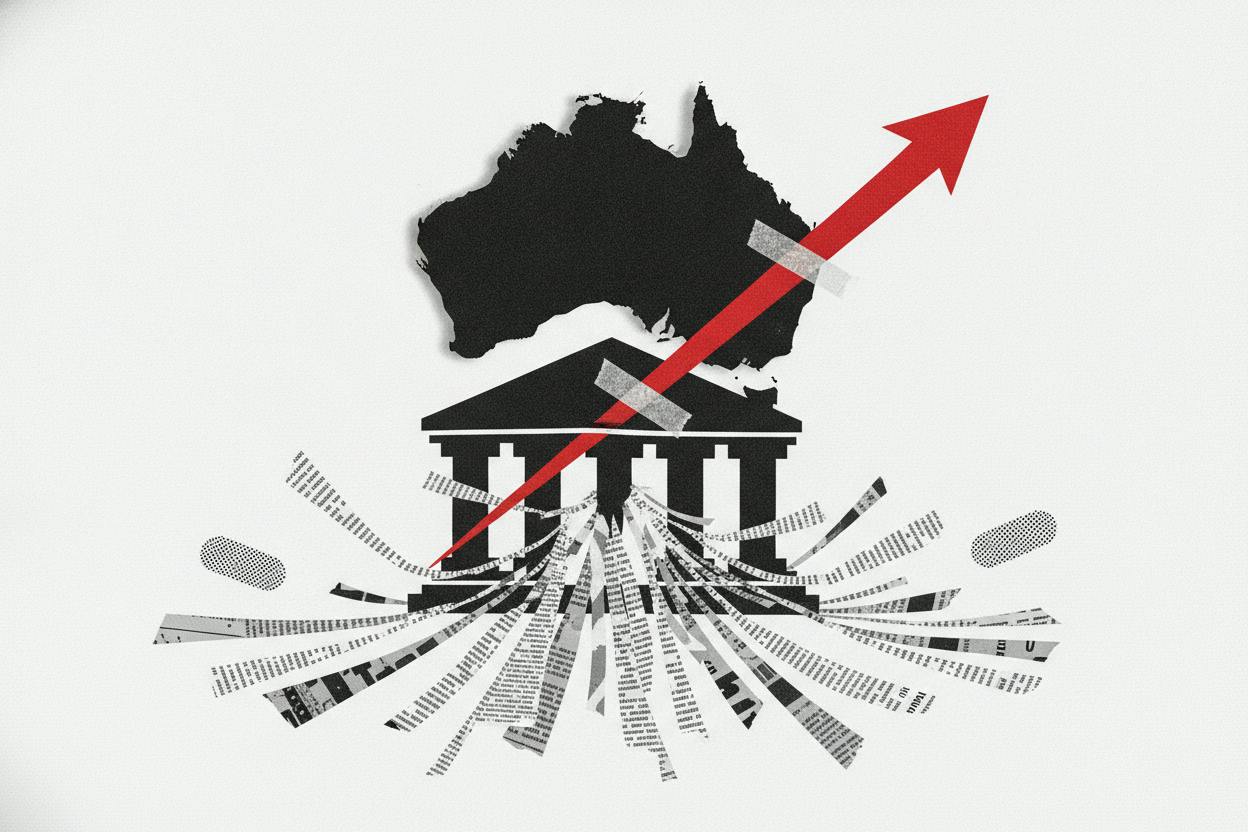
Australian shares closed lower on Tuesday, with the S&P/ASX 200 slipping 0.5% after the Reserve Bank of Australia (RBA) lifted its benchmark interest rate to an 18-year high. The move pushed borrowing costs to levels not seen in nearly two decades, and the pain was felt most acutely in the country's banking sector.
The RBA's 25-basis-point hike was widely expected, but its impact rippled through rate-sensitive corners of the market. Financials led the decline, with the sector falling 0.7% as investors weighed the implications for lenders' profitability. Among the 'Big Four' banks, ANZ and its peers dropped between 0.4% and 1.2%.
At first glance, higher interest rates might seem like good news for banks, which can charge more on loans. But the reality is more nuanced. Banks' own funding costs tend to rise in tandem, as they pay higher interest on deposits and face more expensive wholesale funding. At the same time, borrowers under financial pressure may struggle to repay loans, raising the risk of defaults. That combination can squeeze margins and weigh on bank earnings, which is why investors often sell bank stocks after a rate hike.
Why the RBA is still hiking
The central bank's decision reflects its ongoing battle against inflation, which remains above its target range. By raising the cash rate, the RBA aims to cool demand and bring price pressures under control. However, the cumulative effect of multiple hikes is now being felt across the economy, from mortgage holders to businesses.
Recent data has painted a mixed picture. While some indicators suggest the economy is slowing, others show that cost pressures persist. For instance, Australia's factory slump has deepened, with input costs hitting a one-year high, and the services sector has also contracted as costs climb. These trends highlight the delicate balance the RBA must strike between taming inflation and avoiding a sharp economic downturn.
US midterm elections in focus
Investors were also keeping a close watch on the US midterm elections, with results still coming in. The outcome could shape fiscal policy, regulatory priorities, and the trajectory of the world's largest economy. Markets often prefer gridlock, as it reduces the likelihood of major policy shifts, but uncertainty itself can weigh on sentiment.
The election results are particularly relevant for financial markets, as they could influence everything from corporate taxes to trade policy. US financial stocks have already slipped as investors weighed the risks, and the ripple effects are being felt globally.
What it means for investors
For everyday investors, the RBA's hike is a reminder that interest rates are a powerful force that affects more than just mortgage payments. Higher rates tend to make borrowing more expensive, which can slow consumer spending and business investment. That can weigh on corporate earnings and, in turn, on share prices.
Banks, in particular, are sensitive to rate changes. While they can earn more on variable-rate loans, they also face higher funding costs and the risk of rising loan defaults. As a result, bank stocks often underperform in a rising-rate environment, as seen in Tuesday's session.
For those with diversified portfolios, the key takeaway is that rate hikes can create volatility across sectors. Defensive sectors, such as utilities and consumer staples, may hold up better, while cyclical and financial stocks could face headwinds. It's also worth noting that the RBA's actions are part of a broader global trend, with central banks in many countries tightening policy to fight inflation.
Looking ahead, investors will be watching for signals from the RBA about the future path of rates. If inflation remains stubborn, further hikes could be on the table, which would likely keep pressure on banks and other rate-sensitive stocks. On the other hand, if the economy slows sharply, the central bank may pause or even reverse course, which could provide some relief.
In the meantime, the US election results will continue to influence market sentiment, as investors assess the potential impact on global trade and economic policy. Some top investors have drawn comparisons to past market booms, underscoring the uncertainty that lies ahead.
For now, the message for investors is to stay informed and avoid making impulsive decisions based on short-term moves. Rate hikes and elections are part of the normal market cycle, and a well-diversified portfolio can help weather the ups and downs.