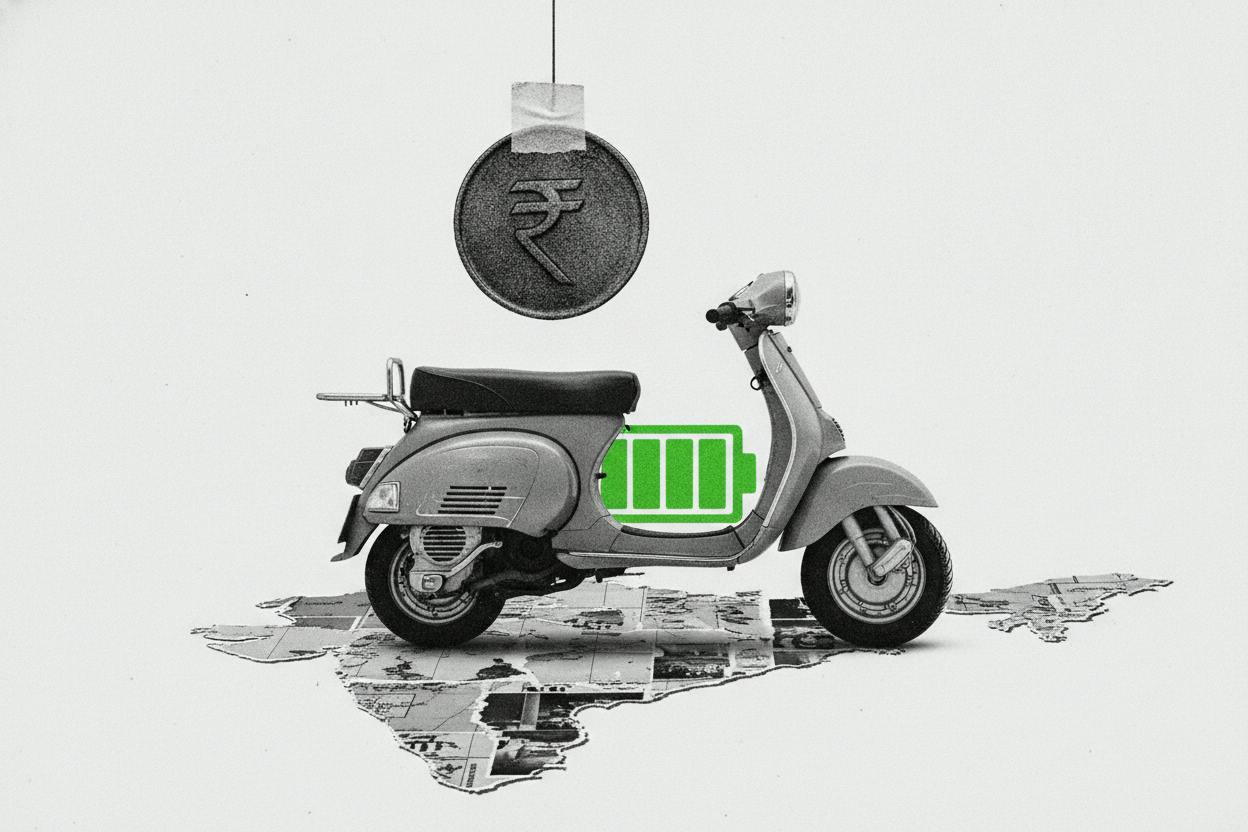
Bajaj Auto, one of India's largest makers of two- and three-wheelers, delivered a strong second-quarter performance that beat investor expectations. The company reported a 35.3% rise in profit, while revenue climbed 34.1%, powered by a sharp jump in exports and the growing popularity of its Chetak electric scooter.
The results underscore how the Pune-based manufacturer is navigating a shifting global market. Export volumes rose 41% during the quarter, outpacing its domestic two-wheeler business. At the same time, the company's electric vehicle (EV) division—led by the Chetak—accounted for nearly 35% of domestic revenue, a sign that its bet on electrification is paying off.
Exports lead the way
Bajaj Auto has long been a major exporter of motorcycles and three-wheelers, selling to markets across Africa, Latin America, Southeast Asia, and the Middle East. The 41% jump in export volumes suggests strong demand in those regions, even as global economic conditions remain uneven. For investors, exports are a key metric because they often carry higher margins and diversify revenue away from the cyclical Indian market.
The company's management framed exports and electric vehicles as twin growth engines. That framing is important because it signals where Bajaj Auto intends to focus its capital and product development. In recent years, the company has invested heavily in both areas, and the latest quarter suggests those investments are beginning to bear fruit.
The Chetak effect
The Chetak, Bajaj Auto's electric scooter, has become a central part of its domestic strategy. With nearly 35% of domestic revenue now coming from EVs, the company is clearly transitioning away from a reliance on petrol-powered scooters and motorcycles. This shift mirrors a broader trend in India, where electric two-wheelers are gaining traction due to government incentives, rising fuel costs, and improving charging infrastructure.
For everyday investors, the Chetak's success is a reminder that EV adoption is not just about cars. Two-wheelers are the backbone of personal transport in India, and companies that can capture this market early may enjoy a long runway of growth. Bajaj Auto's ability to blend its traditional strengths—manufacturing efficiency, brand trust, and a vast dealer network—with new EV technology gives it a competitive edge.
What it means for investors
Bajaj Auto's results come at a time when many global automakers are struggling with slowing demand and margin pressure. The company's ability to grow both profit and revenue at double-digit rates is a positive signal, but investors should consider the broader context.
Exports, while strong, can be volatile. Currency fluctuations, geopolitical tensions, and changes in trade policies can all affect demand. Similarly, the EV market is still evolving, and competition is intensifying—both from established players and new startups. Bajaj Auto's management has acknowledged these challenges, but the current quarter suggests they are managing them well.
For those watching the stock, the key metrics to track in coming quarters will be the sustainability of export growth, the pace of EV adoption, and whether the company can maintain its profit margins as it scales up production. The company's performance also offers a window into the health of the broader Indian consumer economy, which has shown resilience despite global headwinds.
Bajaj Auto's results are part of a larger story of Indian manufacturers gaining global relevance. As other companies in the region report earnings, investors will be looking for similar signs of strength. For instance, Standard Chartered's recent profit jump and HSBC's strong quarter both point to a broader trend of Asian companies outperforming expectations. Meanwhile, China's factory profits have surged, though its stock market remains under pressure—a reminder that strong earnings don't always translate into share price gains.
For Bajaj Auto, the immediate reaction from investors was positive, but the long-term test will be whether the company can keep delivering. The Chetak's rise is a promising sign, but the EV market is still young, and consumer preferences can shift quickly. Export growth, too, depends on global demand, which remains uncertain.
In the end, Bajaj Auto's second-quarter results are a testament to the power of diversification. By balancing a strong domestic franchise with a growing export business and a forward-looking EV lineup, the company has positioned itself well for the future. For investors, the lesson is clear: companies that adapt to changing trends—whether in technology or global trade—are often the ones that deliver consistent returns.