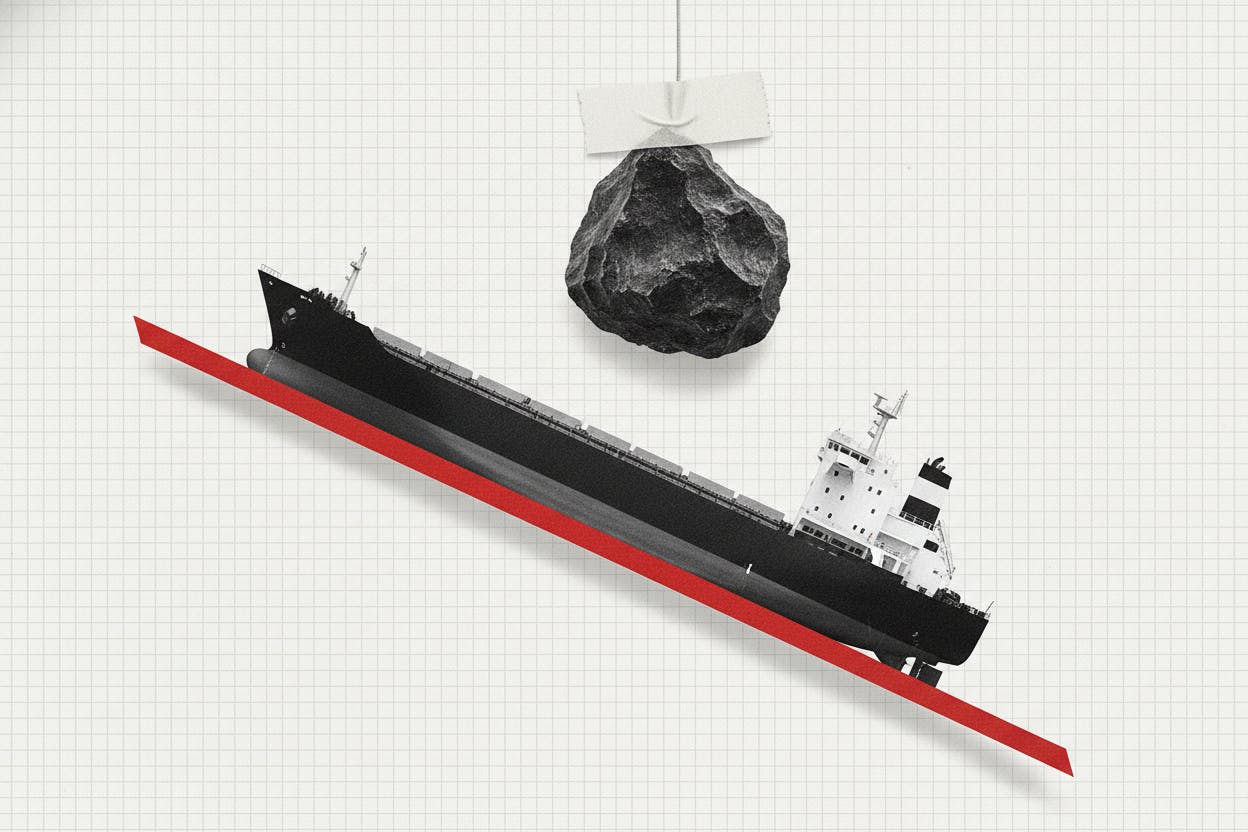
The Baltic Dry Index (BDI), a closely watched barometer of global dry-bulk shipping costs, slipped 1.4% to 2,776 on Tuesday, marking its lowest level since July 31. The decline was driven by cooling rates for the two largest classes of cargo vessels, a sign that demand for moving heavy commodities like iron ore, coal, and grain may be easing.
What the Baltic Dry Index Tracks
The BDI is compiled daily by the Baltic Exchange in London and measures the cost of shipping dry bulk goods across major global routes. It aggregates rates for four vessel sizes, with the largest—capesize and panamax—carrying the most weight in the index. Because these ships transport the raw materials that feed steel mills, power plants, and food supply chains, the index is often viewed as a real-time pulse check on global industrial activity and trade flows.
When the index rises, it typically suggests stronger demand for commodities and a busier global economy. When it falls, as it did today, it can hint at softening demand or an oversupply of ships. For everyday investors, the BDI is not a direct investment, but it can offer clues about the health of sectors like mining, agriculture, and shipping—and by extension, the broader economic cycle.
Capesize and Panamax Rates Cool
Tuesday's drop was led by capesize vessels, the giants of the dry-bulk fleet that typically haul around 150,000 tons of iron ore or coal per voyage. Average daily earnings for capesizes fell by $691 to $36,181. Panamax ships, which are commonly used for cargoes of roughly 60,000 to 70,000 tons of coal or grain, also softened, with daily earnings down $427 to $18,964.
These declines suggest that charterers are paying less to secure ships, which can happen when cargo volumes dip or when more vessels become available. The pullback comes after a period of elevated rates, and the index's slide to a multi-week low indicates that the recent momentum in bulk shipping may be losing steam.
What This Means for Investors
For investors, the BDI's decline is a data point to watch rather than a reason to panic. It can signal weaker demand for commodities, which might weigh on the earnings of shipping companies and, indirectly, on miners and agricultural exporters. However, the index is notoriously volatile, and a single day's move does not establish a trend.
Investors with exposure to shipping stocks or commodity-linked sectors may want to monitor whether this cooling continues. A sustained drop in the BDI could indicate that global trade is slowing, which might have broader implications for economic growth. Conversely, a rebound would suggest that the dip was just a blip.
It's also worth noting that the BDI is just one of many indicators. Copper prices have recently slipped from a six-month high as China data cooled demand hopes, and gold has slipped as Treasury yields climb—both of which reflect the complex interplay of global demand, interest rates, and geopolitical tensions. The shipping index's move today fits into that broader picture of mixed signals across commodity markets.
Broader Market Context
The BDI's decline comes amid a backdrop of shifting currency and rate dynamics. The dollar has been firm, which can make commodities priced in dollars more expensive for buyers using other currencies, potentially dampening demand. Meanwhile, the yuan firmed as the PBOC set its strongest midpoint in months, and the RBA has warned that rates could rise again if inflation flares up—all factors that influence trade flows and shipping demand.
For investors, the key takeaway is that the BDI is a useful gauge of global trade health, but it should be considered alongside other indicators. A single day's decline is not a signal to change your portfolio, but a sustained trend could be worth paying attention to.
Looking Ahead
Market participants will be watching to see whether the BDI stabilizes or continues to slide in the coming sessions. The index is sensitive to seasonal patterns, Chinese demand for iron ore, and the pace of global coal and grain shipments. Any major shifts in these areas could move the index significantly.
For now, the cooling in capesize and panamax rates suggests that the recent surge in bulk shipping costs may be pausing. Investors should keep an eye on the BDI as part of their broader assessment of global economic momentum, but avoid overreacting to short-term fluctuations.