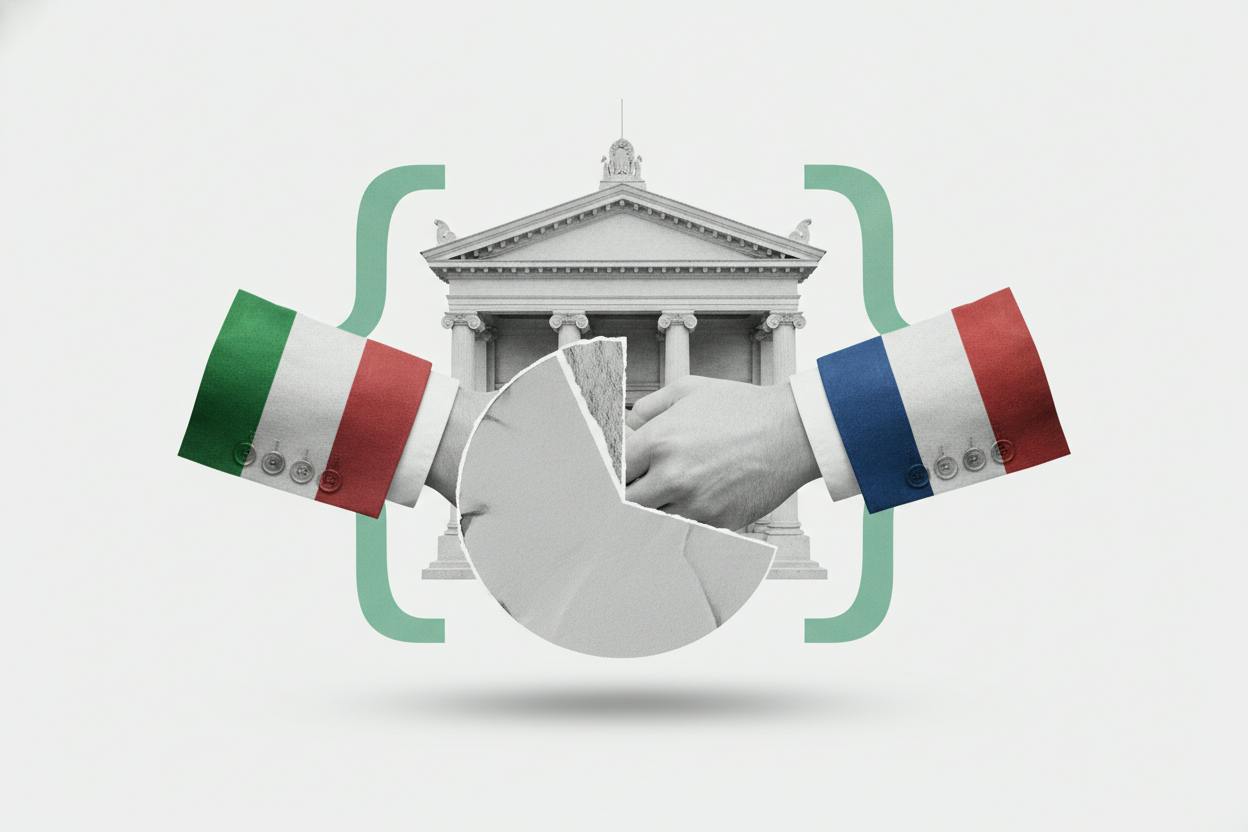
Banco BPM's chief executive, Giuseppe Castagna, moved to dampen speculation about a potential merger with France's Credit Agricole, saying discussions are still "very preliminary." His comments come after Credit Agricole, which already owns 29.6% of the Italian bank, floated a plan that would see it hold roughly 45% of a combined entity.
Speaking to reporters, Castagna acknowledged that markets are treating the deal as nearly done, but he stressed that his team is still evaluating whether the transaction makes financial sense for shareholders—not just strategic sense on paper. "We are testing the economics," he indicated, pushing back on the notion that a merger is inevitable.
What's on the table
Credit Agricole, one of France's largest banks, has proposed combining its Italian operations with Banco BPM to create Italy's third-largest lender. The French bank already holds a significant stake, and the proposed deal would increase its ownership to about 45% of the merged group.
Castagna also addressed governance assumptions that have circulated in the market. Reports suggested Credit Agricole might keep him on as CEO of the combined bank, but he said leadership has not been discussed and is not a prerequisite for any transaction. "That's not a condition," he said, dismissing the idea that his role would be a sticking point.
Underneath the public messaging is a clear element of leverage. Castagna argues that Banco BPM can "do better alone," pointing to a business mix where roughly half of profitability comes from insurance, payments, and asset management—not just traditional lending.
Why the profit mix matters
That diversification is central to the bank's bargaining position. Banks that rely heavily on net interest income—the difference between what they earn on loans and pay on deposits—are more vulnerable when interest rates fall or loan growth slows. In contrast, fees from insurance, payments, and managing savings tend to be steadier and more resilient.
For investors, this means Banco BPM's earnings are less cyclical than those of a typical lender. In deal negotiations, steadier earnings often translate into a higher asking price. If Credit Agricole wants to convert its 29.6% stake into roughly 45% of a merged bank, the exchange terms will be critical. The market's focus is shifting from "will they merge?" to "what valuation does Banco BPM's mix deserve?"
Castagna's resistance to any sense that a premium is already baked in is a classic negotiating tactic. By emphasizing the bank's standalone strength, he is signaling that any deal must reflect that value—or it won't happen.
What it means for investors
For everyday investors, this story is a reminder that merger talks are often long and uncertain. Even when a potential buyer has a clear stake and a public proposal, the final outcome can hinge on valuation, governance, and regulatory hurdles. The fact that the CEO is publicly downplaying the deal suggests that a quick resolution is unlikely.
Investors holding Banco BPM shares should watch for any concrete developments, such as a formal offer or a change in the exchange ratio. The bank's diversified income stream is a key strength, but it also means that any deal must be structured to reflect that stability.
For those watching the broader European banking sector, this is another example of consolidation pressure. Banks across the region are seeking scale to compete with larger global players and to invest in technology. Similar dynamics have been seen in other recent bancassurance deals and mergers among business development companies.
Ultimately, the outcome will depend on whether Credit Agricole is willing to pay a price that reflects Banco BPM's true value—and whether Banco BPM's board believes that value is better realized on its own. Until then, the market will be watching every signal, but as Castagna made clear, a deal is far from certain.