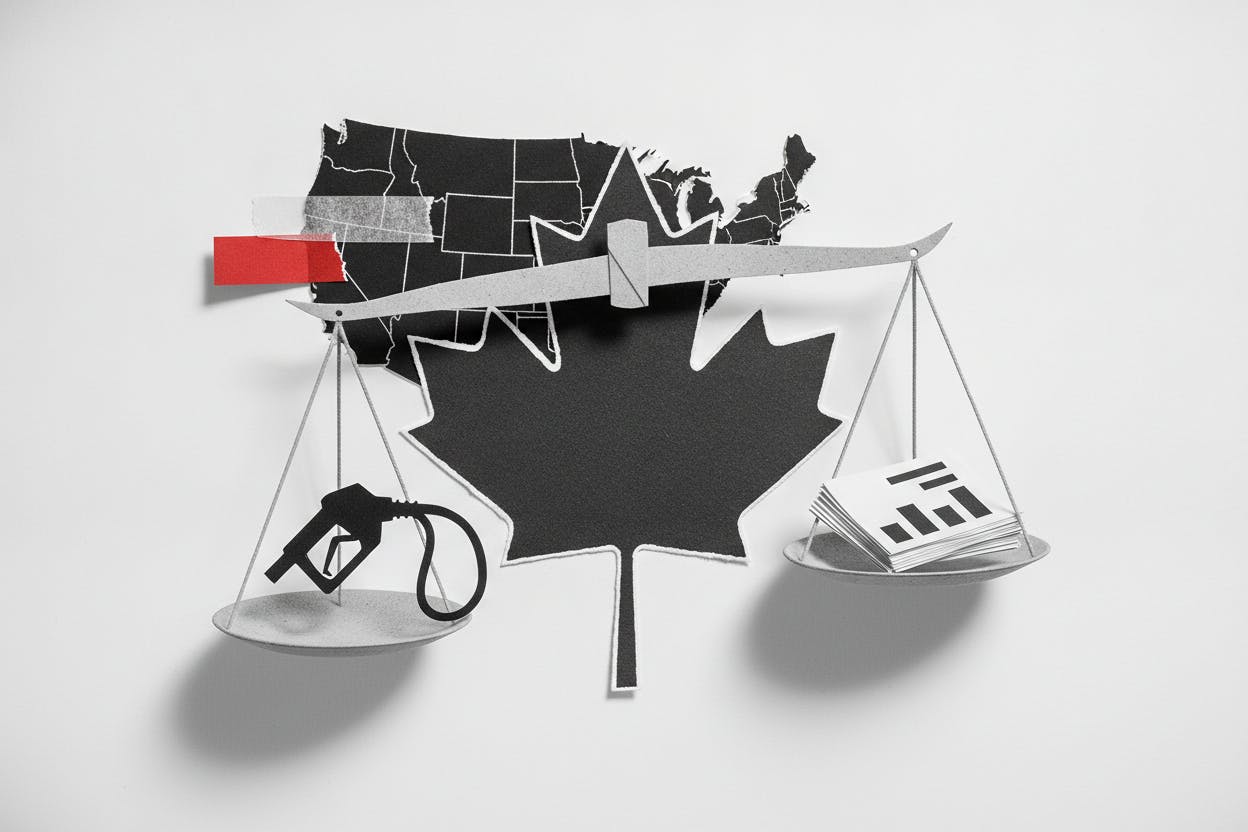
The Bank of Canada (BoC) kept its benchmark interest rate at 2.25% on June 10, but newly released minutes reveal a central bank on high alert. Policymakers are wrestling with a tricky combination: an economy that recently slipped into a technical recession, an inflation rate that has climbed back above the bank's comfort zone, and the looming threat of new US trade restrictions.
The minutes, reported by Reuters, show the BoC juggling two problems at once. Canada's economy has been soft, even contracting in the final months of the first quarter. Yet May inflation rose to 3.2%, pushing past the BoC's 1% to 3% target range for the first time in 29 months. The main culprit: higher gasoline prices.
Energy-Driven Inflation vs. Weak Growth
Governor Tiff Macklem said there is limited evidence that higher energy costs are feeding into broader price increases. Policymakers largely agreed that outside energy, inflation pressures looked contained. That is why they have kept rates at the low end of their so-called “neutral” range since October, pointing to economic slack and a labor market that can still cool without overheating.
Still, the bank stressed it does not want to shrug off a headline inflation bump if it starts to stick. Minutes said persistent inflation readings would be a reason to hike rates. Officials also flagged the upcoming review of the United States-Mexico-Canada Agreement (USMCA) as a major uncertainty. Tougher trade rules could hit growth, disrupt supply chains, and shift the inflation picture in ways that force a policy response.
This balancing act is not unique to Canada. Central banks around the world are grappling with similar trade-offs between supporting growth and controlling inflation. For example, Brazil's central bank recently cut rates while monitoring El Niño's impact on food prices, as covered in El Niño Threatens Brazil's Inflation Outlook as Central Bank Cuts Rates. Meanwhile, Australia's jobless rate dipped but hidden slack grew, as reported in Australia's Jobless Rate Dips to 4.4% But Hidden Slack Grows as Hours Fall.
What It Means for Investors
For everyday investors, the BoC's stance signals that Canada could face a tricky mix of shocks. Energy-driven inflation pushes rates higher, while trade restrictions can slow the economy. But trade stress can also weaken the Canadian dollar, making imported goods cost more and adding another layer to inflation.
Put together, that keeps the Canadian dollar prone to sharp moves on trade headlines, and it leaves short-term Government of Canada rate expectations highly sensitive to each inflation print. Investors should watch for any signs that energy price increases are spreading to other goods and services, as that would increase the likelihood of a rate hike.
The broader market context also matters. Energy and mining stocks have been weighing on some indices, as seen in Miners and Energy Weigh on ASX 200 as Jobs Data Looms for RBA Clues. A sharp drop in oil prices recently set the stage for a firmer Australian open, as noted in Oil's 4% Plunge Sets Stage for Firmer Australian Open as Energy Worries Ease. These global energy trends can influence Canada's inflation and trade dynamics.
The Bottom Line
The Bank of Canada is effectively warning that the path ahead is uncertain. With inflation above target and growth weak, the central bank is keeping its options open. For now, rates stay at 2.25%, but the next move could go either way depending on how energy prices and US trade policy evolve.
Investors should stay tuned to upcoming inflation reports and any developments in the USMCA review. The Canadian dollar and bond markets are likely to remain volatile as these factors play out.