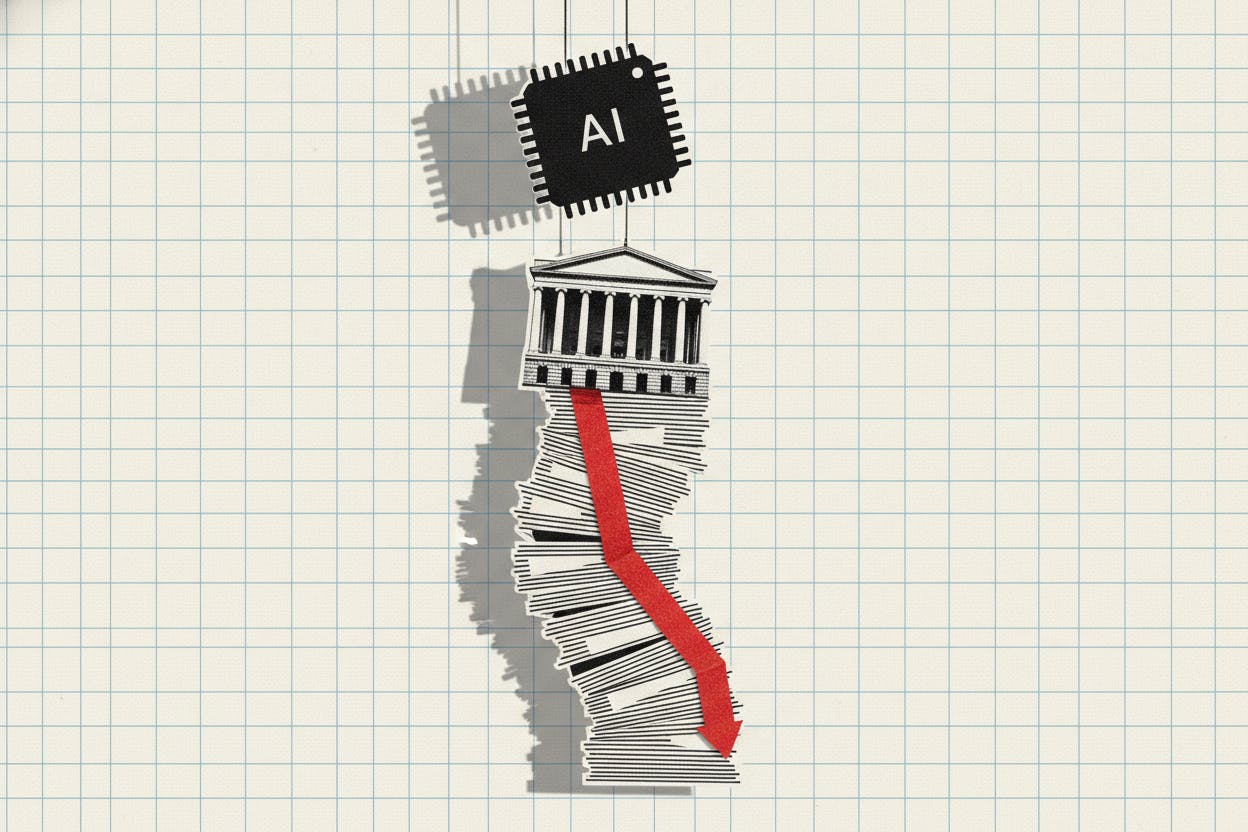
The Bank of England (BoE) added a new item to its list of financial stability worries on Tuesday: the growing crowd of investors making leveraged bets on artificial intelligence. In its half-yearly Financial Stability Report, the central bank warned that these trades could amplify any sudden shift in sentiment about AI profitability, potentially triggering a sharper stock-market drop.
The warning comes even as the BoE said UK banks remain resilient overall. But the report highlights a broader concern: the combination of high valuations, heavy public debt, fast-growing private credit, and now a concentrated AI trade that could unwind quickly.
What the BoE is worried about
The BoE's concern isn't just that some AI-linked stocks look expensive. It's the structure of the bets around them. Some investors, including hedge funds, may be borrowing money—using leverage—to hold similar positions in AI-related stocks. That means if a piece of bad news or a reassessment of AI's profit potential hits, those leveraged positions could be forced to sell quickly, accelerating a decline.
This is a classic risk in financial markets: when many investors crowd into the same trade using borrowed money, a sudden reversal can turn into a cascade. The BoE's report notes that such momentum-driven strategies could amplify any rethink on AI profitability. The worry is compounded by the fact that AI companies themselves are borrowing heavily to fund data centers and other infrastructure, adding another layer of debt to the ecosystem.
The report also flags that old risks haven't disappeared. Valuations in some markets remain elevated, public debt levels are high, and the private credit market—where companies borrow from non-bank lenders—continues to grow rapidly. These factors, combined with the new AI risk, create a backdrop where a shock could spread more quickly than in the past.
What this means for investors
For everyday investors, the BoE's warning is a reminder that the AI rally, while exciting, carries hidden risks. When a trade becomes crowded and leveraged, it can reverse violently. That doesn't mean AI stocks are doomed, but it does mean investors should be aware that the market's current enthusiasm could turn into a sharp correction if sentiment changes.
The BoE's report is not a prediction of a crash. It's a risk assessment. The central bank is essentially saying: we see a setup that could make a downturn worse if it happens. For investors, that's a signal to check their own exposure to AI-related stocks and consider whether they are comfortable with the potential for sudden swings.
It's also worth noting that the BoE sees UK banks as resilient. That means the financial system itself is not the source of the risk—the risk is in the market's behavior. This is similar to past warnings about leveraged trades in other sectors, like the 2021 Archegos collapse or the 2022 UK gilt crisis, where concentrated, leveraged positions caused outsized damage.
Broader market context
The BoE's warning comes at a time when AI-related stocks have been on a tear, driven by excitement over generative AI and its potential to transform industries. But as hedge funds have crowded into winning trades, the risk of a sudden reversal has grown. Meanwhile, data center companies are exploring IPOs to fund AI-driven expansion, adding to the borrowing picture.
The BoE's report also touches on the broader economic backdrop. With interest rates still elevated in many economies, including the UK, the cost of borrowing is high. That makes leveraged trades more vulnerable to a squeeze. If AI companies or their investors face higher costs or lower revenues, the debt they've taken on could become a problem.
For now, the BoE's message is one of caution, not alarm. But it's a clear signal that regulators are watching the AI trade closely. Investors should do the same.