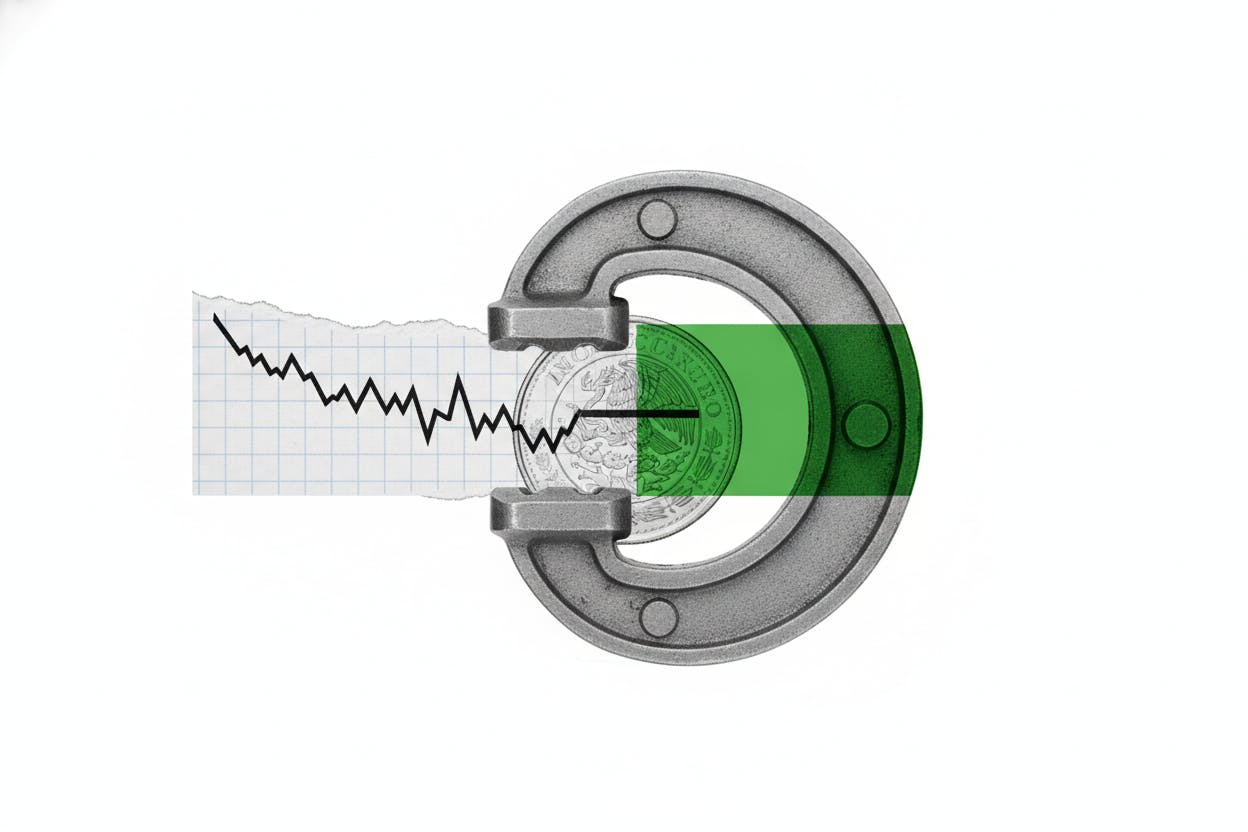
Mexico's central bank, known as Banxico, has pressed pause on its long-running rate-cutting campaign. In a unanimous decision, policymakers held the benchmark interest rate at 6.50%, ending a streak of cuts that began in March 2024. The move, widely anticipated by markets, signals that further easing is no longer on autopilot.
Why Banxico Hit Pause
The decision marks a clean end to an easing cycle that started after the policy rate peaked at 11.25% in March 2023. Over the past two years, Banxico gradually lowered rates to support economic growth while keeping a close eye on inflation. Now, with the economy showing signs of stabilization and inflation risks still tilted to the upside, the central bank has opted to hold steady.
Banxico noted that activity is stabilizing and expects the economy to expand in the second quarter of 2026 after contracting in the prior quarter. However, it also warned that inflation risks remain elevated. The bank kept its fourth-quarter headline inflation forecast at 3.5% and raised its core inflation forecast—which strips out volatile items like food and energy—to 3.5% from 3.4%. It still sees inflation returning to its 3% target only in the second quarter of 2027.
What This Means for Investors
For everyday investors, Banxico's pause has several implications. First, it suggests that Mexican interest rates will stay higher for longer than previously expected. Many analysts now believe the hold could last through the rest of 2026, meaning further cuts depend on whether inflation continues to cool as projected.
Higher short-term rates in Mexico keep the peso attractive for so-called carry trades, where investors borrow in low-yielding currencies to invest in higher-yielding ones. As long as Banxico holds rates steady and inflation gradually declines, the peso may continue to draw interest from global investors. This dynamic also supports Mexican government bond yields, particularly at the short end of the curve.
However, the pause also means borrowing costs for Mexican consumers and businesses will remain elevated, which could weigh on domestic demand. For investors holding Mexican assets, the focus will now shift to inflation data and any surprises that could alter Banxico's path.
Broader Context
Banxico's decision comes amid a global backdrop where central banks are grappling with persistent inflation. In the United States, the Federal Reserve has also maintained a cautious stance, with its preferred inflation gauge recently hitting 4.1% as expected. That has kept U.S. Treasury yields elevated and the dollar strong, which in turn influences emerging market currencies like the peso.
For investors comparing opportunities across markets, the gap between Mexican and U.S. interest rates remains wide. While the Fed has signaled it may cut rates later this year, Banxico's pause suggests the differential could persist, making Mexican assets relatively attractive on a yield basis.
At the same time, the peso's appeal is not without risks. If inflation in Mexico proves stickier than expected, Banxico may need to hold rates even longer, or potentially raise them. Conversely, if the economy weakens sharply, the central bank could be forced to resume cuts sooner than anticipated. Either scenario would affect currency and bond markets.
What to Watch Next
Investors should keep an eye on upcoming Mexican inflation reports, as well as Banxico's quarterly forecasts. Any deviation from the projected path could trigger market moves. The peso and short-term bond yields are likely to react more to inflation surprises than to day-to-day growth headlines, given the central bank's clear focus on price stability.
For now, Banxico's message is clear: the easing cycle is on hold, and further cuts will require convincing evidence that inflation is heading sustainably toward 3%. Until then, Mexico's interest rates—and the peso's carry appeal—look set to stay elevated.