European investment bank Berenberg has raised its price target on Siemens shares to €330 from €320, following the industrial giant's latest update that highlighted booming demand from data centers. The new target still implies upside from recent levels, though Siemens shares have already rallied this year on the back of artificial intelligence-driven infrastructure spending.
Two-speed business
Siemens' update painted a picture of a company being pulled in two directions. On one side, its Smart Infrastructure division—which sells electrification equipment, building automation, and grid technology—is seeing a surge in orders as tech companies race to build data centers. Berenberg pointed to triple-digit percentage growth in data center orders for that unit, a figure that underscores how deeply the AI buildout is reshaping demand for physical infrastructure.
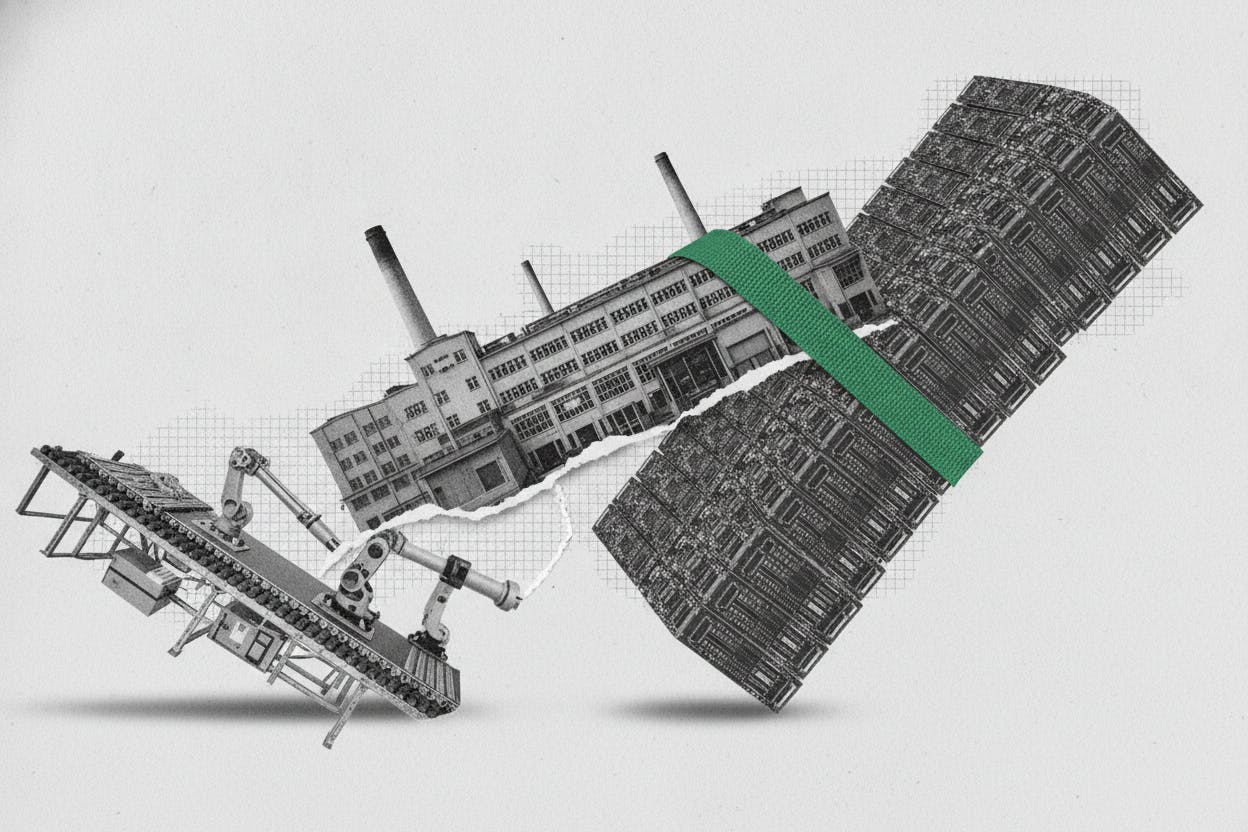
On the other side, the Digital Industries automation business remains soft. That division makes factory automation and industrial software, and it has been struggling with weak manufacturing demand, particularly in Europe and China. The contrast highlights a broader trend: while the world is investing heavily in computing power and energy infrastructure, traditional industrial production is still in a downturn.
Because of the strength in Smart Infrastructure, Siemens raised its fiscal 2026 comparable revenue growth guidance for that division to 10%–11%, up from the previous 8%–10% range. That is a meaningful upgrade and suggests management sees the data center boom continuing well into next year.
What this means for investors
For everyday investors, the key takeaway is that Siemens is increasingly a play on the data center and electrification theme, rather than a pure industrial bellwether. The company's ability to lift guidance even while its automation arm struggles shows that the AI-driven demand for power and cooling is more than offsetting weakness elsewhere.
Berenberg's price target increase is a signal that at least one major bank believes the stock still has room to run. However, price targets are just one analyst's view, and investors should consider the broader picture. Siemens trades at a premium to many traditional industrials, reflecting the market's enthusiasm for its data center exposure. That premium could shrink if the AI investment cycle slows or if the automation business deteriorates further.
It's also worth noting that Siemens is not the only company benefiting from this trend. Rivals like Schneider Electric and ABB have also seen strong demand for electrification products. Investors looking to gain exposure to the data center buildout have multiple options, each with different risk profiles.
Broader market context
The news comes amid a mixed backdrop for global markets. While tech and infrastructure names have been buoyed by AI optimism, other sectors have been more cautious. For instance, stocks dipped recently as retail earnings loomed, and energy shares rallied on oil price strength. Meanwhile, higher oil prices have pushed up yields, which can pressure gold and copper.
In Europe, the industrial sector has been a mixed bag, with some companies reporting solid order books while others warn of weakening demand. Siemens' update suggests that the companies most exposed to electrification and data centers are the ones outperforming.
Investors should also keep an eye on how central banks and inflation data evolve. If interest rates stay higher for longer, that could eventually cool the capital spending that is driving data center construction. But for now, the momentum appears strong.
Looking ahead
The next key catalyst for Siemens will be its full fiscal year results, due in November. Investors will be watching whether the Smart Infrastructure momentum continues and whether Digital Industries shows any signs of recovery. Berenberg's move also echoes its recent optimism on other industrial names, such as Rolls-Royce, where it raised the target on engine growth.
For those who own Siemens shares, the raised guidance is a positive sign, but it's important to remember that the stock already reflects much of the good news. For those considering an entry, the valuation is not cheap, and any disappointment in the automation business could weigh on the shares.
Ultimately, Siemens' story is a reminder that in today's market, the line between technology and traditional industry is blurring. Companies that can capitalize on the infrastructure needs of the digital economy are finding growth, even as other parts of the economy lag.