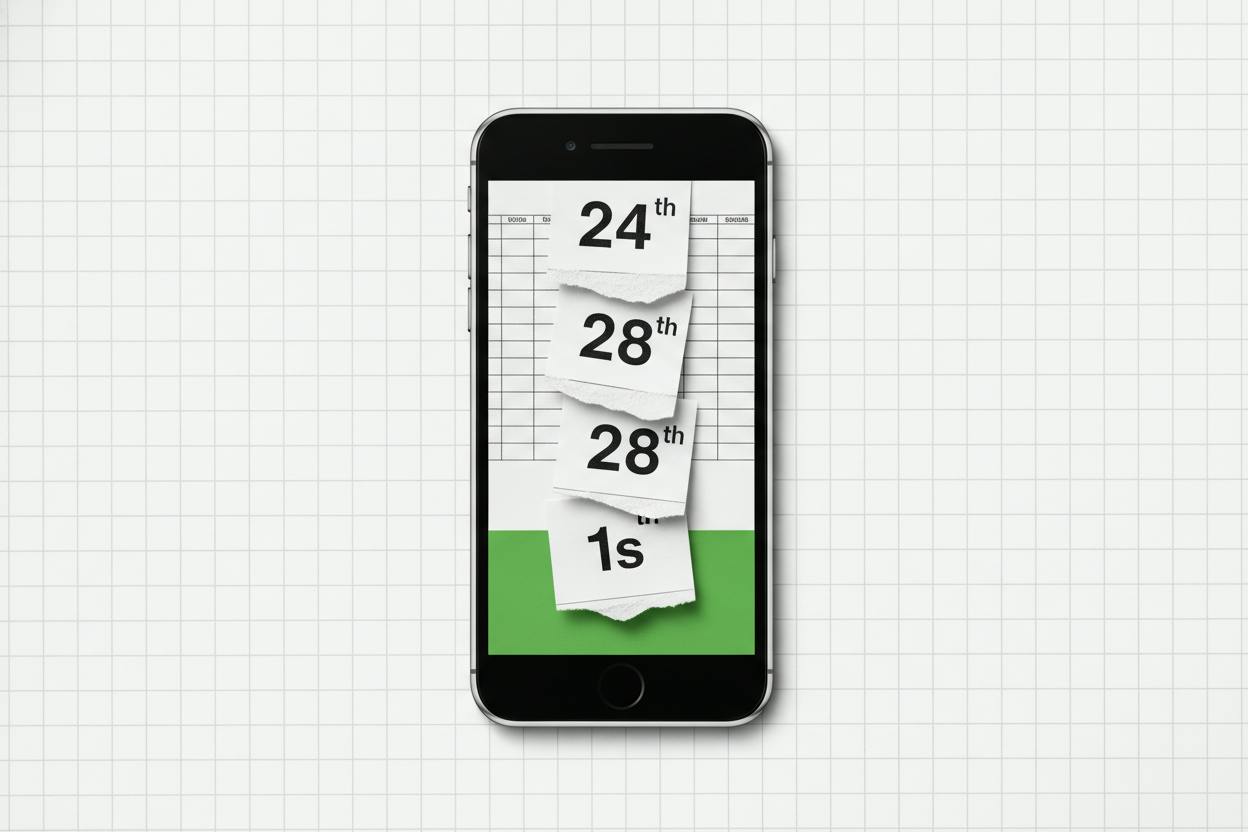
Most budgeting apps can tell you where your money went last week. Very few help on the 24th, when the account says $612, rent lands on the 1st and the car insurance renews on the 28th. You glance at that balance, feel fine, buy the shoes and spend the next week wincing. Plenty of budgets die right there.
The problem isn't a lack of intention. Debt.com's 2026 survey found that 85% of Americans keep a budget. The follow-through is the issue, because an effective budget has to match the way you actually handle money—not the way you wish you did.
Different personalities need different tools. Some people want every dollar assigned a job before the month begins. Others just want a cap on groceries and takeout. A few only want a tap on the shoulder before things go sideways. The best budgeting app for you is the one that fits your natural habits, not the one with the most features.
Three main approaches to budgeting
Budgeting apps generally fall into three camps, each with its own philosophy.
Zero-based budgeting: give every dollar a job
Zero-based budgeting is the most structured approach. You assign every dollar of income to a category—rent, groceries, savings, fun—until nothing is left unallocated. The goal is to make your income minus your outgo equal zero on paper, so every dollar has a purpose before you spend it.
This method works well for people who like control and detail. It forces you to plan ahead and can be eye-opening if you've never tracked where money goes. But it requires regular maintenance. If you skip a few days, the whole system can fall apart, and the rigidity can feel suffocating for spontaneous spenders.
Category or envelope-style limits: cap the flexible stuff
Category-based budgeting, sometimes called envelope budgeting, sets a limit on specific spending areas—groceries, dining out, entertainment—and stops you when you hit the cap. It's less about assigning every dollar and more about putting guardrails on the categories where people tend to overspend.
This approach suits people who have a rough handle on fixed bills but struggle with variable spending. It's flexible: you can adjust limits month to month, and you don't have to track every penny, just the categories you care about. The downside is that it can miss the big picture if you don't also track fixed expenses.
Alert-based budgeting: a nudge before trouble
Some people don't want a full budget at all—they just want a warning before they overspend. Alert-based apps monitor your account and send a notification when you're close to a limit or when a big bill is coming. It's a lighter touch that works for people who find detailed budgeting tedious.
This style is great for those who are generally responsible but occasionally get caught off guard by timing—like the rent-on-the-1st, insurance-on-the-28th scenario. The app acts as a safety net, not a taskmaster. The trade-off is that it doesn't help you plan ahead or save for long-term goals.
Why the right fit matters
The best budgeting app is the one you'll actually use. A 2026 survey from Debt.com found that 85% of Americans keep a budget, but the follow-through is where budgets die. If an app feels like a chore, you'll abandon it by February. If it matches your personality, it becomes a habit.
For example, a zero-based budgeter might love the granular control of an app that lets you assign every dollar. A category-capper might prefer something that simply turns red when you've spent too much on takeout. An alert-seeker might only need a push notification when the account balance dips below a threshold.
There's no one-size-fits-all answer. The right choice depends on your spending style, your tolerance for tracking, and your financial goals.
What this means for your money
Choosing a budgeting app isn't just about convenience—it's about improving your financial health. A budget that you stick with can help you avoid overdraft fees, reduce credit card debt, and build savings. Even a simple alert system can prevent the kind of overspending that leads to financial stress.
For everyday investors, budgeting is the foundation. Before you can invest consistently, you need to know where your money is going. A budgeting app that fits your personality can free up cash for savings and investing, which is why this choice matters more than the specific features.
If you're also thinking about broader financial moves, you might be interested in how Canada's debt load is viewed differently depending on the measure, or how big investors are shifting money as traditional portfolios wobble. But for most people, getting the budget right is the first step.
How to choose
Start by asking yourself a few questions. Do you want to plan every dollar, or just set limits on the fun stuff? Do you prefer a hands-on approach or a set-it-and-forget-it nudge? Are you trying to pay off debt, save for a house, or just stop living paycheck to paycheck?
Once you know your style, look for an app that matches. Many offer free trials, so you can test a few before committing. The best budgeting app for 2026 is the one that fits the way you handle money—and that you'll still be using in December.