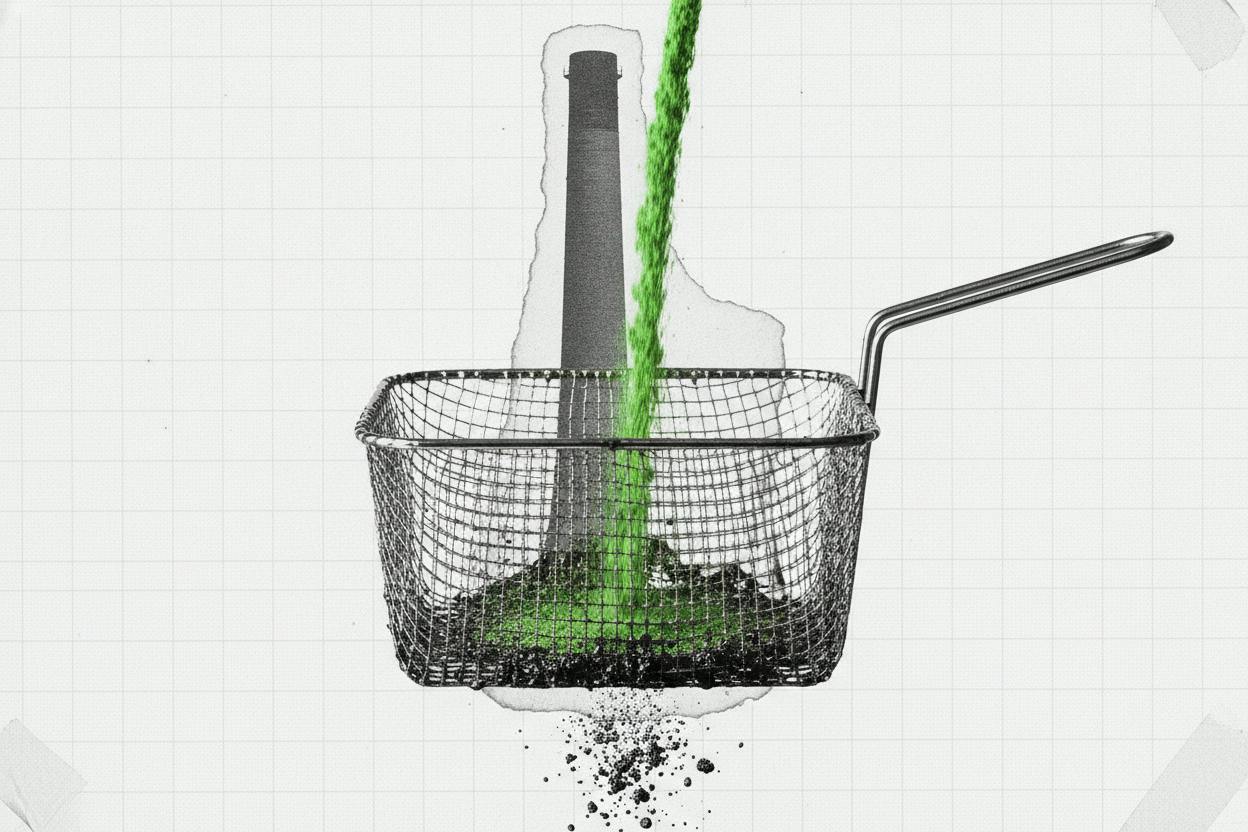
Beyond Oil, a food-technology company focused on extending the life of cooking oil, has landed its first commercial customer in the industrial frying space. An unnamed food-production facility has moved from a pilot program to using Beyond Oil's filtration powder in its day-to-day frying operations, marking a key step in the company's push beyond small-scale kitchens and into large fry lines.
The transition from trial to standard operations is significant for a young food-tech firm. Industrial frying is a high-volume, cost-sensitive business where even small improvements in oil longevity can translate into meaningful savings. But it is also a conservative market, where operators are often reluctant to change processes that already work.
What the pilot showed
According to Beyond Oil, the facility first ran an industrial-scale pilot that integrated the company's powder into its existing oil-filtration setup. The company reported that the pilot reduced free fatty acids by 93% and total polar compounds by 52% compared with untreated oil.
For those unfamiliar with frying chemistry, free fatty acids and total polar compounds are two of the main indicators kitchens and food plants use to monitor oil quality. As oil is heated and reused, these compounds build up, and when they reach certain thresholds, the oil starts to affect the taste, texture, and consistency of the food being fried. High levels can also trigger health and safety concerns, forcing operators to discard oil earlier than they might like.
By cutting those markers sharply, Beyond Oil's product aims to slow the degradation process. The pitch is straightforward: if oil stays usable longer, a facility needs to replace it less often, and it can maintain more consistent quality across batches. That consistency is especially important in industrial settings, where a single off batch can disrupt production schedules or lead to customer complaints.
Why this customer matters
Beyond Oil's management framed the adoption as evidence that the product can slide into existing workflows without requiring new equipment or extensive retraining. That is a crucial point, because operational hassle is often what keeps a successful pilot from turning into repeat purchasing.
In many industrial settings, a new product that promises savings but demands new machinery or a steep learning curve will struggle to gain traction, no matter how good the results look on paper. By working with the facility's current filtration process, Beyond Oil lowers the switching friction, which raises the odds that this first customer will keep ordering and that other plants will follow.
The broader context is also worth noting. The food industry has been under pressure to reduce waste and improve efficiency, and frying oil is a significant cost for many producers. Any product that can extend oil life without compromising quality fits neatly into that trend. At the same time, food-tech companies often face a long road from pilot to commercial scale, and this announcement is a tangible sign of progress.
What it means for investors
For shareholders, the headline number is the 93% reduction in free fatty acids, but the real test is whether this single adoption can become steady, repeat revenue. Early-adoption headlines move fast, but the harder part is turning one facility into a reliable stream of orders.
In industrial frying, the savings come from fewer oil replacements and more consistent output. The easiest wins usually happen when a new product doesn't force a facility to change its equipment or retrain its staff. Beyond Oil says this pilot did exactly that, which is a positive signal for the company's ability to convert trials into long-term contracts.
The next proof point for investors will be whether this customer ramps up its usage over time and whether similar plants start to follow. If that happens, revenue expectations become less dependent on one-off trials and more grounded in recurring demand. If not, the company could remain in the pilot-heavy phase that characterizes many early-stage food-tech businesses.
For now, the announcement is a step forward, but it is just one step. Investors will be watching for signs of repeat orders, new customer announcements, and any data on how the product performs in routine, day-to-day use rather than in a controlled pilot. The company's ability to scale beyond this first industrial customer will ultimately determine whether this is a one-time win or the beginning of a broader commercial breakthrough.