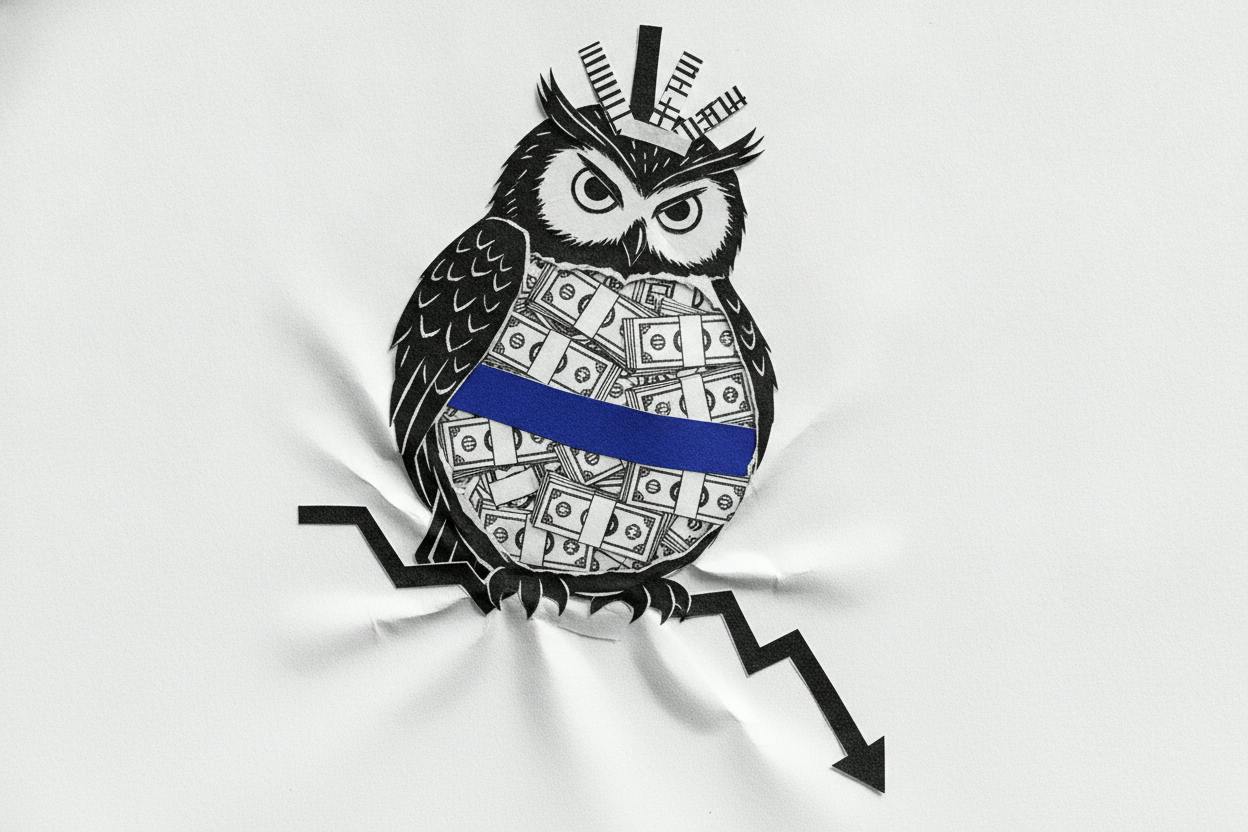
Blue Owl Capital, a major alternative asset manager, reported a record quarter for institutional fundraising, pulling in $12.6 billion in new capital commitments during the third quarter. That brought its total over the past 12 months to $48.8 billion, and helped push its assets under management (AUM) up 12% to nearly $330 billion.
The strong numbers come at a time when the company's stock has been under pressure, falling about 35% this year. Investors have grown cautious about the broader private credit market, which has expanded rapidly in recent years and now faces questions about credit quality and liquidity in a higher-interest-rate environment.
What is Blue Owl and why does it matter?
Blue Owl is an alternative asset manager, meaning it invests in assets that aren't traditional stocks or bonds. Its main businesses include direct lending to mid-sized companies and owning real estate and other income-producing assets. Unlike a mutual fund or ETF, Blue Owl's funds are typically open only to large institutional investors like pension funds, endowments, and sovereign wealth funds, as well as wealthy individuals.
The company earns fees based on the amount of money it manages, so growth in AUM is a key driver of its revenue and profit. In the third quarter, Blue Owl also reported slightly higher profit, with adjusted distributable earnings per share rising to 24 cents from 22 cents a year earlier, according to Reuters.
Distributable earnings are a measure of the cash a company can actually pay out to shareholders, making it a closely watched metric for asset managers. The increase, while modest, shows that the firm's core business remains profitable even as market sentiment has soured.
Why is the stock falling despite strong fundraising?
The disconnect between Blue Owl's operational performance and its stock price reflects broader investor anxiety about private credit. Private credit involves lending directly to companies, often those that are too small or risky to borrow from public markets. In recent years, this sector has boomed, with firms like Blue Owl, Ares, and others raising tens of billions of dollars.
But as interest rates have risen, concerns have grown about whether borrowers can handle higher debt payments. Some analysts worry that a slowdown in the economy could lead to a wave of defaults, which would hurt lenders like Blue Owl. The company's stock has been caught up in this broader sell-off, even as its own fundraising numbers remain strong.
Investors have also been paying close attention to the continued flow of money into alternative assets, which suggests that institutional demand remains robust. Ares, a rival firm, recently raised $31 billion, underscoring that the appetite for private credit and other alternatives is far from fading.
What does this mean for everyday investors?
For most individual investors, Blue Owl's results are a window into the health of the private credit market, which has become a significant part of the financial system. While you may not be able to invest directly in Blue Owl's funds, the company's performance can affect the broader market, especially if problems emerge in private lending.
The fact that Blue Owl is still raising record amounts of money suggests that large institutions remain confident in the asset class, despite the recent stock slide. That could be a reassuring sign, but it doesn't eliminate the risks. If the economy weakens and defaults rise, even well-capitalized lenders could face losses.
For investors who own Blue Owl stock, the key takeaway is that the business is growing, but the market is pricing in potential trouble ahead. The stock's decline reflects uncertainty, not necessarily a deterioration in the company's fundamentals.
What to watch next
Investors will be watching several things in the coming months. First, whether Blue Owl can maintain its fundraising pace. Second, how its portfolio performs, particularly in the direct lending business, as higher interest rates continue to pressure borrowers. Third, any signs of stress in the broader private credit market, which could affect not just Blue Owl but the entire sector.
Blue Owl's results also come amid a mixed backdrop for markets, with bond yields rising and concerns about AI spending weighing on sentiment. In that environment, alternative asset managers are often seen as a diversifier, but they are not immune to market swings.
For now, Blue Owl's record fundraising is a positive signal, but the stock's decline shows that investors are not fully convinced. The coming quarters will reveal whether the company can turn its strong inflows into sustained profit growth, and whether the private credit market can weather the current economic uncertainty.