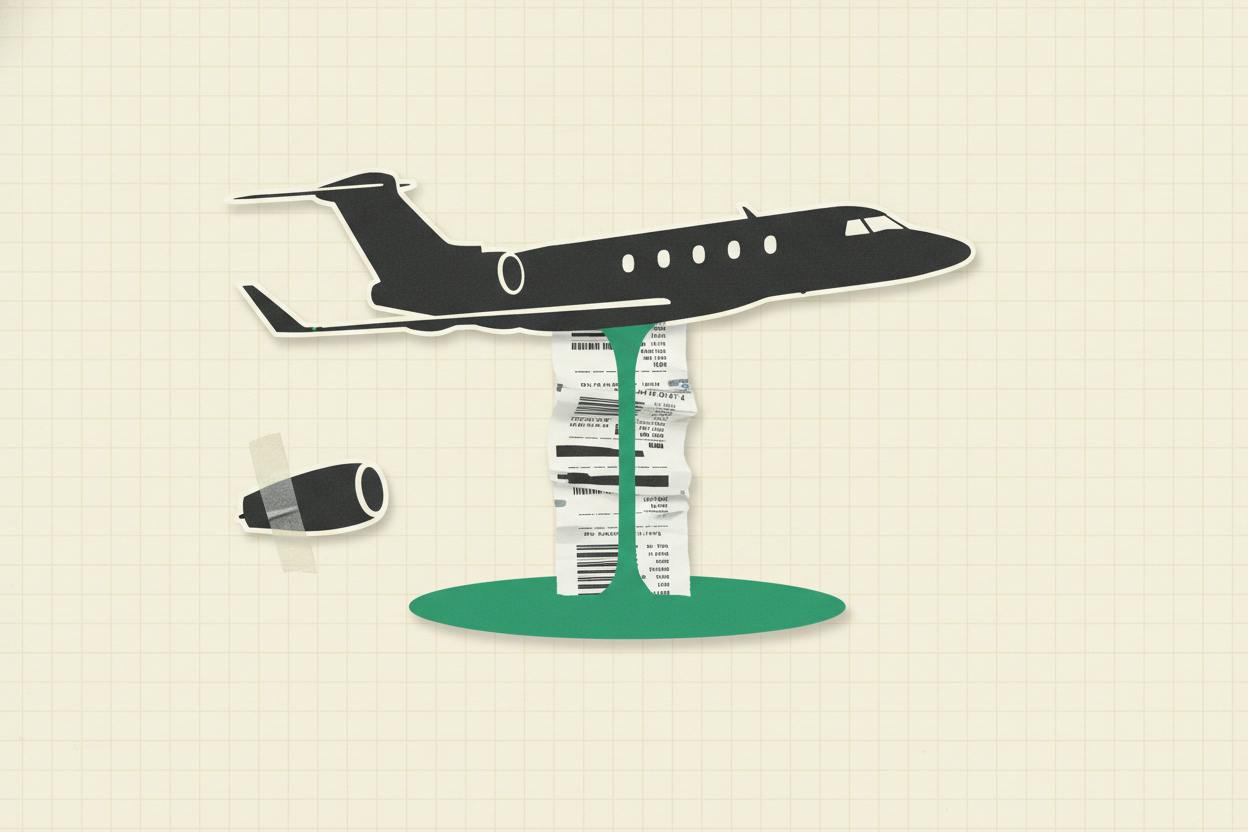
Bombardier, the Canadian business-jet manufacturer, is betting on a fast-growing services business to smooth out its cash flow. The company said quarterly revenue rose 3% to $2.4 billion, even though it delivered 33 aircraft—one fewer than a year earlier. The gap was filled by its aftermarket unit, where services revenue jumped 19% to $701 million, helping free cash flow climb 20% to $183 million.
That steadier, higher-margin work is why Bombardier raised its 2026 free-cash-flow forecast to more than $1.3 billion, while reiterating plans to deliver more than 157 aircraft this year. The update, reported by Reuters, signals a shift in how the company plans to generate cash—less dependent on the timing of new jet deliveries and more reliant on recurring service dollars.
Why services matter for a jet maker
For years, Bombardier's fortunes have swung with the delivery schedule of its large-cabin jets. Each new aircraft sale brings a big payment, but also ties up cash in parts, inventory, and customer pre-delivery payments. That makes cash flow lumpy and hard to predict.
Services work—maintenance, repairs, parts, and upgrades—is different. It's repeat business, priced more steadily, and typically requires less upfront capital. When a company like Bombardier grows its services mix, it can improve what analysts call “cash conversion”: the ability to turn reported profit into cash that can actually be used to pay down debt, fund operations, or return to shareholders.
The company also noted that demand has held up in charter and fractional ownership, where customers buy shares of a jet rather than the whole aircraft. That trend, along with defense-related “special mission” versions of its Global jets built with Sweden's Saab, provides additional support.
What it means for investors
For investors, the key takeaway is that Bombardier's 2026 cash target looks less delivery-dependent. If the company can reach more than $1.3 billion of free cash flow without needing every planned delivery to land on schedule, it can look less cyclical—and that can matter for its cost of funding.
When Bombardier refinances debt or raises new borrowing, lenders and bond investors charge less when cash flows look steadier. A stronger services business could therefore lower the company's borrowing costs over time, improving its financial flexibility.
That said, the company still faces the inherent risks of the business-jet market. Economic downturns can hit demand for new aircraft, and supply-chain issues can delay deliveries. But the growing aftermarket revenue provides a buffer that wasn't there in previous cycles.
Bombardier's update echoes a broader theme in manufacturing: companies are increasingly leaning on recurring revenue streams to smooth out the volatility of big-ticket sales. Similar dynamics are playing out in other industries, as seen with Legrand's raised forecast on AI data center demand and Nippon Steel's profit boost from US Steel.
Looking ahead
Investors will be watching whether Bombardier can sustain this services momentum. The company's ability to hit its 2026 cash target will depend on continued growth in aftermarket revenue, stable demand for new jets, and successful execution of its delivery plan.
For now, the message is clear: Bombardier is trying to build a more resilient business, one where cash flow doesn't hinge on every single delivery. That's a shift that could make the stock more attractive to investors who have long been wary of the industry's boom-and-bust cycles.
As with any forecast, there are no guarantees. But the move toward services is a step in the right direction for a company that has spent years trying to convince the market it can generate reliable cash.