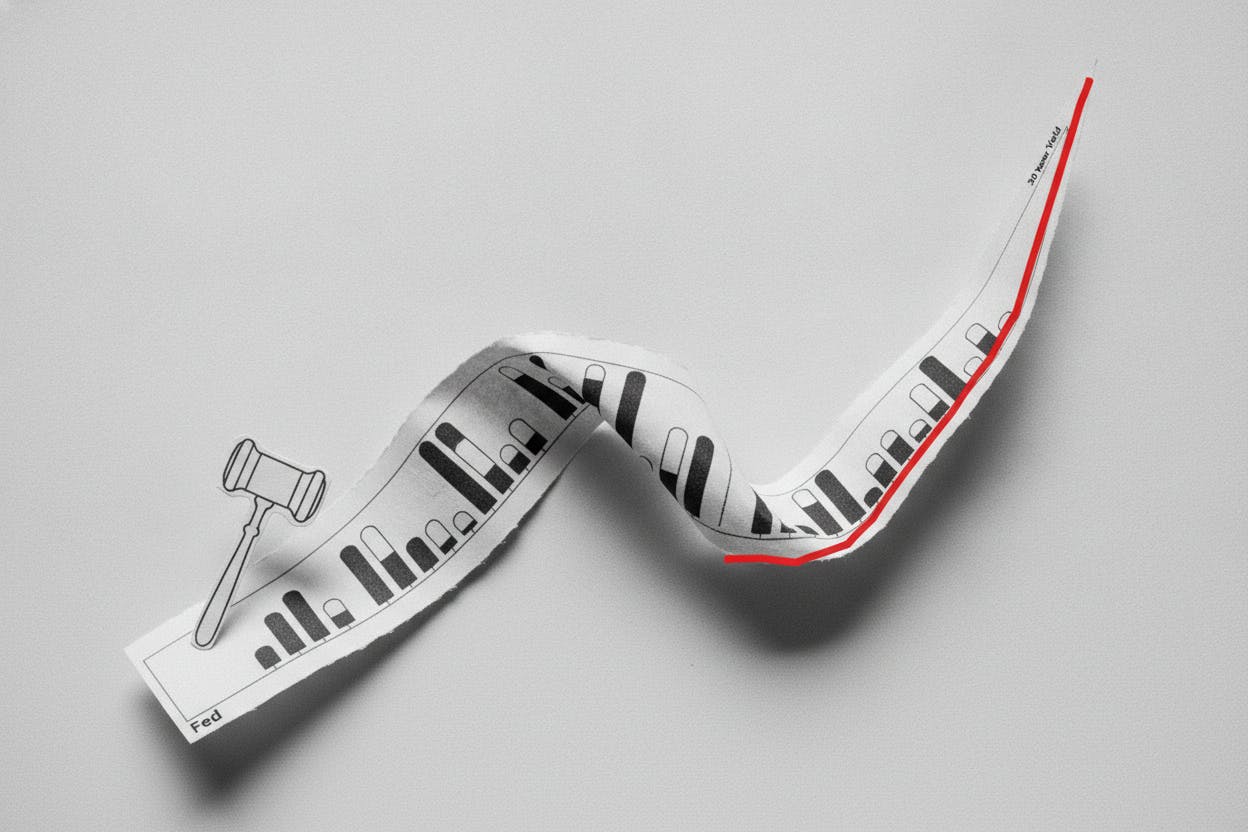
The Federal Reserve left its benchmark interest rate unchanged at its latest meeting, but the decision was far from unanimous: three officials dissented in favor of a hike. The market's reaction, however, was anything but uniform. Short-term Treasury yields slipped, while the 30-year yield climbed to its highest level in 19 years. That split is a clear sign that bond investors are questioning the central bank's next move.
What the yield curve is telling us
To understand the signal, it helps to know what drives different parts of the Treasury market. Short-term yields, like the 2-year, are closely tied to the Fed's policy rate. When those yields fall, it usually means traders expect the central bank to keep rates where they are or even cut them soon. So the drop in short-term yields suggests investors believe the Fed is close to done raising rates.
Long-term yields, like the 30-year, are a different story. They reflect not just today's policy but also expectations for inflation and economic growth over the next three decades. A rising 30-year yield points to a growing "term premium" — the extra compensation investors demand for locking up their money for so long. When that premium rises, it often signals that investors are less confident about the Fed's ability to keep inflation under control over the long haul.
In other words, the bond market is saying two things at once: "the Fed is probably done hiking for now" and "we're not so sure about the long-term inflation picture."
Why the dissent matters
The three dissents are notable. When a significant minority of Fed officials wants to move in the opposite direction of the majority, it shows internal disagreement about the path of policy. That can make future decisions less predictable. Investors will be watching the next set of economic data — especially inflation reports and jobs numbers — to see which side of the Fed wins out.
This isn't the first time bond markets have sent mixed signals. Earlier this year, Treasury yields rose despite cooler inflation data, a reminder that yields are driven by more than just the latest CPI print. And globally, central banks are facing similar tensions. The Bank of Japan, for example, held rates at 1% but signaled future hikes, while the yen weakened. These cross-currents show that the post-pandemic era of ultra-low rates is firmly behind us.
What it means for investors
For everyday investors, the key takeaway is that the bond market is not speaking with one voice. That can create volatility in both stocks and bonds. When long-term yields rise, it can pressure growth stocks, because higher discount rates reduce the present value of future earnings. It can also make borrowing more expensive for businesses and households, which can weigh on economic growth.
On the other hand, falling short-term yields could be a sign that the Fed is nearing the end of its tightening cycle. That might be good news for borrowers with variable-rate debt, like credit cards and home equity lines, which are tied to the Fed's policy rate. But it doesn't mean rates will drop sharply anytime soon.
Investors should also keep an eye on the term premium. If it keeps rising, it could signal that the market is losing faith in the Fed's inflation fight. That would be a bigger concern than a single meeting's dissent.
Looking ahead
The Fed's next moves will depend heavily on incoming data. Inflation has cooled from its peaks, but it's still above the central bank's 2% target. The labor market remains resilient, which gives the Fed room to hold rates steady. But if inflation proves sticky, the dissenting voices may grow louder.
Globally, other central banks are facing similar dilemmas. The Bank of Japan warned that inflation could overshoot its target, and Japanese bond yields rose as traders awaited a signal on rates. These international moves can spill over into U.S. markets, especially through currency and yield differentials.
For now, the bond market is telling us that the Fed's job is far from over. The path of rates will depend on whether inflation continues to ease, and whether the economy can absorb higher long-term borrowing costs without cracking. Investors should brace for more two-way moves in yields as the debate plays out.