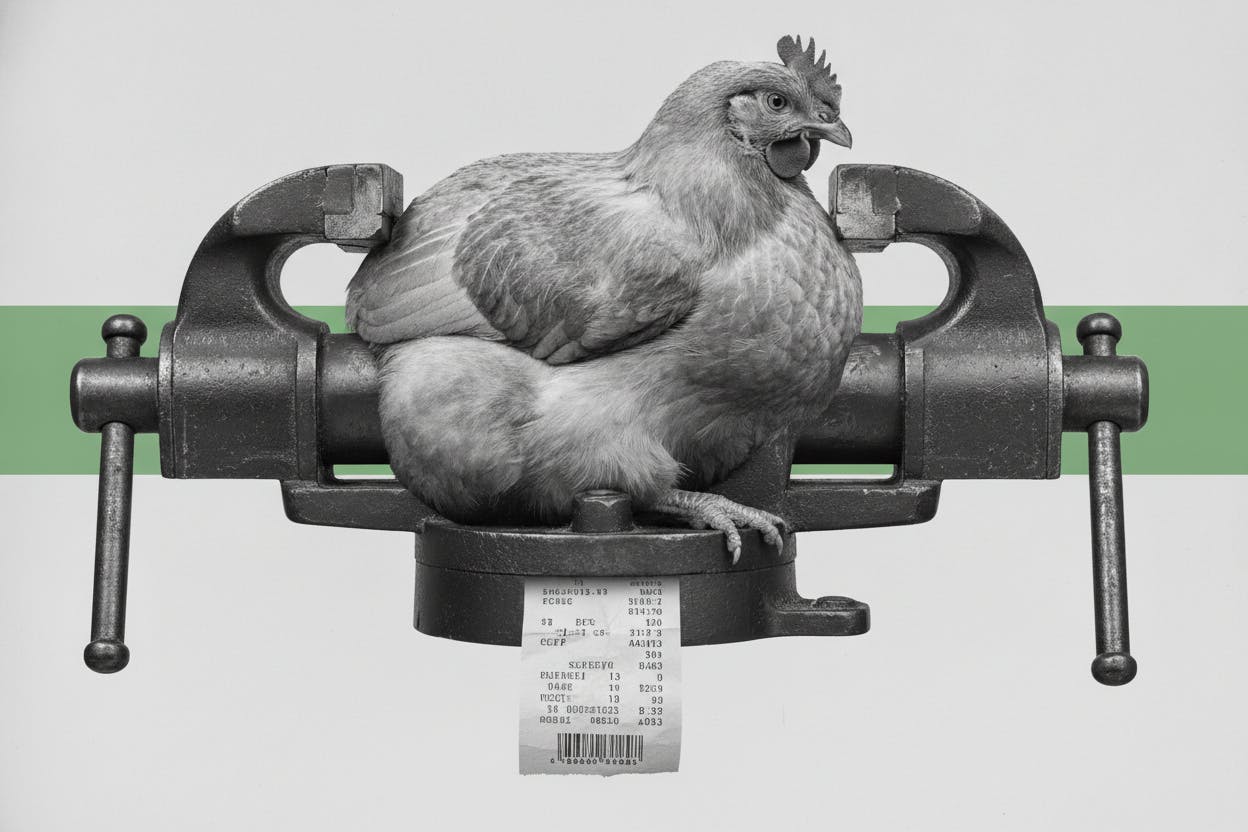
Brazil's poultry industry is bracing for another round of margin pressure. JPMorgan, a global investment bank, told clients that it expects profitability at JBS and MBRF—two of the country's largest meat processors—to slide in the second half of 2026. The culprit: a persistent glut of chicken.
The bank's analysts point to a market where supply is running ahead of demand. Farmers have been raising more birds—chick placements are up 2.3% year over year—and slaughter volumes have climbed 2.5%. At the same time, domestic consumers remain cautious, keeping demand soft. When supply outpaces demand in a commodity-like market, prices usually do the balancing act, often through discounting at supermarkets and in wholesale channels.
That's a problem for processors because many of their costs—feed, labor, energy—are sticky. If chicken prices fall faster than costs, margins get squeezed. JBS and MBRF, both major exporters as well as domestic suppliers, are particularly exposed because they operate at scale, where even small price moves can have outsized effects on the bottom line.
Why is Brazil's chicken market oversupplied?
Brazil is one of the world's largest chicken producers and exporters. The industry expanded aggressively in recent years, partly to meet strong global demand. But that expansion has now tipped into oversupply. Domestic demand, meanwhile, has been sluggish. High interest rates and inflation have left Brazilian consumers with less purchasing power, making them more price-sensitive at the meat counter.
The situation is reminiscent of other commodity cycles, where producers expand during good times only to find themselves with too much product when demand cools. For chicken, the cycle can be especially pronounced because birds are raised on a relatively short timeline, so supply can ramp up quickly.
JPMorgan's forecast suggests this imbalance will persist into the second half of 2026. That's a longer-than-expected stretch of pressure, and it could force producers to adjust—either by cutting output, shifting more product to export markets, or accepting thinner margins.
What it means for investors
For everyday investors, the key takeaway is that JBS and MBRF—both publicly traded—could see their earnings take a hit in 2026. That doesn't necessarily mean the stocks will fall, but it does mean investors should be prepared for potentially weaker results and possibly lower dividends if profits shrink.
It's also a reminder that commodity-linked businesses are cyclical. Companies that process chicken, pork, or beef are heavily influenced by the balance between supply and demand. When supply is tight, margins can be fat; when supply is abundant, they can get squeezed. This is a normal part of the industry, and long-term investors often look for companies that can manage through these cycles.
JPMorgan's note is just one forecast, and it could be wrong. But it's a signal that the current environment is challenging for Brazil's poultry processors. Investors with exposure to these names—either directly or through funds—might want to keep an eye on quarterly earnings reports and any commentary from management about pricing and supply.
For context, other companies have faced similar margin pressures recently. For example, Figma's AI push boosted sales but squeezed margins, and Axon's margins slipped as services took a bigger slice of revenue. While those are tech companies, the underlying theme—revenue growth not always translating to profit growth—is universal.
In Brazil, the broader economic backdrop adds another layer. The central bank recently cut rates to 14%, but borrowing costs remain high, which can weigh on consumer spending and, in turn, on demand for chicken. If rates stay elevated, domestic demand may stay soft, prolonging the glut.
What to watch next
Investors will be watching several things in the coming months. First, how quickly producers respond to the oversupply. If they cut back on chick placements, supply could tighten sooner than expected. Second, export demand. Brazil is a major exporter, and if global buyers step up, that could absorb some of the excess. Third, any signs of a pickup in domestic consumption, which would help rebalance the market.
JPMorgan's forecast is a caution flag, not a red alert. But it's a useful reminder that in the world of commodities, today's boom can quickly become tomorrow's bust. For those invested in JBS or MBRF, patience and a long-term view may be key.