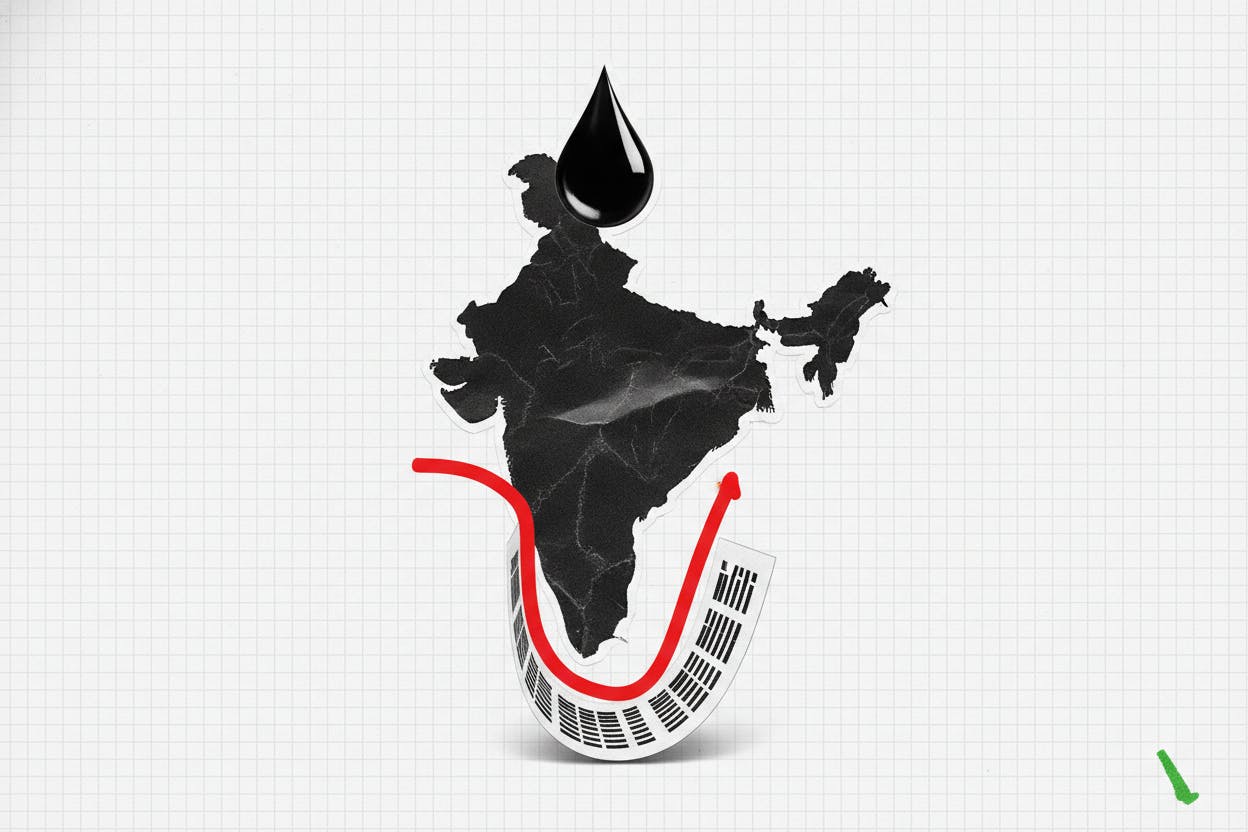
Oil prices are climbing again, and India's financial markets are feeling the heat. Brent crude, the global benchmark, touched $92 a barrel on Monday, driven by fresh shipping disruptions in the Red Sea and renewed concerns about a potential closure of the Strait of Hormuz. For India—the world's third-largest oil importer—this is a familiar but unwelcome scenario that is already showing up in bond yields and the rupee.
Why Oil Matters So Much for India
India imports roughly 85% of its crude oil needs, so every dollar increase in the price of oil adds billions to its annual import bill. When oil prices spike, the country needs more US dollars to pay for those imports, which puts downward pressure on the rupee. A weaker rupee, in turn, makes imports even more expensive, creating a feedback loop that can stoke inflation.
The latest jump in Brent follows a series of attacks on commercial vessels in the Red Sea by Houthi rebels, forcing shipping companies to take longer, costlier routes around Africa. Adding to the anxiety, any disruption near the Strait of Hormuz—a narrow waterway through which about 20% of the world's oil passes—could send prices even higher. While a full closure remains unlikely, the mere threat is enough to move markets.
India's 10-year government bond yield has already nudged into a 6.80%-6.86% range, reflecting investor concerns that the Reserve Bank of India (RBI) may need to tighten monetary conditions. Higher oil prices can push up inflation, which typically leads to higher interest rates or at least a delay in any rate cuts. That makes existing bonds less attractive, sending their prices down and yields up.
What This Means for the Rupee and Bonds
The rupee is also under pressure. When oil prices rise, the RBI often steps in to stabilize the currency by selling dollars from its reserves and absorbing rupees from the banking system. That action effectively reduces the amount of cash available in the financial system, which can push short-term borrowing costs higher. Over time, those higher short-term rates can ripple through to longer-term bond yields.
For everyday investors, the immediate impact is visible in bond fund returns. Bond prices move inversely to yields, so a rise in yields means a decline in the value of existing bond holdings. Investors holding long-duration bond funds may see their net asset values dip as yields climb. At the same time, higher yields could eventually offer better entry points for new bond buyers, but only if inflation stays under control.
The rupee's weakness also matters for anyone with exposure to international investments or foreign currency expenses. A weaker rupee makes imported goods—from electronics to machinery—more expensive, which can squeeze profit margins for companies that rely on imports. That's a particular concern for India's fast-moving consumer goods (FMCG) sector, which is already facing margin pressure from rising input costs. For more on that, see our earlier piece on India's FMCG Giants Face Margin Squeeze as Input Costs Outpace Price Hikes.
Broader Market Context
The oil shock comes at a time when Indian stocks have been trading in a narrow range, with the benchmark Nifty 50 index struggling to break out. Higher oil prices tend to weigh on sentiment because they increase costs for a wide range of industries, from transportation to manufacturing. Airlines, paint makers, and tyre companies are among the most vulnerable, as crude derivatives are key raw materials for them.
Investors are also watching how the RBI responds. The central bank has been managing the rupee through a combination of dollar sales and measures to attract foreign inflows. Earlier this year, the RBI brought in $20.72 billion through various inflow measures, which helped stabilize the currency temporarily. But if oil stays above $90, the pressure will persist. For a deeper look at how the RBI has been managing the situation, check out Rupee Gains 0.2% as Oil Rally Cools and RBI Inflow Measures Bring $20.72 Billion.
The broader market is also keeping an eye on the upcoming earnings season, which includes reports from major companies like Nestle, IndusInd Bank, and Adani Power. Strong earnings could offset some of the negative sentiment from oil, but if oil stays elevated, the outlook for corporate margins may darken. For a preview of the earnings calendar, see India's Earnings Deluge: Nestle, IndusInd, Adani Power Report on July 22.
What Investors Should Watch Next
The key variable is where oil goes from here. If the Red Sea disruptions ease and the Strait of Hormuz remains open, Brent could retreat, taking some pressure off the rupee and bonds. But if tensions escalate, $95 or even $100 a barrel is not out of the question. That would force the RBI to act more aggressively, potentially raising rates or tightening liquidity further.
For now, the 10-year bond yield is testing the upper end of its recent range. A sustained move above 6.86% could signal that investors are pricing in a more prolonged period of high oil prices. The rupee, meanwhile, is likely to remain under pressure, with the RBI defending key levels. For more on how the central bank is managing the currency, read Oil Surge Past $92.50 Pressures Indian Rupee, RBI Seen Defending 96.50 Level.
In short, the oil shock is a reminder of how vulnerable India remains to global energy prices. For investors, the takeaway is to stay diversified and keep an eye on inflation-sensitive assets. Bond investors should be prepared for more volatility, while equity investors may want to focus on sectors that are less exposed to oil price swings, such as IT services or pharmaceuticals.