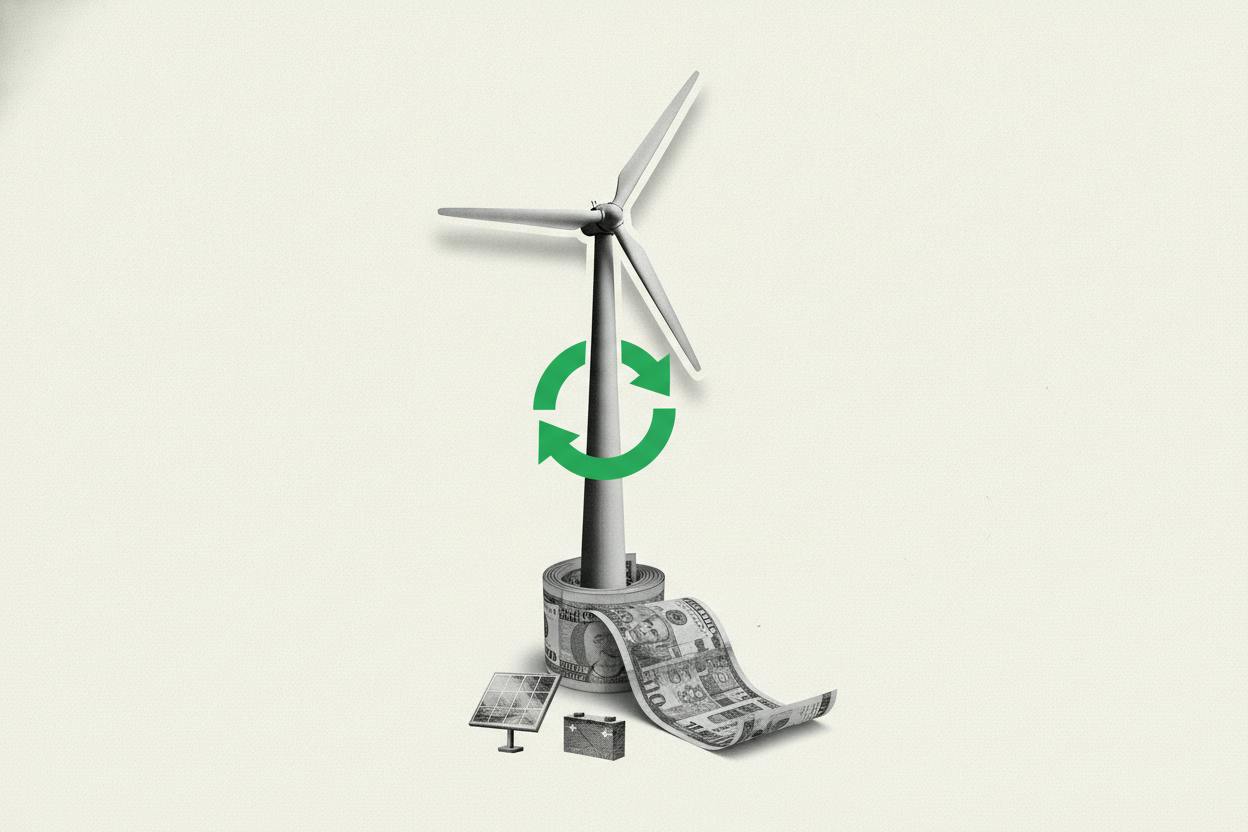
Brookfield Renewable Partners is stepping up its clean-energy ambitions. At its investor day, the company said it now plans to deploy more than $11 billion into new power projects over the next five years, up from its previous target. RBC Capital Markets highlighted the update in a note to clients on Wednesday.
The firm is building across wind, solar, battery storage, and nuclear, and it still expects those investments to earn a 12% to 15% targeted equity internal rate of return (IRR). For everyday investors, that target is a key measure of how much profit the company hopes to generate on the money it puts into new projects, after accounting for the cost of financing.
How Brookfield plans to pay for it
The big question for any company with an aggressive spending plan is where the money comes from. Brookfield's answer, according to RBC, is "capital recycling." That means selling mature, cash-generating assets—like operating wind farms or solar plants—and using the proceeds to fund new developments. This approach reduces the need to issue new equity, which can dilute existing unitholders.
RBC's analysts noted that Brookfield does not expect higher interest rates and inflation to materially slow the pace of those asset sales. That is an important point because higher rates usually make buyers demand higher yields, which can push down the prices sellers receive for infrastructure assets. If Brookfield can still sell its older projects at reasonable prices, it can keep its development pipeline funded without tapping public markets as often.
This strategy is not unique to Brookfield. Many infrastructure and renewable companies use asset sales to fund growth, especially when equity markets are volatile. The approach can be attractive to investors because it avoids the dilution that comes with issuing new shares or units. However, it also depends on a healthy market for second-hand power assets.
What it means for investors
For unitholders, the raised deployment target is a sign that Brookfield sees enough attractive opportunities to keep growing. The maintained 12%-15% IRR goal suggests the company believes it can still earn strong returns even in a higher-rate environment. If it succeeds, that could support the value of the units over time.
RBC kept its price target at $35 per unit, while the units traded around $28.16. That gap reflects the bank's view that the market may be undervaluing Brookfield's growth prospects. But it also highlights the risks: if asset-sale prices weaken or project costs rise, the company might miss its targets.
For comparison, other energy firms are also making big moves. For instance, TotalEnergies' power unit is nearing a cash-flow turning point, according to RBC, which shows how the broader sector is evolving. And in India, Inox Clean Energy has filed for a $1.2 billion IPO to cut debt, another sign of capital flowing into renewables.
Investors should also watch how Brookfield's plan interacts with interest rates. If rates stay high, buyers of infrastructure assets may demand higher yields, which could lower sale prices. Brookfield's confidence that this won't materially slow its asset sales is a bet that contracted cash flows from renewable assets remain attractive to buyers. That bet is central to the whole $11 billion plan.
Another factor to consider is the company's use of debt. While capital recycling reduces equity dilution, Brookfield may still borrow to fund some projects. Higher borrowing costs could eat into returns, but the company's 12%-15% IRR target suggests it expects to manage that.
For ordinary investors, the key takeaway is that Brookfield is doubling down on clean energy, but the success of that bet hinges on its ability to sell older assets at good prices. If that works, the company can grow without constantly asking unitholders for more money. If not, it may have to slow down or raise capital in less favorable ways.
As always, past performance is not a guarantee of future results, and investors should consider their own financial situation before making decisions.