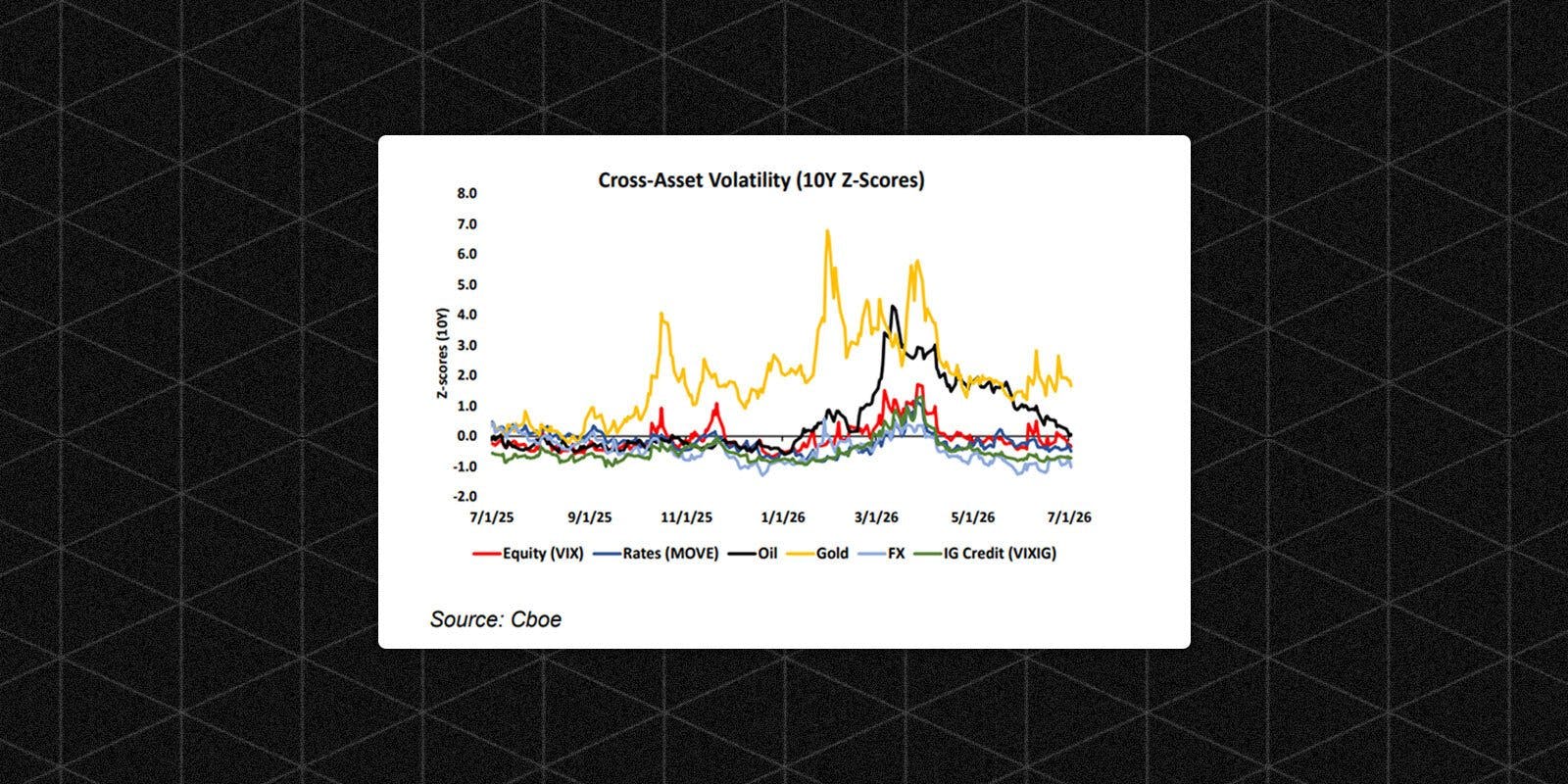
On the surface, markets looked almost sleepy last week. Implied volatility—a measure of how much movement investors expect in an asset's price—dropped across every major asset class. The Cboe Volatility Index (VIX), often called the market's 'fear gauge,' fell two points to 16.2%. Oil volatility also eased, with the Cboe Crude Oil Volatility Index (OVX) sliding to 42%, nearly five points lower than the previous week and below its pre-Iran-tension level.
But beneath that calm surface, a significant shift was underway. Investors have been rotating out of technology stocks, a move that suggests they are repositioning for a different market environment. For everyday investors, understanding this rotation is key to making sense of what's really happening—and what might come next.
What Is Implied Volatility, and Why Does It Matter?
Implied volatility is essentially the market's best guess at how much a stock, index, or commodity might swing in the near future. It's derived from the prices of options contracts. When implied volatility is high, it means traders expect big moves—up or down. When it falls, it suggests they expect calmer trading.
Last week, the drop in implied volatility was broad. The VIX, which tracks expected volatility in the S&P 500, fell to 16.2%, a level that signals relative calm. Oil volatility also declined, even as geopolitical tensions in the Middle East remained elevated. By July 6, the OVX had slipped below its level before the Iran conflict escalated, as oil prices themselves dipped.
This broad decline in volatility might seem like good news—less fear, more stability. But it can also be a sign that markets are complacent, or that investors are simply not pricing in risks that could still materialize.
The Tech Rotation: What's Happening Under the Hood
While headline volatility measures were falling, a quieter but important shift was taking place in stock portfolios. Investors have been moving money out of technology stocks and into other sectors. This rotation is significant because tech has been the dominant driver of market gains for years, and a sustained move away from it could reshape market leadership.
Why are investors rotating? Several factors may be at play. Tech stocks have had an enormous run, and valuations are stretched by many measures. Meanwhile, other parts of the economy—like energy, financials, and industrials—are showing signs of strength. If interest rates stay higher for longer, or if the economy avoids a recession, those sectors could benefit more than tech.
This rotation is not necessarily a bearish signal for the overall market. It could simply mean that investors are broadening their exposure, looking for value beyond the usual tech giants. But it does mean that the calm in volatility indexes may be masking a lot of activity beneath the surface.
What It Means for Everyday Investors
For the average investor, the key takeaway is not to be lulled by low volatility readings. A low VIX does not guarantee that stocks will keep rising, nor does it mean that risks have disappeared. In fact, periods of low volatility can sometimes precede sharp moves, as markets become complacent and then get surprised.
The rotation out of tech is a reminder that diversification matters. If you have been heavily weighted in technology stocks—either through individual names or funds like the Invesco QQQ Trust—it may be worth considering whether your portfolio is balanced across different sectors. The S&P 500 Near Record as CPI, Bank Earnings, and Iran Tensions Test Markets article highlights how broader market conditions are testing the resilience of the rally.
Investors should also keep an eye on oil markets. The drop in oil volatility and prices could be a tailwind for consumer spending and transportation stocks, but it also reflects uncertainty about global demand. The Latin American Markets Steady as Oil Pulls Back 1.3% on US-Iran Strikes piece shows how geopolitical events can still move energy markets.
What to Watch Next
In the coming weeks, investors will be watching several key data points and events. The upcoming Consumer Price Index (CPI) report will give clues about inflation and the Federal Reserve's next move. Bank earnings season is also starting, which will provide insight into corporate health and lending conditions.
If the rotation out of tech continues, it could signal a shift in market leadership that lasts for months. On the other hand, if tech stocks regain their momentum, the rotation could prove short-lived. Either way, the calm in volatility indexes is not the whole story—there is plenty of action for those who know where to look.
For a broader perspective on how global markets are reacting to these crosscurrents, the Asian Markets Diverge as China's Inflation Cools and Tech Stocks Rally article offers a useful contrast, showing that tech is still finding buyers in some regions.



