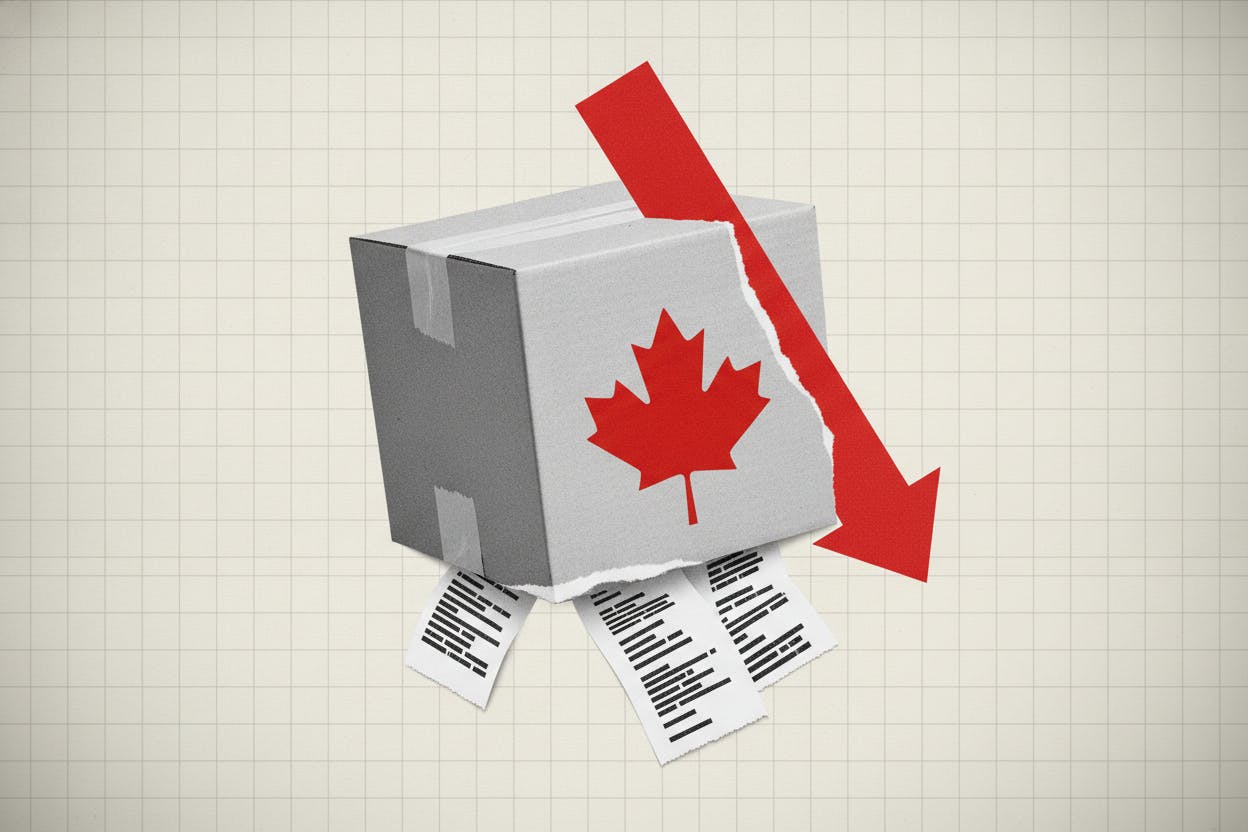
Canadian small businesses that sell to the United States are bracing for a proposed 50% tariff that could take effect next Wednesday, and a new survey suggests most expect a significant hit to their sales. The Canadian Federation of Independent Business (CFIB) released the survey on Wednesday, painting a picture of widespread concern among exporters who have long relied on tariff-free access under the Canada-United States-Mexico Agreement (CUSMA).
The survey found that about two in five Canadian exporters say their products could be caught by the proposed levy. Worry runs even wider: more than nine in ten exporters to the US said they are concerned, and 32% said they are “extremely concerned.” Among firms that believe they would be directly exposed, 77% expect their revenue to fall if the tariff takes effect.
What is CUSMA and why does it matter?
CUSMA, the trade deal that replaced NAFTA in 2020, generally allows goods that meet specific rules of origin to cross the Canada-US border without tariffs. Many small exporters have built their business models around this assumption, treating the US market as an extension of their home market. A 50% tariff would upend that logic, effectively making their products far more expensive for American buyers overnight.
The proposed tariff appears to target goods that do not meet CUSMA’s content requirements, but the CFIB survey suggests that many businesses are unsure whether their products would qualify. That uncertainty is itself a problem, because even firms that think they are compliant may face delays or costs proving it.
“The assumption that CUSMA-compliant goods stay tariff-free is being tested,” the survey implies, and the results show that many small firms are not confident they will escape the levy.
How small exporters are reacting
Small businesses are not waiting passively. The survey indicates that many are reviewing their supply chains, looking for alternative markets, or considering whether to absorb the tariff themselves or pass it on to US customers. For firms with thin margins, absorbing a 50% tariff is rarely an option, and passing it on could make them uncompetitive.
The timing is particularly difficult. Many small exporters have already been dealing with higher input costs, labour shortages, and the lingering effects of inflation. A new tariff would add another layer of pressure, potentially forcing some to cut back on hiring or investment.
The broader economic backdrop is also relevant. Canada’s labour market has shown surprising resilience, with recent jobs reports beating expectations, but tariff risks loom over that strength. As Canada’s hot jobs report lifts the loonie, the currency’s gains could be short-lived if trade tensions escalate.
What it means for investors
For everyday investors, the key takeaway is that this tariff is not just a political story—it has real implications for Canadian businesses and the broader economy. Small exporters are a significant source of employment and economic activity in Canada, and a widespread revenue decline could ripple through local communities and the national GDP.
Investors with exposure to Canadian small-cap stocks, particularly those in manufacturing, agriculture, or other export-heavy sectors, should watch how the tariff situation develops. Companies that rely heavily on US sales could see their earnings and stock prices come under pressure if the levy takes effect.
That said, not all exporters will be affected equally. Firms with diversified customer bases or products that clearly meet CUSMA rules may be better positioned. The survey’s finding that only about two in five exporters expect to be caught suggests that some businesses will escape the worst of the impact.
For those looking at the broader market, the tariff also adds to the uncertainty that has been weighing on investor sentiment. Trade disputes can lead to volatility, and this one is no exception. As small business optimism climbs in some measures, the tariff threat could reverse that trend if it materializes.
What to watch next
The immediate focus will be on whether the tariff actually takes effect next Wednesday. If it does, the next question is how quickly it is applied and whether there are exemptions or a phase-in period. Businesses and investors will also be watching for any signs of negotiation between Ottawa and Washington that could defuse the situation.
For Canadian exporters, the coming weeks will be a test of their ability to adapt. Some may accelerate plans to diversify into other markets, while others may lobby for government support. The CFIB survey suggests that many are already preparing for the worst.
In the meantime, investors should keep an eye on earnings reports from Canadian companies with significant US exposure. Any commentary about tariffs could provide clues about how widespread the impact might be. As Alcon raises its 2026 profit outlook on a shrinking tariff hit, it shows that some firms can navigate trade barriers, but small exporters may not have the same flexibility.
The bottom line: a 50% tariff would be a major shock to Canadian small businesses that export to the US, and the CFIB survey shows that most expect a meaningful drop in revenue. For investors, this is a reminder that trade policy can have direct consequences for company earnings and economic growth. Staying informed and watching how the situation evolves will be key.