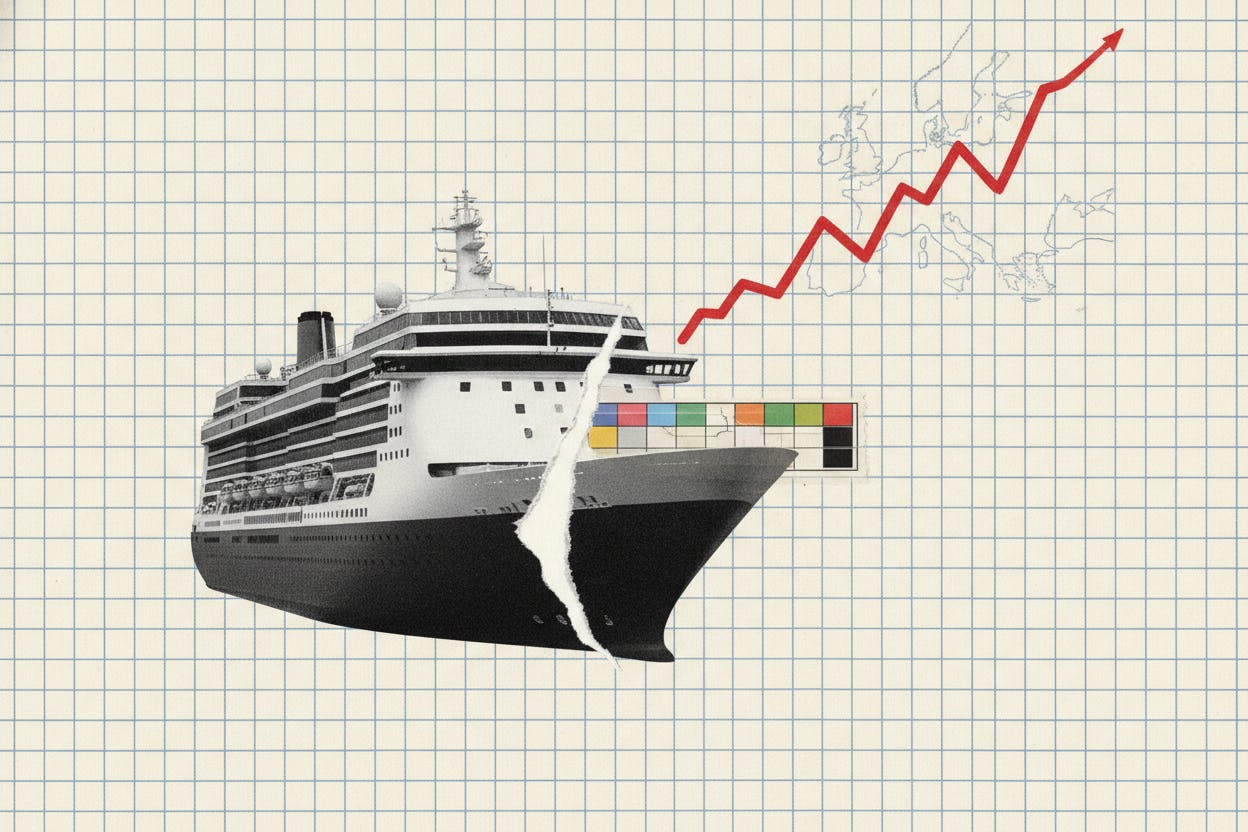
Carnival Corporation's pricing outlook for fiscal 2026 just got a bit murkier, according to a new analysis from UBS. While the cruise operator's European itineraries are largely sold out, rising airfares linked to the Middle East conflict are putting pressure on the company's ability to raise prices on the remaining cabins.
UBS, a global investment bank, estimates that Carnival has about 15% of its 2026 cabin inventory left to sell. The implied yield on that remaining supply—essentially the average price per cabin after adjusting for onboard spending and discounts—is now 600 to 700 basis points weaker than the bank had previously expected. That's a significant drop, and it's partly why Carnival trimmed the top end of its fiscal 2026 yield guidance by 100 basis points.
Why Airfares Matter for Cruise Pricing
The connection between airfares and cruise pricing might not be obvious at first, but it's straightforward: for many travelers, the total cost of a vacation includes both the cruise ticket and the flight to the port. When airfares rise—as they have due to the Middle East conflict—the overall vacation price tag climbs. That can make consumers more price-sensitive, limiting how much Carnival can charge for its cruises.
Carnival has said that bookings since March are running ahead of last year and that the geopolitical impact looks temporary. But UBS's math suggests the easy pricing gains may already be in the bag. With Europe largely booked, there's less upside from better-than-expected demand showing up later in the year.
The broader economic backdrop also matters. While US consumer spending has held up, inflation remains a concern, and any further shocks—like a sustained rise in oil prices—could ripple through travel costs. The Middle East conflict has already contributed to volatility in energy markets, and oil prices have seen sharp swings, which can affect both airline fuel costs and consumer confidence.
The Last 15% of Cabins Could Move Profits More Than Expected
For investors, the key takeaway is that the final slice of inventory can have an outsized impact on earnings. Cruise ships have high fixed costs—once a ship sails, most expenses like crew, fuel, and port fees are already locked in. That means each extra dollar of ticket revenue is usually high-margin. Conversely, if the last 15% of cabins clear at noticeably lower prices, the blended yield for the year can slip, and earnings can take a bigger hit than the headline guidance cut suggests.
UBS notes that Carnival's stock was trading around $28.95, with the firm's price target at $35. Closing that gap will likely require clearer signs that late-cycle pricing is holding up. If analysts have to trim fiscal 2026 earnings expectations, the stock could struggle to gain traction.
This dynamic is not unique to Carnival. Other companies with high fixed costs, like airlines or hotels, face similar risks when demand softens at the margin. But for cruise operators, the long booking window means that pricing decisions made now will echo through financial results for months.
What Investors Should Watch Next
Investors will be watching several factors in the coming months. First, any easing of the Middle East conflict could lower airfares and relieve pressure on cruise pricing. Second, Carnival's booking trends for 2027 will offer clues about whether the current softness is temporary or structural. Third, the company's ability to manage costs—especially fuel—will be critical.
It's also worth noting that Carnival is not alone in facing headwinds. The broader travel industry has been navigating a mixed recovery, with demand strong in some regions but uneven in others. For everyday investors, the lesson is that even a small change in pricing guidance can have a magnified effect on profits for companies with high operating leverage.
As always, it's important to look beyond the headline numbers. The last 15% of cabins may seem like a small piece of the puzzle, but in the cruise business, it can make a big difference to the bottom line.