RBC Capital Markets believes Casey's General Stores can deliver steady earnings growth over the next several years, projecting 8% to 10% annual growth in EBITDA through fiscal 2029. The investment bank's outlook, released after Casey's investor day, points to a three-part strategy: expanding the store base, maintaining fuel profitability, and using technology to improve operations.
What's Driving the Growth Plan
Casey's, a convenience store and gas station chain with over 2,500 locations across the Midwest and South, outlined a blueprint that RBC calls "achievable." The plan centers on adding roughly 400 stores over the next three years through a mix of new construction and small acquisitions. That expansion would increase the company's footprint by about 16%, giving it more locations to sell gasoline, prepared food, and other merchandise.
Alongside store growth, Casey's aims to keep same-store sales rising. That means getting more revenue from existing locations, often by selling higher-margin items like pizza, sandwiches, and other prepared foods. The company has also been investing in loyalty programs and digital ordering to encourage repeat visits.
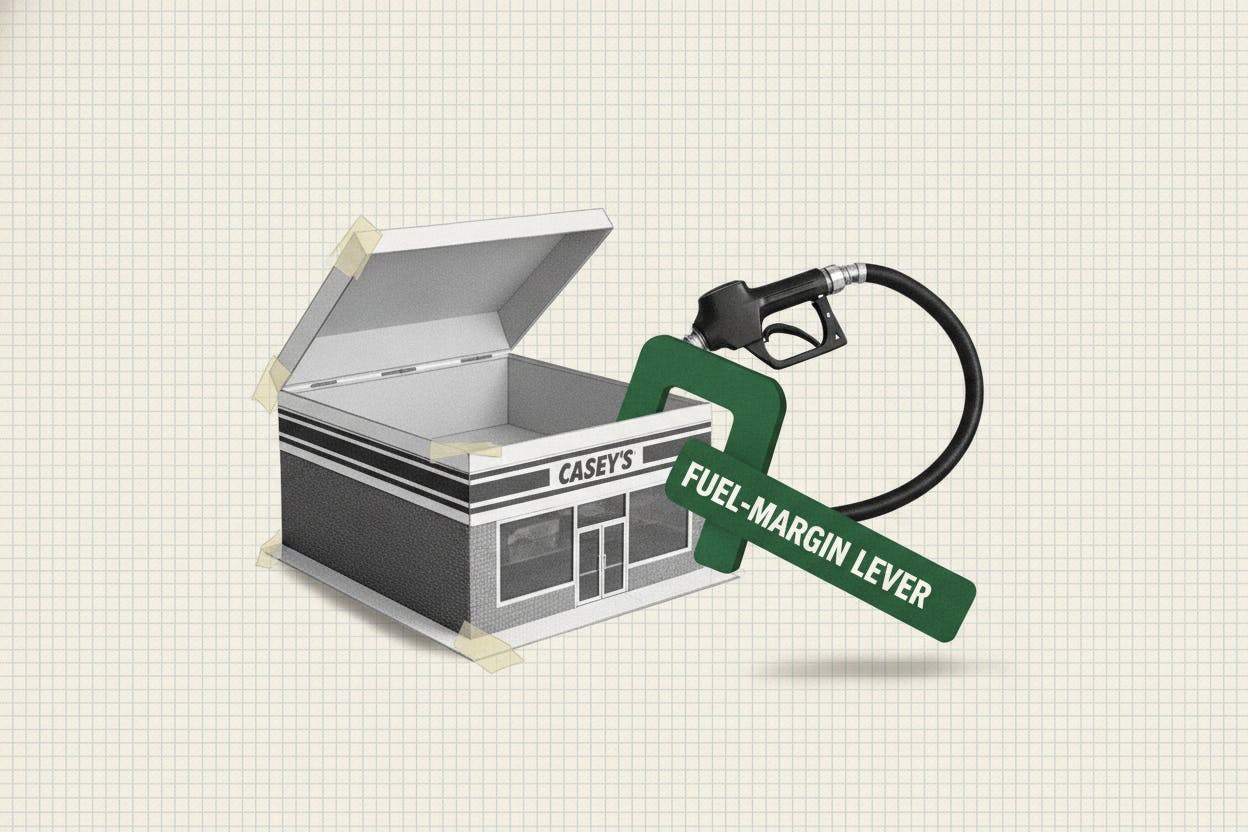
The third pillar is fuel margins. Gasoline is a low-margin, high-volume business for convenience stores. A shift of just a few cents per gallon can have an outsized impact on overall profit. RBC's model assumes fuel gross margins will stay around the mid-40-cents-per-gallon level through fiscal 2029. That's a key assumption, because fuel profits act like a built-in lever for EBITDA—the measure of earnings before interest, taxes, depreciation, and amortization that investors use to gauge operating performance.
Why Fuel Margins Matter So Much
For everyday investors, the focus on fuel margins might seem technical, but it's central to understanding Casey's growth story. Each penny per gallon of margin drops straight into gross profit. If margins hold at the mid-40-cent level, the company gets a steady stream of cash from its core fuel business. That cash can fund store expansions, dividends, or share buybacks.
But fuel margins are notoriously volatile. They can swing with crude oil prices, regional competition, and seasonal demand. If margins slip, Casey's would need to rely more heavily on other parts of the business—prepared food, loyalty programs, and cost-cutting initiatives—to hit its growth targets. RBC raised its price target on Casey's stock to $850 from $794, but kept a Sector Perform rating. That suggests the bank sees steady progress rather than a dramatic turnaround story.
RBC's analysis also highlights the role of artificial intelligence and other technology. Casey's has been testing AI-driven tools for pricing, inventory management, and supply-chain efficiency. These projects could help the company trim costs or optimize fuel pricing in real time, potentially protecting margins even if market conditions shift.
What It Means for Investors
For investors, the key question is whether Casey's can sustain those mid-40-cent fuel margins as a baseline or whether they're a temporary tailwind. If fuel profitability proves durable, the 8-10% EBITDA growth target looks more achievable. If not, the company will need to lean harder on prepared food sales and operational improvements to fill the gap.
The broader backdrop matters too. Casey's operates in a sector where consolidation is common, and its store expansion plan mirrors moves by other regional chains. The company's focus on prepared food—a higher-margin category than gasoline—has helped it stand out from traditional gas stations. Meanwhile, its loyalty program and digital efforts aim to keep customers coming back, even as competitors like H&M revamps stores in other retail segments.
RBC's price target of $850 implies modest upside from current levels, but the Sector Perform rating suggests the stock is fairly valued given the risks. Investors should watch fuel margin trends closely in coming quarters, as well as same-store sales growth and the pace of new store openings. Any deviation from the plan could shift the debate about Casey's valuation.
In the end, Casey's growth story is about execution. The company has a clear roadmap, but hitting the 8-10% EBITDA target will depend on keeping fuel margins steady, expanding stores efficiently, and using technology to squeeze more profit from each location. For now, RBC sees that path as realistic—but not without risks.