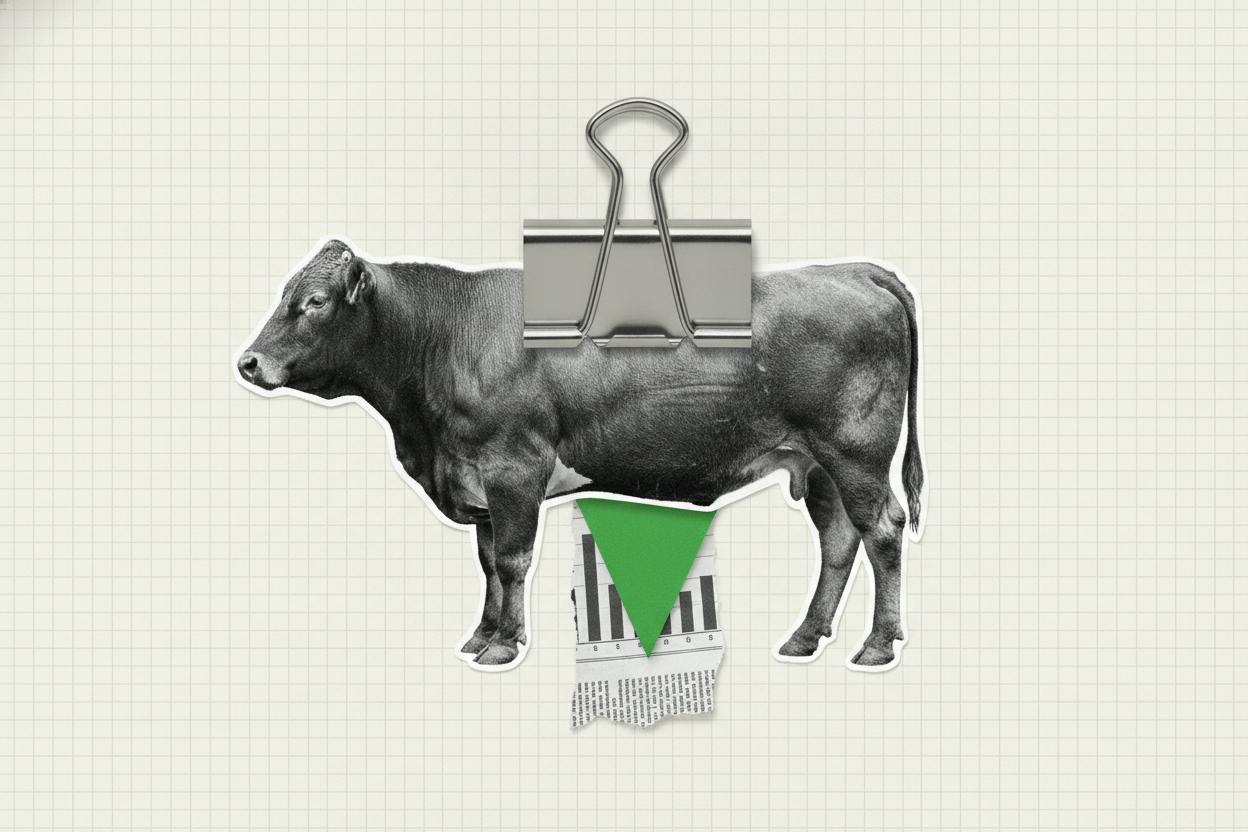
Cattle futures rose on Friday, with CME January feeder cattle reaching a two-week high as traders shifted their focus from softer wholesale beef prices to the potential for firmer cash cattle deals. The move marks a stabilization after last week's slide left both live and feeder cattle looking oversold.
What's driving the rebound?
The key catalyst is a sharp improvement in packer economics. HedgersEdge, an agriculture analytics firm, estimated beef packer profits at $34.40 per head, a dramatic turnaround from losses of roughly $20 per head just a week earlier. When packers are making money, they are typically more willing to keep plants running and compete for supply, which can lift cash bids even if beef prices are easing and cattle weights are rising.
This matters because cash cattle prices are the anchor for CME cattle futures. As contracts near delivery, futures prices tend to gravitate toward where cash cattle actually trade. So stronger cash can pull futures higher and steady sentiment, even when wholesale beef cutouts—the prices for boxed beef sold to retailers and restaurants—are softening.
Why cash matters more than cutouts right now
Last week's decline left the market oversold, and traders are now looking ahead to the next round of negotiated cash trades. The shift in packer margins is the swing factor. A move from losing $20 a head to earning $34 gives packers more room to raise bids, especially if they want to maintain processing volumes.
While boxed-beef prices have been easing, the improved packer economics suggest that demand for cattle remains intact. If packers are profitable, they have an incentive to keep slaughter lines running, which supports demand for feeder and live cattle.
Hog margins also improved, but weak demand signals—such as modest export sales—kept that market from offering a clear read-through for cattle. So the cattle market's direction hinges on whether the improved packer economics translates into higher cash prices in the coming days.
What it means for investors
For everyday investors, cattle futures are a way to gain exposure to the agricultural commodity complex, often through exchange-traded funds or futures contracts. The recent price action highlights how supply chain dynamics—not just consumer demand—drive these markets.
The near-term support for CME December live cattle and CME January feeder cattle depends less on cutout headlines and more on whether improved packer economics shows up as higher cash prices in the next round of negotiated trades. If packers are willing to pay up, futures could continue to firm. If cash deals disappoint, the market could resume its slide.
Investors should also keep an eye on broader commodity trends. For instance, gold prices have been slipping as the dollar firms, a reminder that currency moves can influence commodity markets. Similarly, natural gas futures have been under pressure as storage builds exceed seasonal norms, showing how supply and demand fundamentals vary across commodities.
For those watching the agricultural sector, the cattle market's resilience despite softer beef prices is a sign that packer margins are a critical indicator. As always, it's important to understand the risks and do your own research before making any investment decisions.