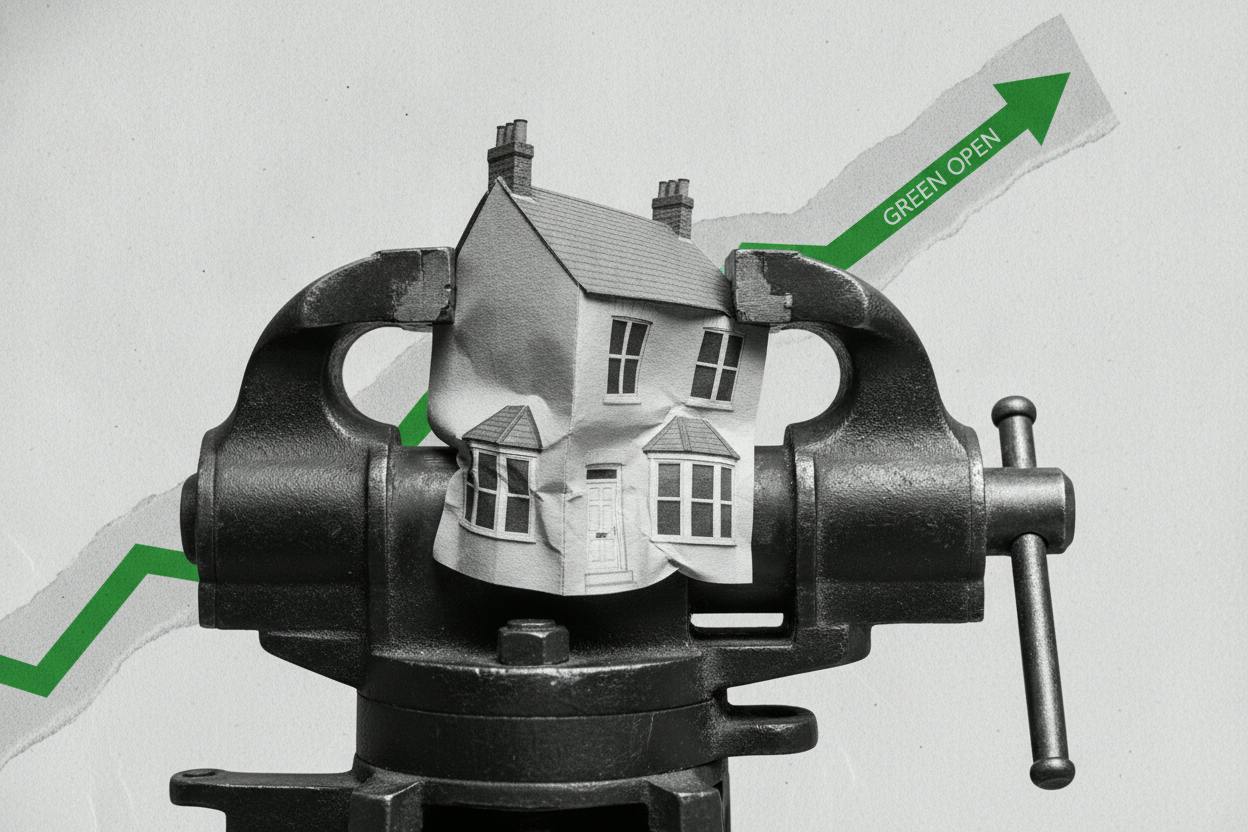
Commonwealth Bank of Australia (CBA) reported an unaudited first-quarter cash profit of about AU$2.8 billion, a result that looks steady on the surface. But buried in the update were signs that the bank's credit quality is beginning to weaken, with more home loans slipping into late payments and bad-debt charges climbing from the previous quarter.
Cash profit is a key metric for Australian banks because it strips out one-off items and volatile accounting adjustments, giving investors a clearer view of underlying earnings. CBA's figure was roughly in line with its recent quarterly pace, according to brokerage Jarden, which noted that cash net profit after tax was flat compared with the second-half 2026 quarterly average and about 8% higher than a year earlier.
What's driving the credit cracks?
The softer part of the update came from the bank's loan book. Bad and doubtful debt charges—money set aside for loans that may not be repaid—rose from the prior quarter. So did the share of home loans that are 90 or more days past due, a standard measure of serious arrears. Impaired assets, loans that are likely to default, also increased.
For everyday borrowers, 90-plus-day arrears are a red flag because they indicate that a household has fallen significantly behind on mortgage payments. While the absolute numbers remain relatively low by historical standards, the direction is what catches investors' attention. Rising arrears typically mean more borrowers are struggling, often due to higher interest rates, cost-of-living pressures, or a softer jobs market.
Australia's housing market has been under pressure as the Reserve Bank of Australia has kept interest rates elevated to combat inflation. Many homeowners who took out loans during the low-rate era are now facing much higher monthly repayments when they refinance. This is a familiar story across developed economies, and it's one reason why banks elsewhere are also seeing loan defaults climb.
Why the headline profit still looks solid
Despite the credit deterioration, CBA's profit held up well. The bank's scale, diversified income streams, and cost discipline have helped it absorb the impact of higher provisions. Its net interest margin—the difference between what it earns on loans and pays on deposits—has been relatively resilient, even as competition for deposits intensifies.
Jarden's assessment suggests that the market should not overreact to the quarterly blip. A flat quarter is not a disaster, and the year-on-year growth of 8% shows the bank is still expanding its earnings power. However, the trend in arrears and bad-debt charges is worth monitoring closely, as it could signal the beginning of a broader credit cycle downturn.
For context, Australian banks are among the most profitable in the world, and CBA is the country's largest mortgage lender. Its performance is often seen as a bellwether for the health of the Australian consumer and the broader economy. When CBA's loan book starts to show stress, it can be an early warning for other lenders and for the housing market.
What it means for investors
For everyday investors, the key takeaway is that CBA's earnings are still solid, but the risk profile is slowly shifting. Rising bad-debt charges eat into profits, and if arrears continue to climb, the bank may need to set aside even more money for loan losses in future quarters. That would weigh on earnings and potentially on the dividend, which is a major reason many investors hold bank shares.
Investors should also watch how the bank manages its expenses and whether it can maintain its net interest margin. If the economy weakens further, credit costs could rise faster than expected, putting pressure on the bank's profitability. On the other hand, if the RBA begins cutting interest rates later this year, borrowers could get relief, and arrears might stabilise or decline.
CBA's update comes at a time when other companies are reporting strong profit growth, but the banking sector faces its own unique challenges. The contrast highlights how different industries are navigating the current economic environment.
For now, the market is likely to take CBA's result in stride, focusing on the steady profit rather than the early signs of credit stress. But the rising arrears are a reminder that the full impact of higher interest rates is still working its way through the system. As other companies trim their outlooks due to cost pressures, banks may soon face similar headwinds if the economy slows further.
In the coming months, investors will be watching CBA's second-quarter update for any acceleration in arrears or bad-debt charges. A continued rise could prompt analysts to cut earnings forecasts, while a stabilisation would ease concerns. For now, the bank's profit remains resilient, but the cracks are visible—and they're worth keeping an eye on.