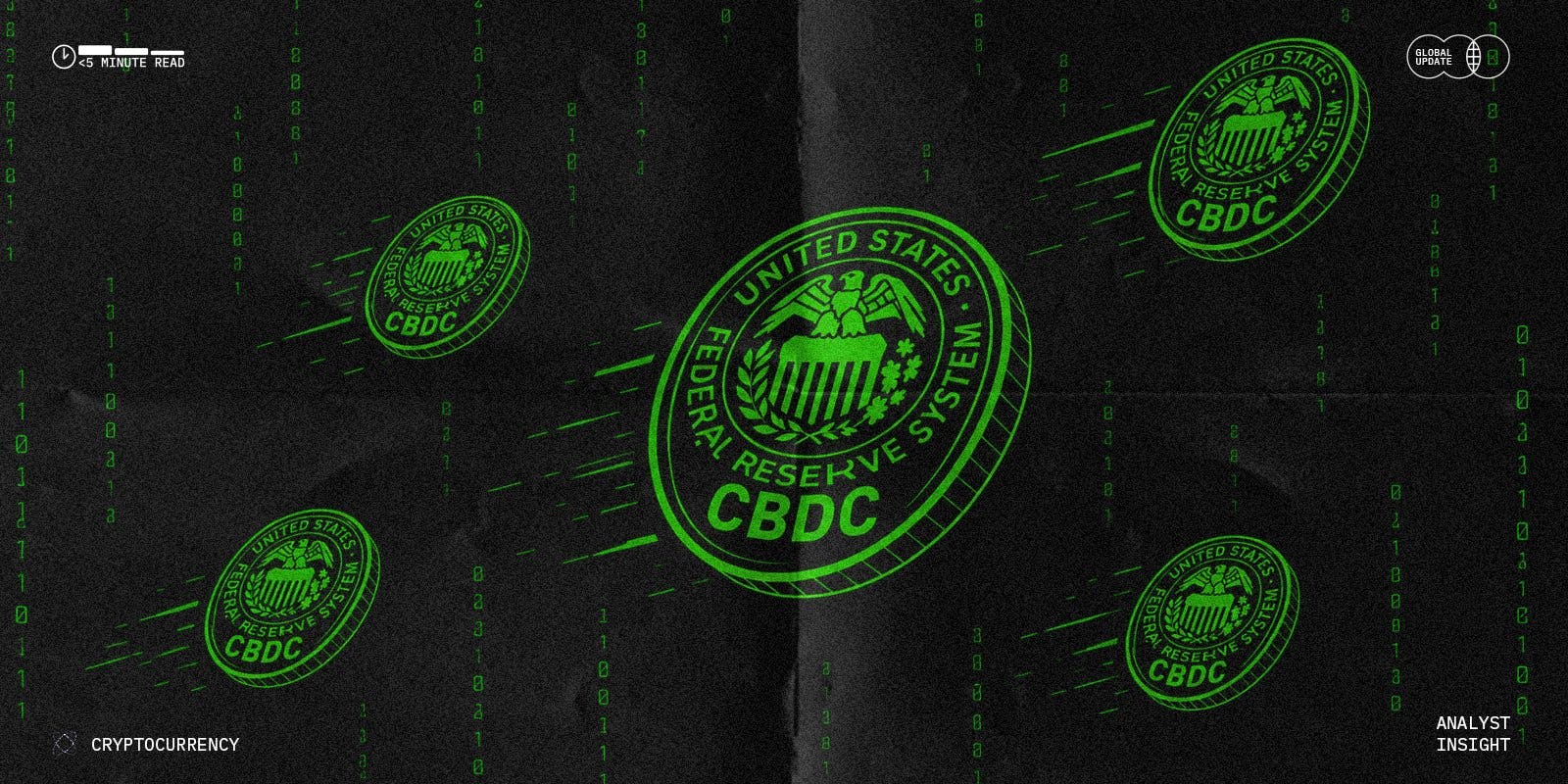
Cryptocurrencies have moved from the fringes to the mainstream of finance over the past decade, and that has not gone unnoticed by governments. Many central banks are now experimenting with digital versions of their own currencies, known as central bank digital currencies, or CBDCs. These could change how money moves, how banks operate, and even how crypto fits into the system.
What exactly is a CBDC?
A CBDC is essentially a digital form of a country's traditional currency, like a digital US dollar or a digital euro. It is issued and backed by the central bank, just like physical cash, but it exists only in electronic form. Unlike cryptocurrencies such as Bitcoin, which are decentralized and not tied to any government, a CBDC is controlled by the state.
The idea is to give people and businesses a way to hold and spend money electronically that is as safe as cash but more convenient than physical notes and coins. Many central banks are still in the research and pilot phase, testing how such a system would work in practice.
Why are governments interested?
One of the main attractions is speed and cost. Moving money between banks, especially across borders, can be slow and expensive. A CBDC could make payments nearly instant and much cheaper, which would be a boost for consumers and businesses alike.
But there is another side to the coin. A digital currency controlled by the central bank would give policymakers far more visibility into how money is spent. In theory, they could see every transaction, and they might even be able to impose restrictions, such as limiting how much cash people can hold or what they can buy. That prospect has raised privacy concerns and sparked debate about how much control governments should have over personal finances.
What it means for banks
For traditional banks, CBDCs could be a double-edged sword. On one hand, banks could help distribute the digital currency and manage accounts for customers. On the other hand, if people can hold accounts directly with the central bank, they might pull money out of commercial banks, which could reduce the funds banks have to lend. That could squeeze their profits and force them to rethink their business models.
Payment companies, such as credit card networks and digital wallet providers, could also feel the heat. If a government-backed digital currency becomes the default way to pay, some of the fees that payment firms charge might disappear or shrink. That is a risk for investors in those companies.
What it means for crypto
The relationship between CBDCs and cryptocurrencies is complicated. Some see CBDCs as a threat, because they offer many of the same benefits as crypto—fast, digital payments—but with the backing of a government. That could reduce the appeal of decentralized coins, especially for people who use them mainly for everyday transactions.
Others argue that CBDCs could actually validate the broader idea of digital money and pave the way for more innovation in the space. Some governments are also exploring how CBDCs could work alongside crypto, or even use blockchain technology to run their digital currencies.
For crypto investors, the key is to watch how these projects develop. If CBDCs become widely adopted, they could change the competitive landscape. But they are unlikely to make crypto obsolete overnight, as many crypto enthusiasts value the independence and anonymity that government-issued currencies do not offer.
What investors should watch
For everyday investors, the rise of CBDCs is a story to follow rather than a reason to panic. The rollout is likely to be gradual, with many countries still in the testing phase. But the implications are broad: banks, payment processors, and crypto exchanges could all be affected.
Investors in financial stocks should keep an eye on how banks adapt to a world where digital cash is more common. Those with exposure to payment companies might want to monitor any regulatory moves that could affect fees. And crypto investors should watch for any signs that governments are trying to compete directly with digital assets.
At the same time, CBDCs could bring real benefits, such as cheaper and faster payments, which could boost economic activity. As with any major change in the financial system, there will be winners and losers. The key is to stay informed and understand how these developments might ripple through your portfolio.
For more on how digital currencies are affecting markets, see our coverage of Nigeria's new crypto taxes and the July jobs report that could move markets.