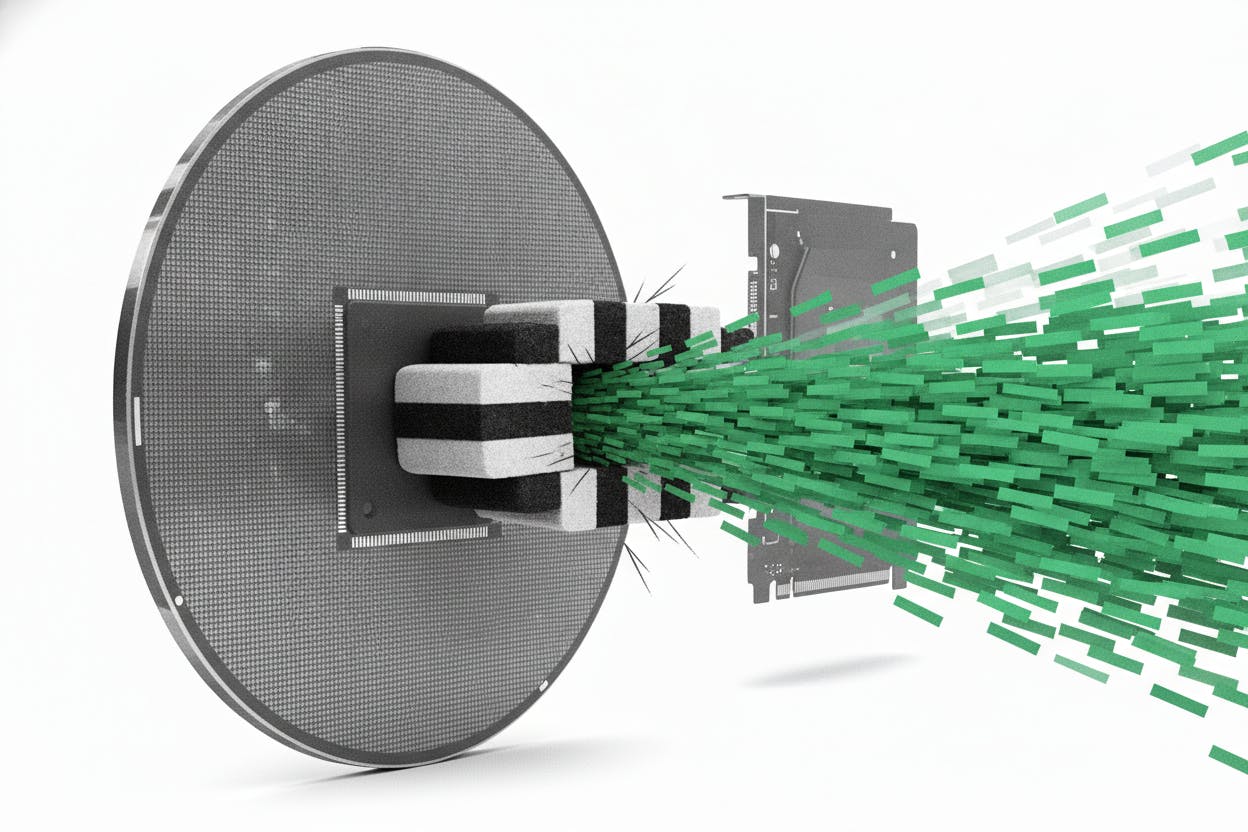
Cerebras Systems has unveiled its latest AI inference system, the CS-4, at its Supernova event, and analysts at UBS see the new hardware as a major step forward that widens the company's competitive gap with traditional graphics processing units (GPUs).
According to UBS, the CS-4 is roughly six times faster than its predecessor, the CS-3. That performance leap matters because it directly affects how much work Cerebras can process in a given amount of time—and, in turn, how profitable its cloud services can be.
What is an AI inference system?
To understand why this matters, it helps to separate the two main phases of artificial intelligence. Training is the process of teaching a model on vast amounts of data. Inference is what happens after training, when the model is actually used to answer questions, generate text, or make predictions. Inference is the part that runs every time you use a chatbot or an AI-powered search tool.
Most AI inference today runs on GPUs—chips originally designed for graphics but repurposed for the heavy math that AI requires. Cerebras takes a different approach. Instead of breaking a model into pieces and spreading it across many chips, its systems use a single, enormous chip that keeps the entire model in one place. That design can reduce the time spent moving data between chips, which is often a bottleneck in GPU systems.
The CS-4 is the latest version of that design. UBS's estimate that it is six times faster than the CS-3 suggests Cerebras is making rapid progress on the inference side of the market, which is becoming increasingly important as AI models move from research labs into everyday products.
Why speed translates into better margins
The financial angle here is about how Cerebras sells its technology. The company offers cloud services where customers pay based on the number of tokens processed—a token being a small chunk of text, roughly a word or part of a word. If a system can process more tokens per second, it can serve more requests with the same hardware.
UBS notes that the higher throughput of the CS-4 could lift margins on those token-priced cloud contracts. In plain terms: if Cerebras can do the same work in less time, its costs per request fall, and the difference between what it charges and what it spends grows. That is the kind of efficiency gain investors like to see, because it can improve profitability without requiring a price increase.
The CS-4 also puts more distance between Cerebras and GPU-based systems. While GPUs are the industry standard and benefit from massive scale and software ecosystems, Cerebras argues that its architecture is better suited for certain inference workloads, especially those that need very low latency or very high throughput.
What it means for investors
For everyday investors, the CS-4 launch is a reminder that the AI hardware race is not just about Nvidia. While Nvidia dominates the market for training chips, the inference segment is more open, and companies like Cerebras are trying to carve out a niche.
If Cerebras can deliver on the performance claims, it could attract more cloud customers and improve its unit economics. That would be a positive for the company's valuation, especially if it eventually goes public—Cerebras has filed for an IPO in the past, though the timing remains uncertain.
But there are risks. The AI hardware market is fiercely competitive, with deep-pocketed rivals and rapid technological change. A six-fold speed improvement is impressive, but it is a single data point from an analyst, not a guarantee of commercial success. Investors should also remember that Cerebras is a relatively small player compared to the giants of the chip industry.
For now, the CS-4 is a signal that Cerebras intends to stay in the fight. The company is betting that its unique architecture can win over customers who need fast, efficient inference. Whether that bet pays off will depend on real-world performance, pricing, and the ability to scale production.
As always, this is not a recommendation to buy or sell any stock. It is simply a look at what the CS-4 launch means for the competitive landscape and for the companies involved.