Cerebras Systems, a maker of specialized AI chips, has lifted its financial forecasts for 2026, pointing to a pickup in demand for AI “inference” — the process of running already-trained models in real time. The company now expects adjusted revenue of $880 million to $890 million in 2026, with gross margin in the range of 41% to 43%, according to a statement reported by Reuters.
The updated outlook reflects a broader trend: as more companies deploy AI applications, the need for computing power to actually use those models — rather than just train them — is growing. Data centers are expanding capacity to handle this workload, and Cerebras says it is well positioned to capture a slice of that spending.
What is a wafer-scale engine?
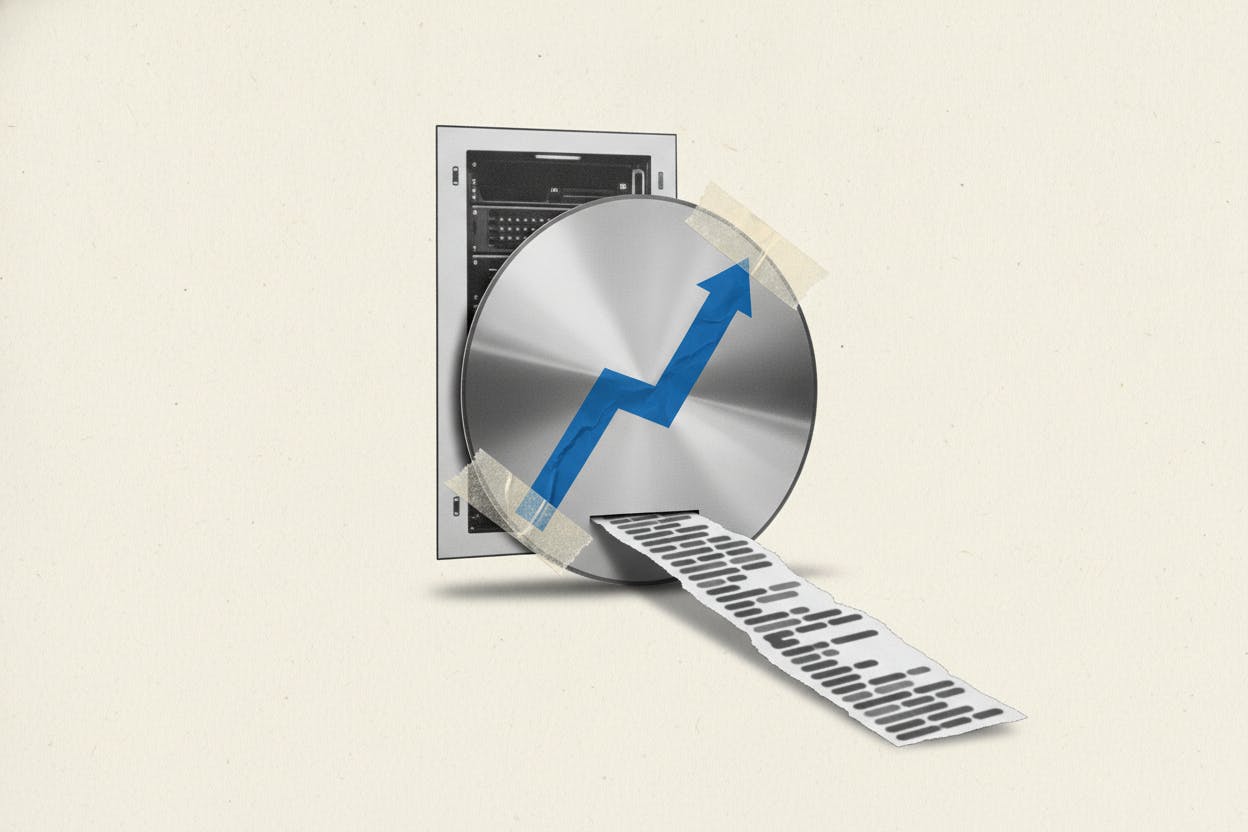
Cerebras’s core product is a wafer-scale engine — essentially one giant chip the size of a dinner plate. This is a departure from the more common approach of linking thousands of smaller chips together to handle AI tasks. The company argues that its single, large chip can perform inference faster and more efficiently, because it reduces the need to shuffle data between separate processors.
Keeping more memory on the chip itself also cuts down on data movement, which is often a bottleneck for AI workloads. Cerebras told Reuters that this design makes it less exposed to price spikes in high-bandwidth memory (HBM), a component that has become costly and supply-constrained as AI demand surges.
The company is taking on Nvidia, which dominates the AI chip market with its GPUs. While Nvidia’s chips are widely used for both training and inference, Cerebras is betting that its alternative architecture will appeal to customers looking for efficiency and lower operational costs.
Why inference demand is heating up
Inference is the stage where a trained AI model is put to work — answering questions, generating text, recognizing images, or making predictions. As AI moves from experimentation into production, inference workloads are multiplying. That shift is showing up across the industry, with other companies also reporting strong demand for AI compute.
Recent reports from CoreWeave and Super Micro have signaled that AI server demand remains robust, and Nebius beat forecasts on the back of large AI cloud deals. These signals suggest that the appetite for AI infrastructure is not fading, even as some investors worry about a potential slowdown in spending.
For Cerebras, the raised guidance is a vote of confidence that its niche approach can win business in a market increasingly focused on inference efficiency. The company’s wafer-scale design is particularly suited to workloads that require large amounts of memory and fast data access, which are common in inference tasks.
What it means for investors
For everyday investors, Cerebras’s forecast is a reminder that the AI boom is not just about training the biggest models — it’s also about running them at scale. Companies that provide the hardware and infrastructure for inference could see sustained demand as AI becomes embedded in more products and services.
However, Cerebras is still a relatively small player compared to Nvidia, and its financial projections are just that — projections. The company’s ability to hit those numbers will depend on execution, customer adoption, and competition. Investors should also note that the guidance is for 2026, which is more than a year away, so there is plenty of room for things to change.
For those watching the broader AI trade, the key takeaway is that demand for AI compute appears to be broadening beyond training. That could benefit not only chipmakers like Cerebras but also cloud providers and server makers that are expanding capacity to meet the need.
As always, it’s wise to consider how any single company’s news fits into your overall portfolio. AI is a fast-moving sector, and while the long-term trend looks strong, valuations can be volatile. Diversification and a focus on fundamentals remain important.