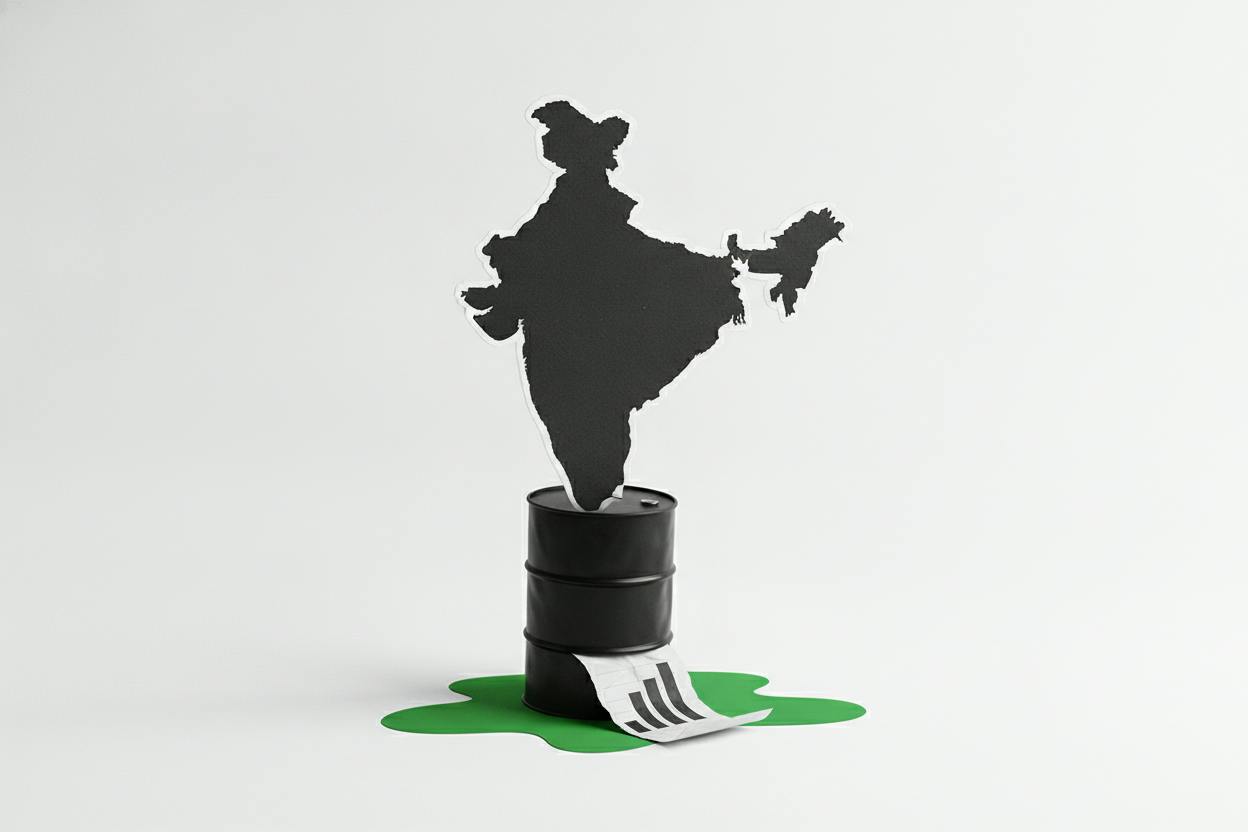
Indian stocks extended their strong run on [day], even as most Asian markets slipped. The Nifty 50 and Sensex both inched higher, helped by a dip in global oil prices and a record wave of foreign money pouring into the country's equities.
Brent crude, the international benchmark, eased to $91.7 a barrel on expectations of a supply surplus. For India, which imports most of its oil, that's a meaningful development. Cheaper crude can ripple through the economy, affecting everything from inflation to the country's trade balance.
Why oil matters for India
India is one of the world's largest oil importers, so the price it pays for crude has an outsized impact on its economy. When oil prices fall, the country's import bill shrinks. That can help narrow the current-account deficit—the gap between what India earns from abroad and what it spends—and cool inflation pressure.
Lower inflation, in turn, can reduce the need for the central bank to keep interest rates high. When those risks fade, investors often demand a smaller "extra return" for owning Indian equities, which can support stock valuations across the board.
On this day, the immediate beneficiaries were companies that either buy crude or use it heavily. Oil marketing companies, which purchase crude and sell fuel locally, tend to see their margins improve when input costs fall. Heavy fuel users like paint and tire makers also stand to gain from lower costs.
Foreign inflows hit a record
The day's gains came on top of a strong month for Indian stocks. According to Reuters, the Nifty 50 and Sensex have risen roughly 10% over the past month, helped by steady corporate earnings and a surge in foreign portfolio investment.
Foreign portfolio investors poured a record $9.53 billion into Indian stocks, a sign of strong global appetite for the country's assets. That influx has also supported the rupee, as foreign money flows into the currency to buy local shares.
Strategists at BNP Paribas India, a global bank, argue that India's relative strength reflects two forces. One is a global rotation out of crowded AI trades—investors shifting money away from tech stocks that have soared on artificial intelligence optimism. The other is a simpler macro story: when oil falls, India's outlook often looks less volatile.
What it means for investors
For everyday investors, the takeaway is that oil prices can be a powerful driver for Indian markets, not just for oil-linked stocks but for the broader economy. Lower crude can steady India's macro backdrop as much as record foreign inflows can lift prices.
When oil prices drop, it can also support rate-sensitive sectors like state-run banks, which tend to benefit when interest rate expectations ease. That's how an oil-driven tailwind can broaden a rally beyond the obvious beneficiaries.
Still, investors should keep an eye on the bigger picture. While cheaper oil is a positive, the global backdrop remains mixed. Wall Street slid recently, and the US moved again to restrict China's access to advanced AI chips, which weighed on sentiment in other Asian markets. Those factors could still spill over into India.
For now, though, the combination of falling crude and strong foreign inflows has given Indian stocks a solid foundation. As always, markets can turn quickly, so it's worth watching whether oil prices stay low and whether foreign investors keep buying.