Chevron, one of the world's largest oil and gas producers, reported quarterly earnings that beat Wall Street's expectations, but the driver wasn't higher oil prices. Instead, the company's refining and fuels business carried the load, offsetting softer results from its drilling-and-production operations.
For the quarter, Chevron posted adjusted earnings of $10.4 billion, or $5.28 per share, up 185% from the same period a year earlier. That came in above the $4.89-per-share consensus estimate tracked by LSEG. The company's upstream business—the part that pumps crude oil and natural gas out of the ground—saw profit fall 30% from the prior quarter to $5.7 billion, partly because crude prices were lower.
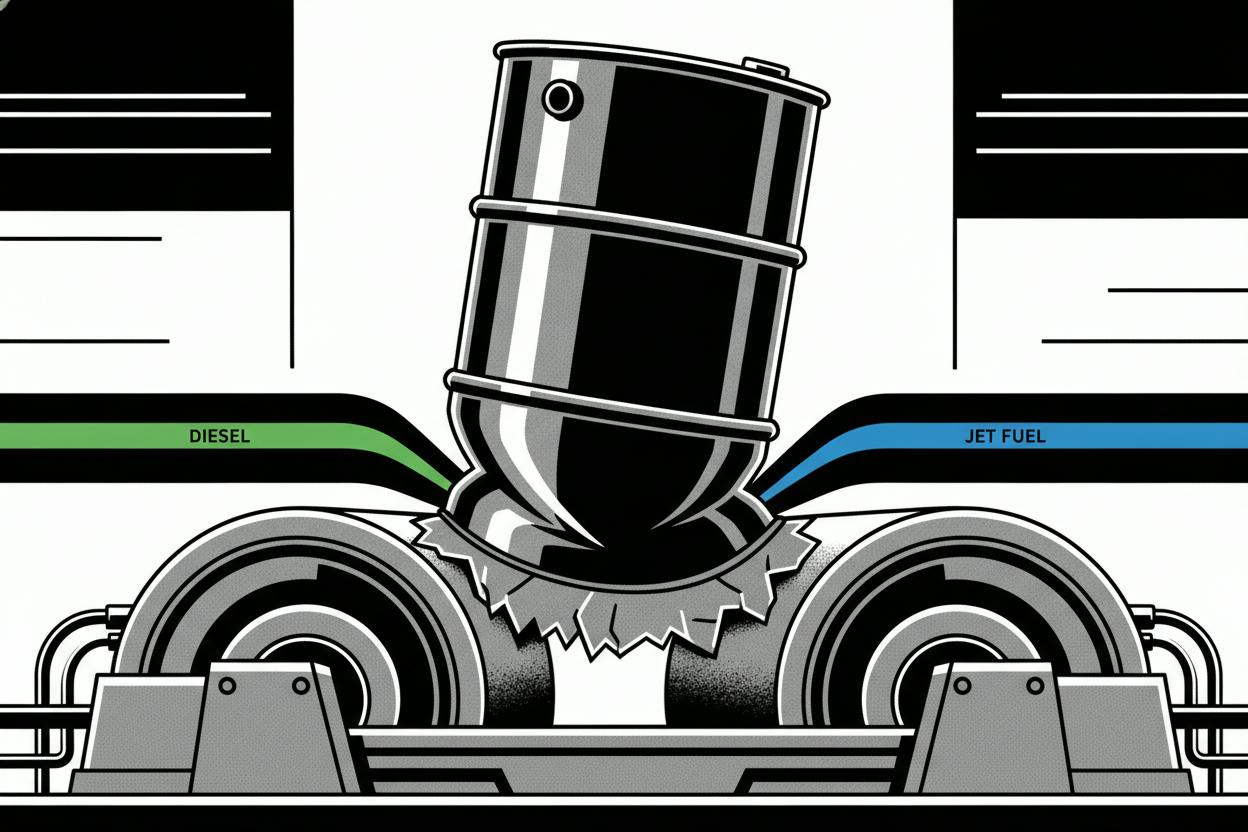
The swing factor was downstream: refining and fuels marketing earnings hit $4.9 billion as Chevron pushed record US crude throughput of over 1 million barrels per day and lifted diesel and jet fuel yields by more than 10%. That matters because refining can strengthen when geopolitics disrupt trade routes or fuel flows, pushing up the gap between crude input costs and product prices—often called the “crack spread.”
Why refining is the star this quarter
For everyday investors, it's worth understanding what refining actually does. Refineries take crude oil and turn it into usable products like gasoline, diesel, and jet fuel. The profit margin on that conversion—the crack spread—can swing wildly. When crude prices fall but product prices stay high, refiners can earn more per barrel. Conversely, when crude spikes but products lag, refining margins get squeezed.
In this quarter, Chevron's refineries ran at record levels, processing more than 1 million barrels of crude per day in the US. The company also shifted its output toward diesel and jet fuel, which are often in higher demand during periods of supply disruption. That flexibility allowed Chevron to capture the margin jump, even as its upstream profits declined.
This isn't just a one-off. The company's cash generation followed the strong downstream performance: adjusted free cash flow reached $14.2 billion, funding $3.5 billion in dividends and $2.5 billion in share repurchases. Net debt also fell sharply, to $20.7 billion from $34.5 billion at the end of 2025, giving Chevron more financial headroom.
What this means for investors
For investors, this quarter is a reminder that in energy, the bottleneck isn't always crude supply—it's the ability to turn crude into the products people suddenly need most. When conflicts or sanctions scramble shipping and regional balances, middle distillates like diesel and jet fuel can tighten faster than crude, and refineries that can run hard can capture the margin jump.
Chevron's record run-rate and higher distillate yields show it can shift its product mix toward those higher-value fuels in shock periods. Over time, that flexibility can make its cash flows look less like a straight bet on headline oil prices and more like “refining optionality” when markets get disrupted.
Chevron also noted that the quarter included one month of Venezuela output after a shift to equity accounting, and that those barrels remain free-cash-flow positive with total costs under $20 per barrel. That's a modest but notable addition to the company's production profile.
For investors, the key takeaway is that Chevron's earnings are increasingly diversified. While upstream profits still matter, the refining side can provide a cushion when oil prices are weak—and a boost when fuel markets tighten. That's a useful reminder for anyone considering energy stocks: the sector isn't just about the price of oil; it's about the entire value chain.
Looking ahead, investors will likely watch whether refining margins stay elevated, how crude prices move, and whether Chevron can maintain its record throughput. The company's ability to generate strong cash flow and return it to shareholders through dividends and buybacks remains a central part of its appeal.
For more on how other energy majors are faring, see how Shell and Cheniere kept energy stocks steady despite oil slipping. And for a broader view of how earnings are moving markets, check how European stocks hit a two-month high on the back of strong earnings.