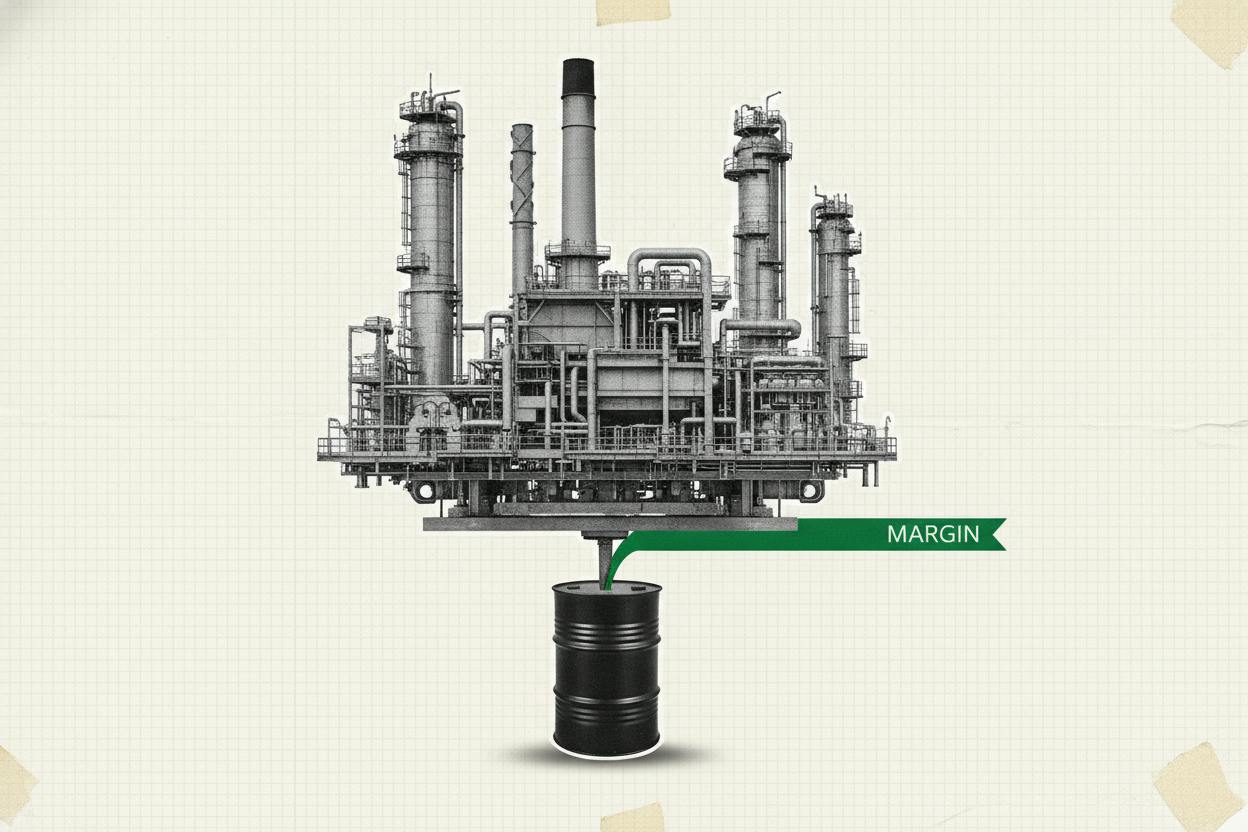
ExxonMobil delivered a third-quarter earnings beat that surprised analysts, but the engine behind the outperformance wasn't higher crude production—it was the company's refining business. The oil giant reported adjusted earnings per share of $4.23, ahead of the $4.08 Wall Street consensus, with adjusted profit of $17.5 billion versus the $16.6 billion expected by analysts polled by LSEG.
The standout came from Exxon's downstream segment, which covers refining crude oil into products like gasoline, diesel, and jet fuel, as well as selling those fuels. Downstream earnings jumped 120% from the previous quarter to $9 billion, a windfall driven by tightening global diesel markets. That tightening lifted the so-called crack spread—the difference between what refiners pay for crude and what they can charge for refined fuels—boosting profit margins across the industry.
Why refining is suddenly so profitable
For much of the past year, refining margins were under pressure as new capacity came online and pandemic-era fuel demand patterns normalized. But in the third quarter, a combination of factors turned the tide. Refinery outages in several regions, seasonal demand for diesel ahead of winter, and supply disruptions all contributed to a squeeze in diesel availability. That pushed fuel prices higher relative to crude, fattening refiners' margins.
Exxon said its U.S. Gulf Coast refineries ran at 100% crude-unit utilization during the quarter, meaning they were operating at full capacity to take advantage of the favorable conditions. The company's scale and operational efficiency allowed it to capture more of that margin than many smaller rivals.
This isn't an isolated story. Chevron also beat estimates as refining profits offset weaker oil prices, and both majors have leaned on refining as fuel margins spiked. The pattern underscores how integrated oil companies—those that both extract crude and refine it—can cushion the blow of lower oil prices with stronger downstream results.
What this means for investors
For everyday investors, Exxon's report is a reminder that oil companies are not just a bet on the price of crude. The refining business can be a significant profit driver, and its performance can swing sharply from quarter to quarter based on global fuel supply and demand dynamics.
The beat also highlights the resilience of Exxon's business model. Even as oil prices softened during the quarter, the company managed to grow profits substantially. That diversification is one reason integrated majors often appeal to income-focused investors looking for steady dividends and buybacks.
However, investors should note that refining margins are notoriously cyclical. The current windfall could fade if diesel supply catches up with demand or if new refining capacity comes online. Analysts will be watching whether Exxon can sustain these margins into the fourth quarter and beyond.
The bigger picture
Exxon's results come at a time when the energy sector is navigating a complex landscape. Global oil demand growth has been uneven, with concerns about economic slowdowns in major economies. At the same time, geopolitical tensions and production cuts by OPEC+ have kept crude prices volatile.
For the broader market, Exxon's beat is a positive signal for the energy sector, which has been a laggard in some recent quarters. It also reinforces the idea that companies with strong operational execution can thrive even in a challenging price environment.
Investors will likely keep an eye on Exxon's capital allocation plans, including any updates on share buybacks or dividend increases, which are often tied to cash flow generation. The company's ability to generate strong cash flow from refining could support those shareholder returns even if crude prices stay soft.
As always, past performance is no guarantee of future results. But for now, Exxon's refining windfall has given investors a reason to cheer—and a reminder that in the energy world, the path to profit can come from unexpected places.