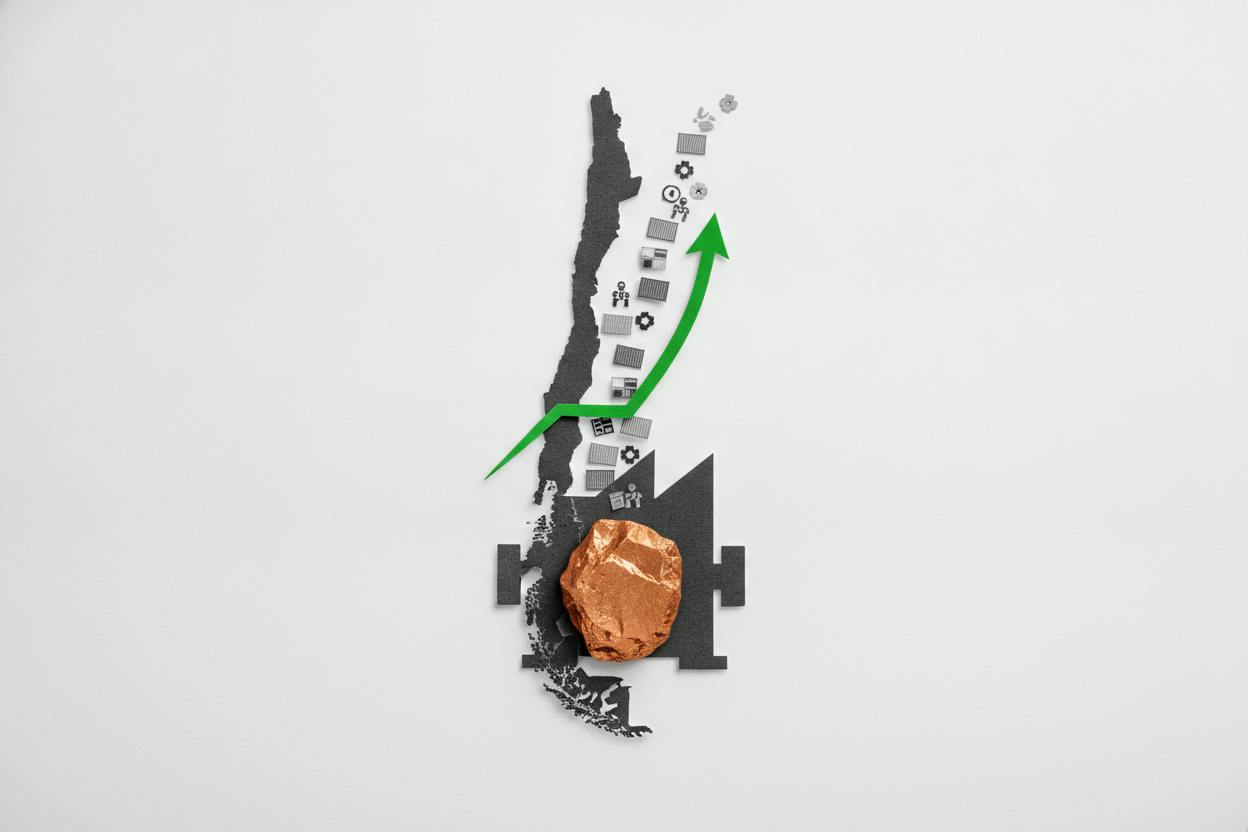
Chile's economy managed to grow in September, even as its crucial mining sector took a sharp hit. According to the country's central bank, economic activity rose 0.2% year-on-year, returning to positive territory after two months of declines and beating economists' forecasts of a flat reading.
The growth was powered by trade, industry, and services, which more than offset a 12.1% drop in mining output. That slump was driven by lower ore grades and operational stoppages, including a shutdown at BHP's Escondida mine following a fatal accident.
What the numbers show
The central bank's Monthly Index of Economic Activity (IMACEC) is a GDP-like snapshot that covers about 90% of the economy. It's a closely watched gauge because it gives an early read on the country's economic health before official GDP figures are released.
Non-mining activity grew 2.0% year-on-year, with trade up 4.5%, according to Scotiabank Chile, one of the country's largest banks. That breadth is notable: it suggests the economy can generate momentum even when its biggest export is struggling.
On a month-to-month basis, activity rose 1.9%, the central bank said.
The mining drag is a reminder of Chile's dependence on copper, which accounts for a large share of exports and government revenue. When major mines face disruptions, the headline numbers can swing sharply. But the September data also shows that other parts of the economy can pick up the slack.
What it means for investors
For markets, the growth surprise could shift expectations for Chile's interest-rate path. When growth data beats forecasts, traders often dial back bets on quick rate cuts, because the central bank has less pressure to stimulate the economy.
That repricing typically shows up first in short-dated local interest rates. The Chilean peso (CLP) also tends to react quickly to changes in expected policy rates, especially when compared with yields in other countries. So a growth beat can become an early pressure point for the currency.
The fact that the upside came from broad, non-mining areas—not just a one-off in copper—makes the report more meaningful. It suggests the economy's resilience is not solely tied to commodity prices. Still, the mining slump is a reminder of the risks that come with concentrated exposure to a single commodity.
Investors will likely keep an eye on whether this momentum continues in the coming months, and whether the central bank's next moves reflect a more cautious stance on rate cuts. For everyday investors, the key takeaway is that Chile's economy can grow even when copper struggles—but the path isn't always smooth.