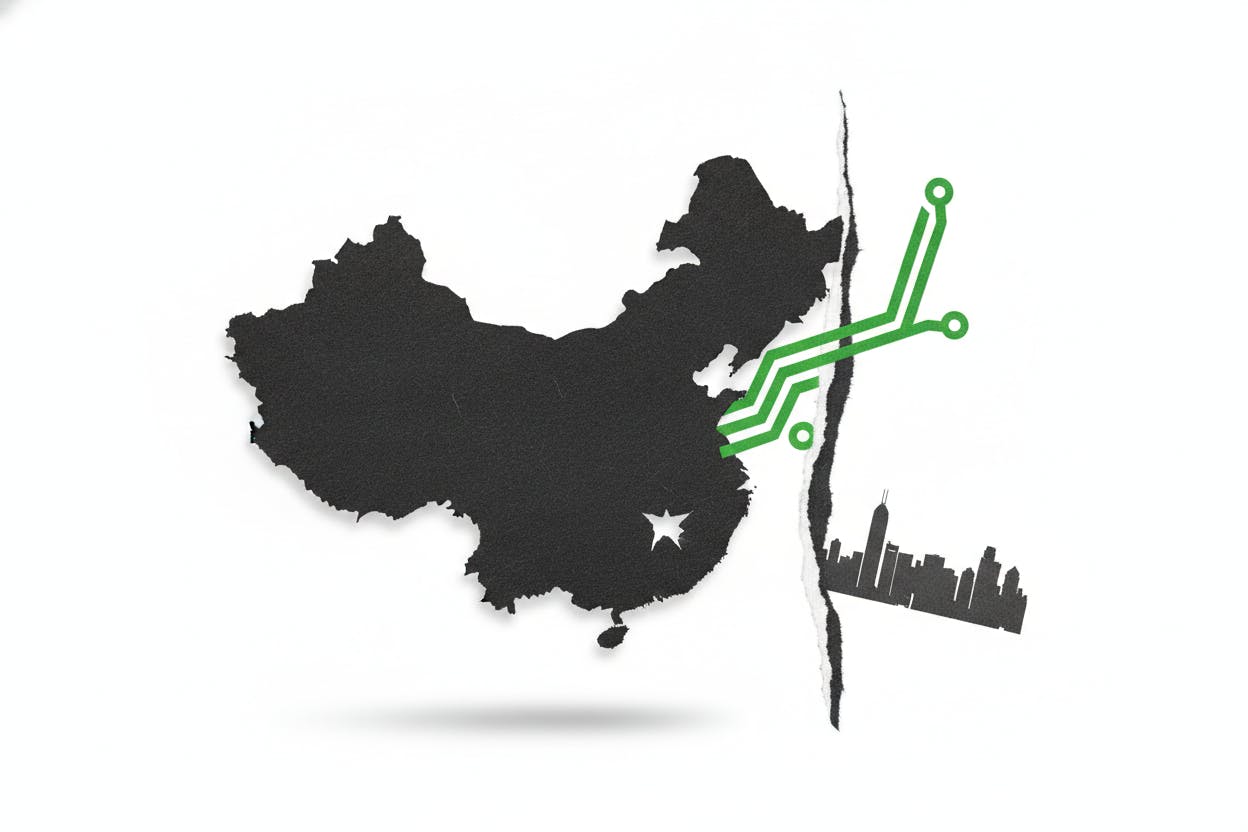
China's mainland shares rose on Tuesday, led by a rally in artificial intelligence (AI) and semiconductor stocks, after June factory data showed manufacturing activity returned to expansion for the first time in months. The gains on the mainland contrasted with a decline in Hong Kong's benchmark, as investors rewarded sectors tied to exports and AI hardware while staying cautious on domestically sensitive areas like financials and consumer staples.
Factory Data Signals Recovery
The official purchasing managers' index (PMI), a key measure of factory activity, moved back above the 50-point threshold in June, indicating expansion after a contraction in May. A reading above 50 signals growth, while below 50 points to contraction. The improvement was driven by stronger demand for chips, computers, and other AI-related products, as well as solid export orders. Some of the boost came from "front-loading" by Chinese exporters shipping goods to the United States ahead of potential tariff increases, according to Reuters.
The data offers a glimmer of hope for China's manufacturing sector, which has faced headwinds from weak domestic demand and trade tensions. The rebound in factory activity also aligns with broader trends in the region: Japanese rubber futures rose as the yen hit a 40-year low and China's factory activity expanded, highlighting the interconnectedness of Asian supply chains.
AI and Chip Stocks Lead the Charge
Shares of companies involved in AI and semiconductor manufacturing surged on Tuesday, reflecting investor optimism about China's tech sector despite ongoing US export restrictions on advanced chips. The rally was fueled by the factory data, which pointed to robust demand for AI-related components. Analysts at UBS, a global investment bank, noted that the figures eased near-term concerns about a slowdown in the tech supply chain.
The strength in AI and chip stocks helped lift mainland benchmarks, even as Hong Kong's Hang Seng Index slipped. The divergence underscores a key theme in China's markets: investors are piling into export-oriented and tech hardware names, while shying away from sectors tied to domestic consumption, such as financials and consumer staples, which fell on Tuesday.
What It Means for Investors
The split between mainland and Hong Kong markets, and between tech and domestic sectors, offers a window into investor sentiment. For everyday investors, the message is that China's economic recovery remains uneven. The factory rebound is encouraging, but it is heavily reliant on external demand and AI-related spending, which could be vulnerable to geopolitical shifts or a slowdown in global tech investment.
The front-loading of exports to the US ahead of potential tariffs suggests that some of the strength may be temporary. If trade tensions escalate, the boost from preemptive shipments could fade. Meanwhile, domestic sectors like financials and consumer staples are lagging, indicating that consumer confidence and spending in China have not yet recovered to pre-pandemic levels.
Investors should also keep an eye on policy support. China's central bank recently doubled overnight cash injections to ease a month-end funding squeeze, signaling that authorities are willing to provide liquidity to stabilize markets. However, broader stimulus measures have been limited, and the property sector remains under pressure.
Broader Market Context
The rally in Chinese AI and chip stocks comes amid a global tech resurgence, with Japan's Nikkei 225 surging on a tech rebound and easing US-Iran tensions. The positive factory data from China also supported other Asian markets, including Singapore, where stocks edged higher as geopolitical risks eased.
For investors tracking China, the key question is whether the factory expansion can be sustained. The services sector, which accounts for a larger share of China's economy, also edged back into growth in June, with its PMI hitting 50.2. That suggests the recovery is broadening, but the pace remains modest.
In the near term, markets will watch for further policy signals from Beijing, as well as upcoming trade data and corporate earnings reports. The divergence between AI/export stocks and domestic sectors is likely to persist until there is clearer evidence of a pickup in consumer spending and property market stabilization.
For everyday investors, the takeaway is to understand the risks of chasing sector rallies. While AI and chip stocks have momentum, they are also exposed to geopolitical headwinds and regulatory shifts. A diversified approach that balances exposure to both export-oriented and domestic sectors may help navigate the uneven recovery.