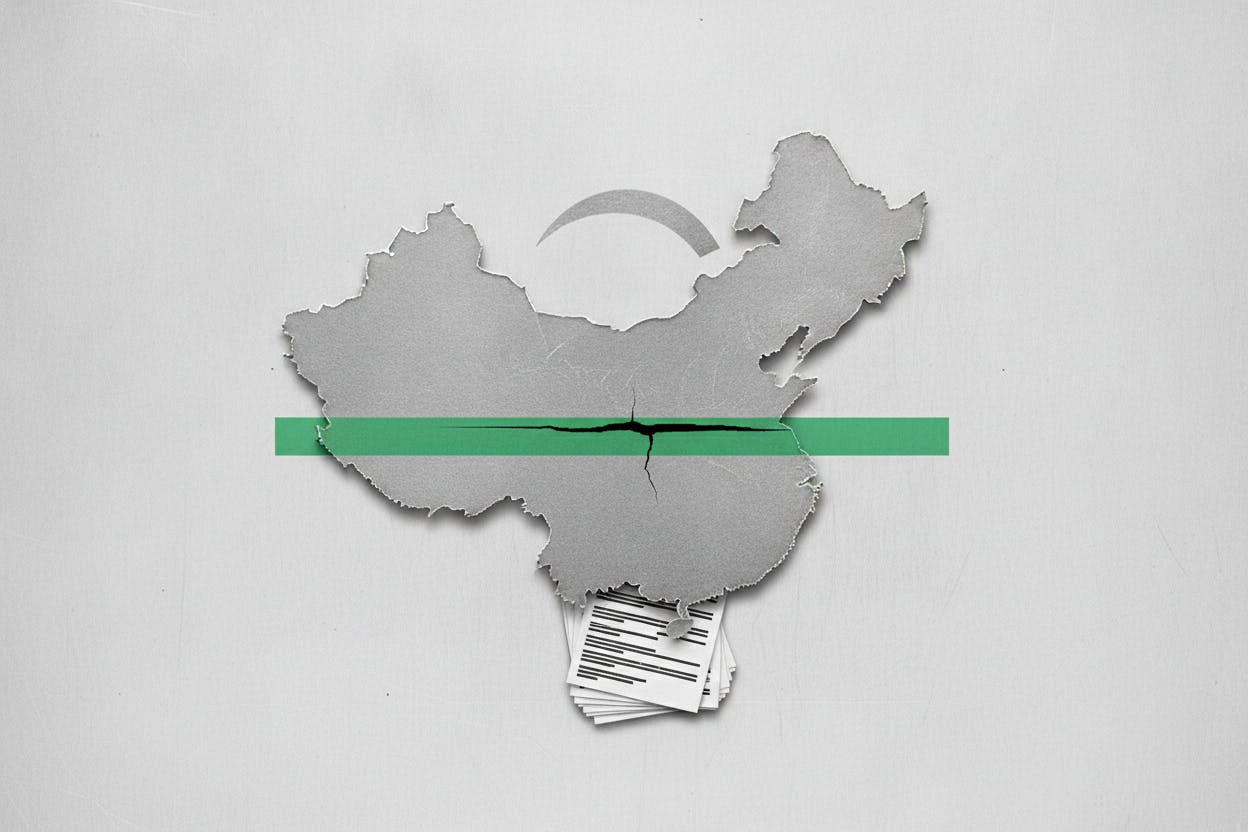
China's services and construction activity barely returned to growth in June, according to the latest official data from the National Bureau of Statistics. The non-manufacturing purchasing managers index (PMI) rose to 50.2, up from 50.1 in May and slightly above the 49.9 consensus estimate tracked by Investing.com.
A PMI is a survey-based indicator where readings above 50 signal expansion and below 50 point to contraction. So June's reading suggests the sector is stabilizing rather than accelerating. The details, however, were mixed.
Mixed Signals Beneath the Surface
The services sub-index edged up to 50.4 from 50.3, indicating a modest improvement in business activity. But construction remained in contraction territory at 49, unchanged from May, reflecting ongoing weakness in that sector. New orders improved overall, but employment continued to decline sharply, with the employment sub-index still deep in contraction territory.
This pattern is consistent with recent trends in China's economy, where consumer-facing services have shown some resilience while construction and manufacturing face headwinds from a prolonged property downturn and weak domestic demand. The data also aligns with the factory sector's tentative recovery, which also saw a slight rebound in June.
What It Means for Investors
For investors, the key takeaway is that China's economy is still struggling to gain momentum. The PMI reading is barely above the expansion threshold, and the persistent weakness in employment is a concern. Weak hiring suggests that consumer spending, a key driver of growth, may remain subdued in the coming months.
Global investors have been watching China closely for signs of a sustained recovery, especially after a series of stimulus measures from Beijing. But the data so far suggests that the recovery is uneven and fragile. The construction sector's contraction is particularly notable, given its importance to the broader economy and its links to the property market, which remains under pressure.
Some analysts have pointed to the improving new orders component as a positive sign, but caution that it may take several more months of data to confirm a trend. The employment picture will be a key metric to watch in the months ahead, as it directly affects household income and consumption.
Broader Context
China's economic challenges are playing out against a backdrop of global uncertainty. Trade tensions with the US and Europe, as well as a slowdown in key export markets, are adding to the headwinds. Meanwhile, domestic structural issues, such as an aging population and high debt levels, continue to weigh on long-term growth prospects.
In contrast, other parts of Asia are seeing different dynamics. For instance, global banks are shifting their focus to South Korea as opportunities in China and India become more challenging. This shift reflects the uneven nature of growth across the region.
The services PMI data also comes amid a broader trend of mixed economic signals globally. For example, UK business confidence dipped in June as manufacturing weakened, while hiring plans rose. Such divergences highlight the complexity of the current economic environment.
What to Watch Next
Investors will be looking ahead to upcoming data releases, including the official manufacturing PMI and trade figures, for further clues on the direction of China's economy. Any additional stimulus measures from Beijing could also provide a boost, but the effectiveness of such measures remains uncertain.
For now, the message from the June services PMI is one of cautious stabilization rather than robust growth. Investors should keep an eye on employment trends and the construction sector for signs of a more meaningful recovery.