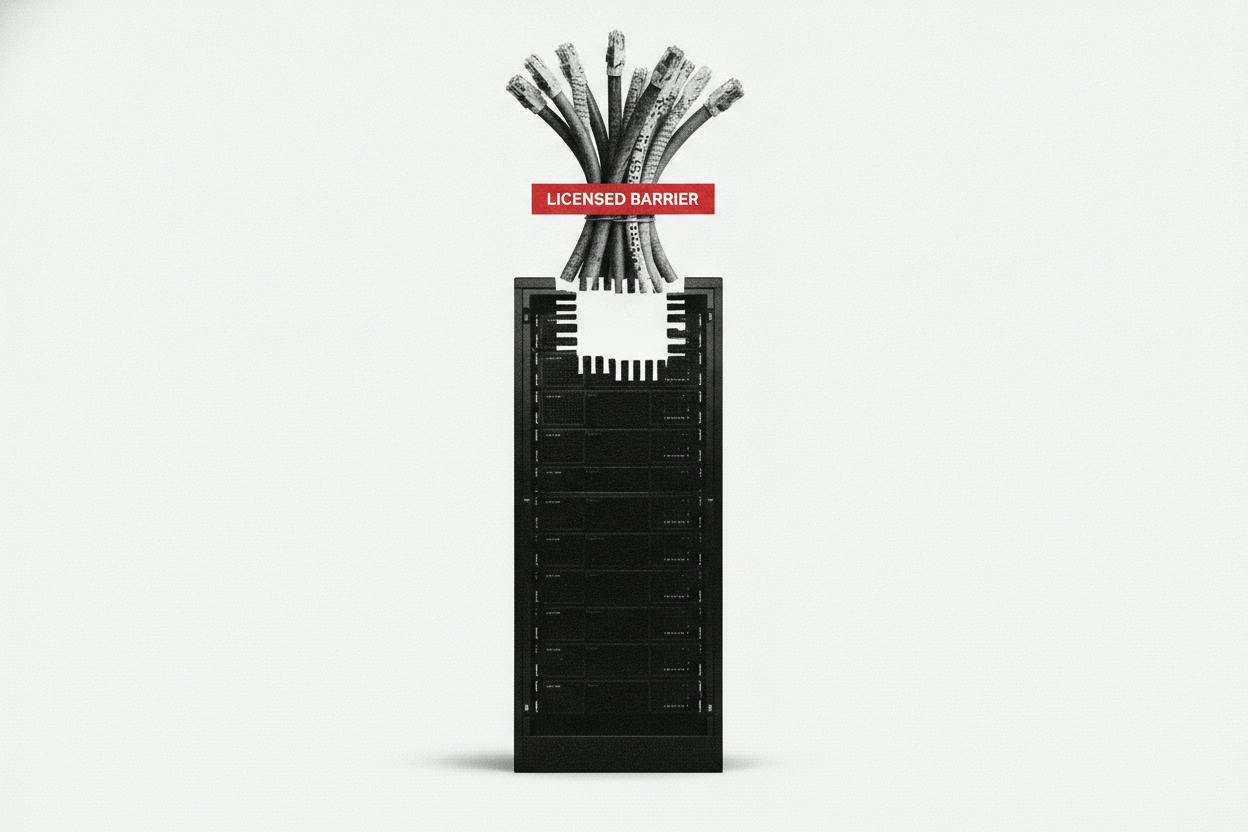
Two of China's most prominent artificial intelligence labs are hitting a slower release cadence, as new US export rules and tougher model defenses combine to raise the cost of building cutting-edge AI. Reuters reports that Z.AI (Zhipu AI) and Moonshot AI are both facing delays to their next flagship models, with implications that reach far beyond the two companies.
What's happening
For years, Chinese AI labs kept pace with global leaders by renting large pools of computing power outside China and shipping major model updates quickly. That playbook is now under pressure. A US Commerce Department rule that took effect on November 19 requires licenses for certain overseas computing deals above a scale roughly equivalent to 750 Nvidia H100 chips. The aim is to stop Chinese firms from effectively using advanced US hardware without importing it directly.
According to Reuters, Z.AI's planned GLM-5.5 release has not materialized as expected. A person familiar with the matter said that stronger defenses are also making "distillation" less effective. Distillation is a technique where a smaller model is trained by copying the outputs of a more capable one, a cheaper shortcut that has helped Chinese labs iterate quickly. If that shortcut is closing, labs must rely more on expensive, time-consuming original training runs.
Moonshot AI, which Reuters says relies heavily on overseas rentals, expects its major-release cycle could stretch from about six months to 12 months or more if access tightens. The company is reportedly looking at alternative providers and chips, but the shift is not seamless.
Why the rule matters
Big AI training runs are a scale game. When a lab cannot reliably assemble a huge cluster of top-end chips, training either takes longer in real time or gets dialed back. The November 19 licensing rule effectively turns that into a product-cycle constraint. It lands at the same moment that anti-distillation safeguards are removing a cheaper path to rapid iteration.
The rule explicitly pulls offshore hubs into licensing, including Malaysia, Singapore, Indonesia, Thailand, and Brazil. These locations have become popular for Chinese AI firms seeking to rent Nvidia-grade compute without importing the hardware into China. Now, any deal above the 750-H100-equivalent threshold requires a US license, adding friction and uncertainty.
This is not the first time US export controls have rattled the AI sector. Earlier moves to restrict advanced chip sales to China have already pressured Nvidia's stock and reshaped supply chains, as seen in recent market reactions. The new rule extends that pressure to the rental market, which had been a workaround.
What it means for investors
If Reuters is right that GLM-5.5 could slip to the first quarter of 2027 or later, and that Moonshot's intervals could double to a year or more, US leaders like OpenAI and Anthropic may face less frequent "new model" pressure from these two rivals. That could ease the pace of the AI arms race, at least on the Chinese side, and give US firms more breathing room to monetize their existing models.
For investors, the immediate takeaway is that the competitive landscape in AI is shifting. Chinese labs are not disappearing, but they are being forced to slow down. That could affect the perceived urgency of AI spending globally. If Chinese rivals are less able to launch rapid-fire updates, some of the pressure on US companies to constantly out-innovate may ease.
At the same time, the rule could cool near-term demand for Nvidia-grade hosted compute in the offshore hubs it targets. That might have a modest effect on the revenue outlook for cloud providers and data center operators in those regions, though the long-term demand for AI compute remains strong.
Investors should also watch how Chinese labs adapt. Moonshot's search for alternative providers and chips suggests that the constraint is real, but it also signals that companies are not giving up. The longer-term question is whether Chinese labs can develop their own high-end chips or find other workarounds, which would change the picture again.
For everyday investors, the key is to understand that AI development is not just a technical race but a geopolitical one. Export controls are now a factor in how fast models ship, and that has ripple effects across the tech sector. As recent market moves show, AI spending doubts can hit tech shares hard.
The situation is fluid. The November 19 rule is in effect, but its full impact will only become clear as labs try to navigate it. For now, the message is that China's AI labs are hitting a longer release cycle, and that is a development worth watching for anyone with exposure to the tech sector.