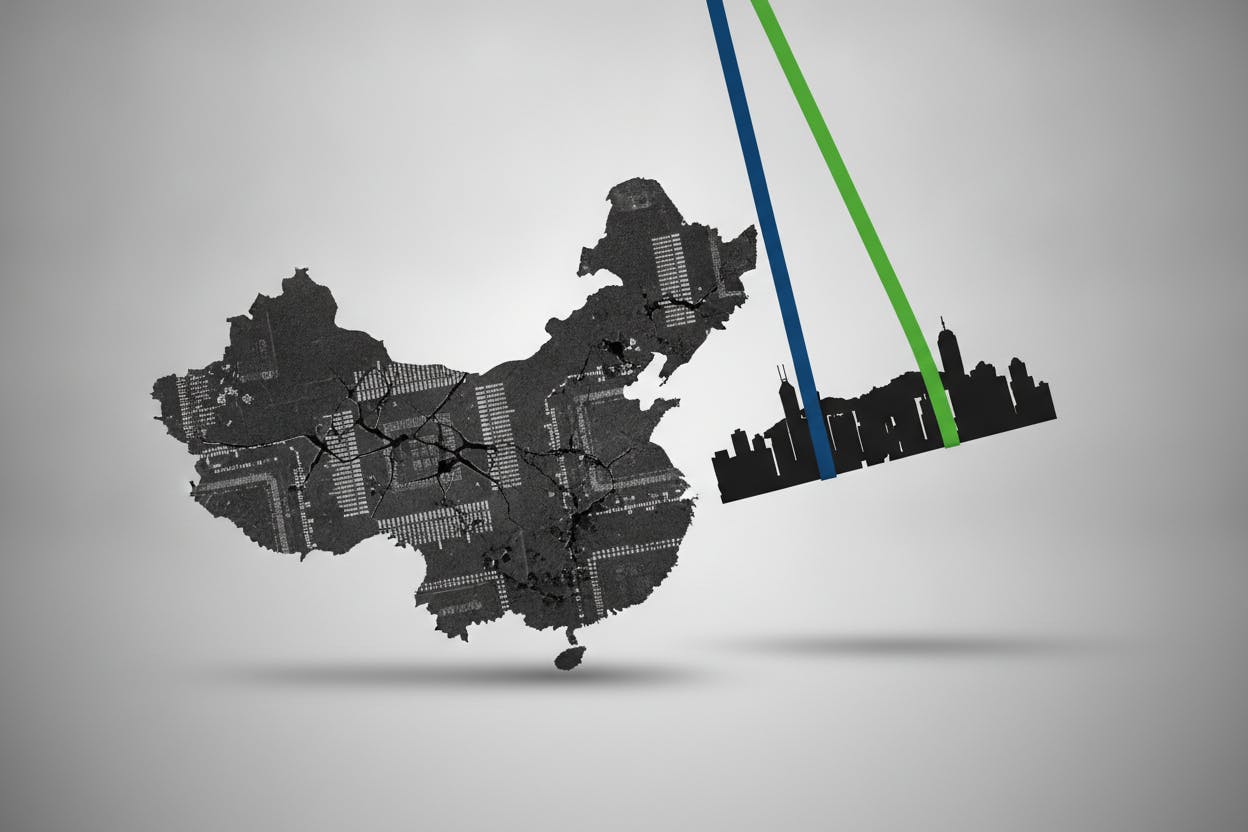
China's mainland stock market took a hit on Tuesday as semiconductor stocks sold off sharply, ending a blistering rally that had seen the sector more than double in value this year. Meanwhile, Hong Kong shares managed to rebound, lifted by gains in tech heavyweights Alibaba and Tencent.
The divergence highlights a market caught between profit-taking in high-flying sectors and cautious optimism ahead of a key political meeting that could set the tone for policy in the months ahead.
Chip Stocks Take a Breather
The CSI Semiconductor Index tumbled 6.8% in afternoon trading, its biggest single-day drop since October 2025. The selloff came after an extraordinary run that had left the index up 112% year-to-date, as investors piled into Chinese chipmakers on hopes of domestic substitution and government support.
The broader market felt the drag. Mainland benchmarks slipped by midday, though losses were contained by strength in other sectors such as autos and banks. The rotation out of semiconductors suggests some investors are locking in profits after the sector's meteoric rise, even as the long-term story around China's push for chip self-sufficiency remains intact.
For context, the semiconductor rally had been fueled by a combination of factors: Beijing's push to reduce reliance on foreign chip technology, strong demand from the electric vehicle and AI sectors, and a broader market recovery after a prolonged downturn. But such rapid gains often invite a pullback, as traders reassess valuations and take money off the table.
Hong Kong Finds Support in Tech Giants
Across the border, Hong Kong's Hang Seng Index rose 1.2%, while the Hang Seng Tech Index added 0.6%. The rebound was driven by Alibaba, which gained 2.7%, and Tencent, which rose 2%. These two internet platforms carry significant weight in Hong Kong's benchmark and often act as bellwethers for investor sentiment toward Chinese tech.
The gains in Hong Kong came despite the mainland weakness, suggesting that investors see value in the beaten-down tech sector after a prolonged regulatory crackdown and economic slowdown. Alibaba and Tencent have both been cutting costs, buying back shares, and focusing on core businesses, moves that have won favor with some investors.
Still, the broader mood remains cautious. Trading volumes were moderate, and many participants are waiting on the sidelines for clearer signals from Beijing.
All Eyes on the Politburo
The key event on investors' radar is this month's meeting of the Politburo, the top decision-making body of the Chinese Communist Party. The meeting will review economic data and set policy priorities for the coming months. Markets are hoping for fresh stimulus measures to support a recovery that has shown signs of losing steam.
Recent economic indicators have been mixed. While exports have held up, domestic demand remains weak, with consumer spending and property investment still sluggish. The Politburo could announce measures to boost consumption, support the housing market, or provide more fiscal stimulus.
For investors, the outcome of the meeting is crucial. Any signs of aggressive stimulus could reignite the rally in mainland stocks, particularly in cyclical sectors. On the other hand, a lack of action could lead to further selling, especially in high-valuation areas like semiconductors.
What It Means for Investors
The split between mainland and Hong Kong markets illustrates the complexity of investing in China right now. On one hand, the semiconductor selloff shows how quickly momentum can reverse in overheated sectors. On the other, the resilience of Hong Kong tech stocks suggests that some investors are betting on a turnaround in the sector after years of underperformance.
For everyday investors, the key takeaway is the importance of diversification. Betting heavily on a single sector, no matter how promising the story, carries risk. The chip rally was impressive, but pullbacks like Tuesday's are a reminder that valuations matter.
Investors should also watch the Politburo meeting closely. Policy signals from Beijing can move markets quickly, and the direction of stimulus will likely determine whether the current rotation out of tech and into value stocks continues.
In the meantime, the broader backdrop remains uncertain. Global factors, including the path of US interest rates and trade tensions, also weigh on sentiment. For a look at how other Asian markets are reacting to similar dynamics, see our coverage of Japan's Nikkei falls as AI chip stocks slide and India stocks poised for higher open.
Ultimately, Tuesday's action is a reminder that markets rarely move in a straight line. The chip selloff may be a healthy correction, or it could signal a deeper rotation. Either way, investors should stay focused on the fundamentals and the policy signals that will shape the next leg of the story.