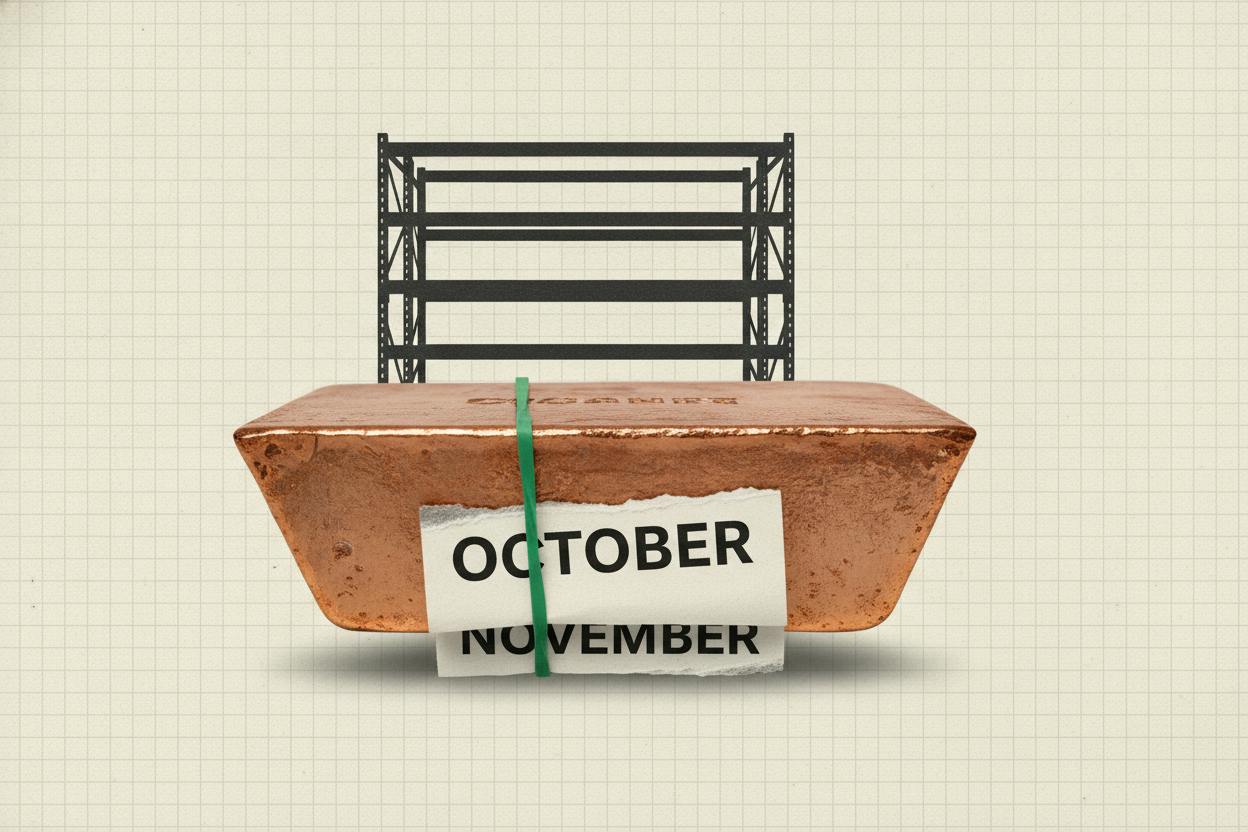
China's copper market is sending a loud warning: there isn't enough metal to go around right now. On Monday, the spread between the Shanghai Futures Exchange's (ShFE) November and December contracts blew out to 9,910 yuan per ton, a level that signals buyers are desperate for immediate delivery and are willing to pay a hefty premium to get it.
This kind of price gap is a classic sign of a "squeeze" in the market. Traders who had bet that copper prices would fall—known as short sellers—are now caught in a bind. As the November contract nears expiry, they face a stark choice: buy back their contracts at a loss or deliver physical copper they may not have. The steep premium makes waiting expensive, and the pressure is mounting.
Why the squeeze is happening
The root cause is simple: supply is thin. ShFE warehouse inventories fell 18.3% last week to 27,642 tons, the lowest level since December 2023. That's a dramatic drawdown, and it means there's very little metal sitting in exchange warehouses to meet near-term demand.
At the same time, the Yangshan import premium—a fee that reflects how much China is willing to pay for seaborne copper on top of global prices—hit a record near $290 a ton. That's a powerful signal that Chinese buyers are scrambling for imports as the fastest way to relieve the tightness, especially if domestic production and arrivals remain constrained.
This isn't just a technical quirk of the futures market. It reflects real-world fundamentals: China is the world's largest copper consumer, and when its buyers are this desperate, it has ripple effects across the global metal market.
What it means for investors
For traders and manufacturers linked to China, the immediate impact is higher costs. When the front-month contract trades far above the next month, anyone holding a short position faces "negative carry"—each roll into the next contract locks in a loss. That can push cash copper prices higher and raise hedging and funding costs for companies that rely on copper, from wire and cable makers to electronics manufacturers.
For everyday investors, this is a reminder that commodity markets can move violently when supply and demand get out of balance. Copper is often seen as a barometer for global economic health, and a squeeze like this suggests that China's appetite for the metal remains strong even as other parts of its economy show signs of cooling. Indeed, recent data showed China's factories leaning on exports as domestic consumer spending stays weak, but the copper market tells a different story—one of robust industrial demand.
The record Yangshan premium also points to a likely response: higher-priced imports will keep flowing into China until inventories rebuild and the prompt squeeze cools. That could mean more copper shipments heading to Chinese ports in the coming weeks, which would eventually ease the tightness but also keep global prices supported.
Broader context
This squeeze comes at a time when copper prices have been volatile. Earlier this year, copper hit a four-month low as doubts about AI-driven demand and a strong dollar weighed on the market. But the current tightness in China shows that physical demand can diverge sharply from sentiment-driven price moves.
Investors should also note that China's copper market isn't isolated. The country's steel output recently slipped to its lowest level since December 2025, and its overall industrial production has shown signs of cooling. Yet copper's strength suggests that certain sectors—perhaps renewable energy, electric vehicles, or grid infrastructure—are still consuming metal at a rapid clip.
For those watching the broader Asian markets, the copper squeeze adds another layer of complexity. It's a reminder that commodity shocks can hit at any time, and that China's role as the world's top buyer means its supply-demand dynamics matter far beyond its borders.
What to watch next
The key question is how long the squeeze lasts. If imports arrive quickly and inventories rebuild, the spread should narrow and the pressure on shorts will ease. But if supply remains constrained, the premium could persist, keeping copper prices elevated and costs high for Chinese manufacturers.
For investors, the takeaway is to keep an eye on ShFE inventory data and the Yangshan premium. These are the clearest signals of whether China's copper shortage is easing or deepening. And as always, it's worth remembering that commodity markets are cyclical—what looks like a crisis today can become a surplus tomorrow.



