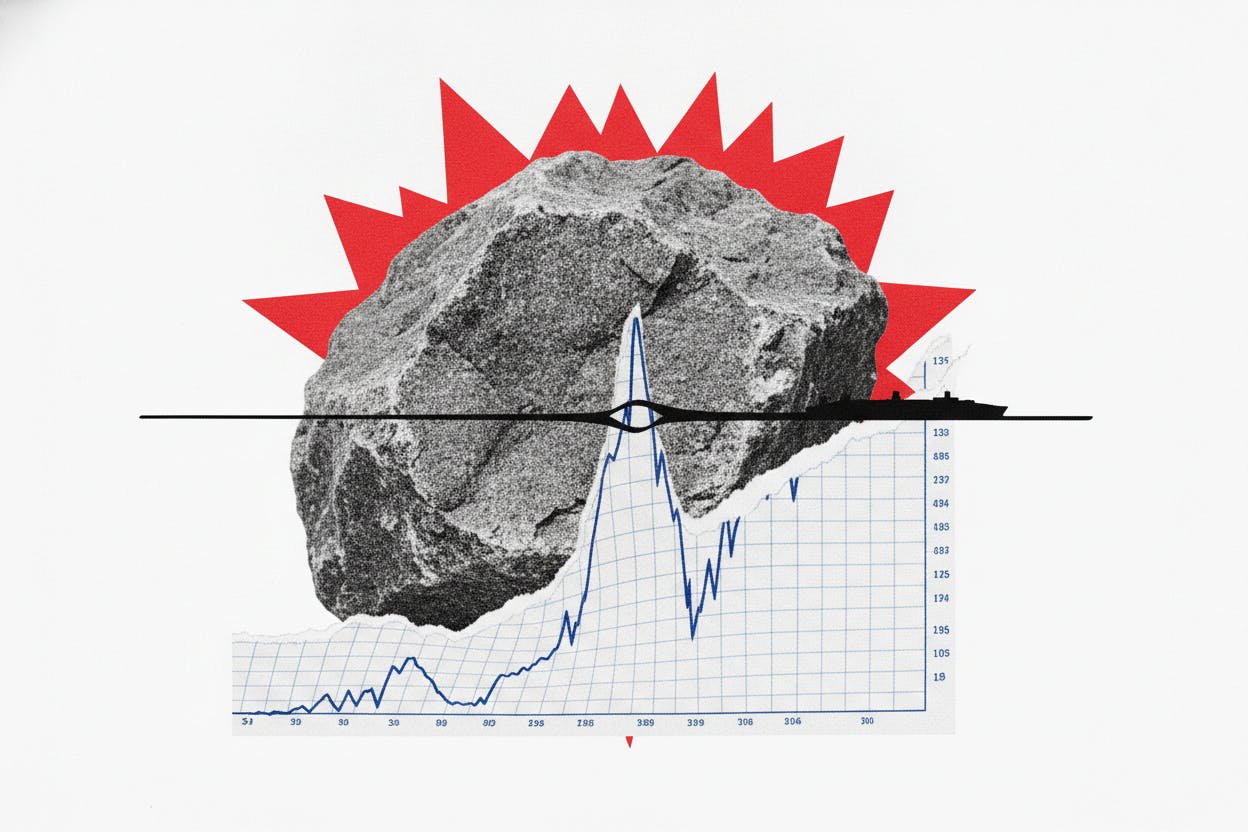
China is taking steps to launch its first sulphur futures contract, a move that could give fertilizer makers and mining companies a new tool to manage costs and help Beijing exert more control over global pricing of this industrial raw material.
According to a Reuters report, the Dalian Commodity Exchange (DCE) could list the contract as early as the fourth quarter of this year, though the timeline remains tentative and requires final approval from the China Securities Regulatory Commission (CSRC), the country's main markets watchdog.
Why Sulphur Matters
Sulphur is a behind-the-scenes workhorse in global industry. It is a key ingredient in the production of phosphate fertilizers, which farmers rely on to boost crop yields. It is also used extensively in copper mining and nickel refining, where it helps extract metals from ore. That means price swings in sulphur quickly ripple into the cost of food production and metals supply.
In recent years, sulphur prices have been anything but stable. Geopolitical tensions, particularly fresh conflict in the Middle East, have sent spot prices to record highs. The volatility has made it difficult for buyers—from fertilizer producers to mining giants—to plan budgets and secure supply chains.
Futures contracts are financial instruments that allow buyers and sellers to lock in a price today for delivery at a future date. By offering a sulphur futures contract, the DCE would give Chinese companies a way to hedge against sudden price spikes, smoothing out the cost of raw materials over time.
China's Push for Pricing Power
China is the world's largest consumer of sulphur, importing vast quantities to feed its fertilizer and metals industries. Yet despite that demand, global sulphur pricing has historically been set in other markets, leaving Chinese buyers exposed to price moves driven by events elsewhere.
Launching a domestic sulphur futures contract is part of a broader strategy by Beijing to gain more sway over the pricing of key commodities. The DCE already lists futures for iron ore, coking coal, and other industrial inputs, and those contracts have helped shift pricing influence toward China. A sulphur contract would follow a similar playbook.
If the contract gains traction, it could eventually become a benchmark for sulphur prices in Asia, giving Chinese buyers a stronger voice in negotiations with international suppliers. That would be a significant shift in a market where pricing has long been dominated by producers in the Middle East and North America.
What It Means for Investors
For everyday investors, the launch of a sulphur futures contract may seem like a niche development, but its implications are broader than they first appear.
First, it could help stabilize input costs for Chinese fertilizer companies and metals producers, which in turn could support profit margins in those sectors. That matters for investors holding shares in companies like Sinochem or Yunnan Copper, or in exchange-traded funds (ETFs) that track Chinese industrial stocks.
Second, a successful sulphur futures contract would reinforce China's growing influence over global commodity markets. That trend has implications for everything from trade prices to the cost of goods imported by other countries, including the United States and Europe.
Third, the move is a reminder that commodity markets are becoming more financialized. As more futures contracts emerge, price discovery becomes more transparent, but also more exposed to speculative trading. Investors should watch how the contract is structured—particularly margin requirements and position limits—to gauge whether it is designed for genuine hedgers or could attract heavy speculation.
Broader Market Context
The push for a sulphur futures contract comes at a time when Chinese commodity markets are already in flux. Factory profits rose 21.1% in May, but the gains were uneven, with the AI boom masking a slump in autos and other traditional sectors. Meanwhile, investors are rotating out of AI stocks into healthcare and consumer staples, signaling a shift in sentiment toward more defensive plays.
In the agricultural space, soybean and corn prices have slipped as traders await key USDA reports, and palm oil futures have risen on stronger crude oil and rival edible oils. Sulphur sits at the intersection of these trends: it is a cost driver for fertilizer, which in turn affects crop prices, and it is also tied to energy markets through its use in refining.
If the DCE's sulphur contract launches as planned, it will be worth watching how it trades in its early months. Thin liquidity is common for new futures contracts, and it can take time for hedgers and speculators to build confidence in the product. But if it succeeds, it could become a fixture in global commodity markets—and a new variable for investors to track.