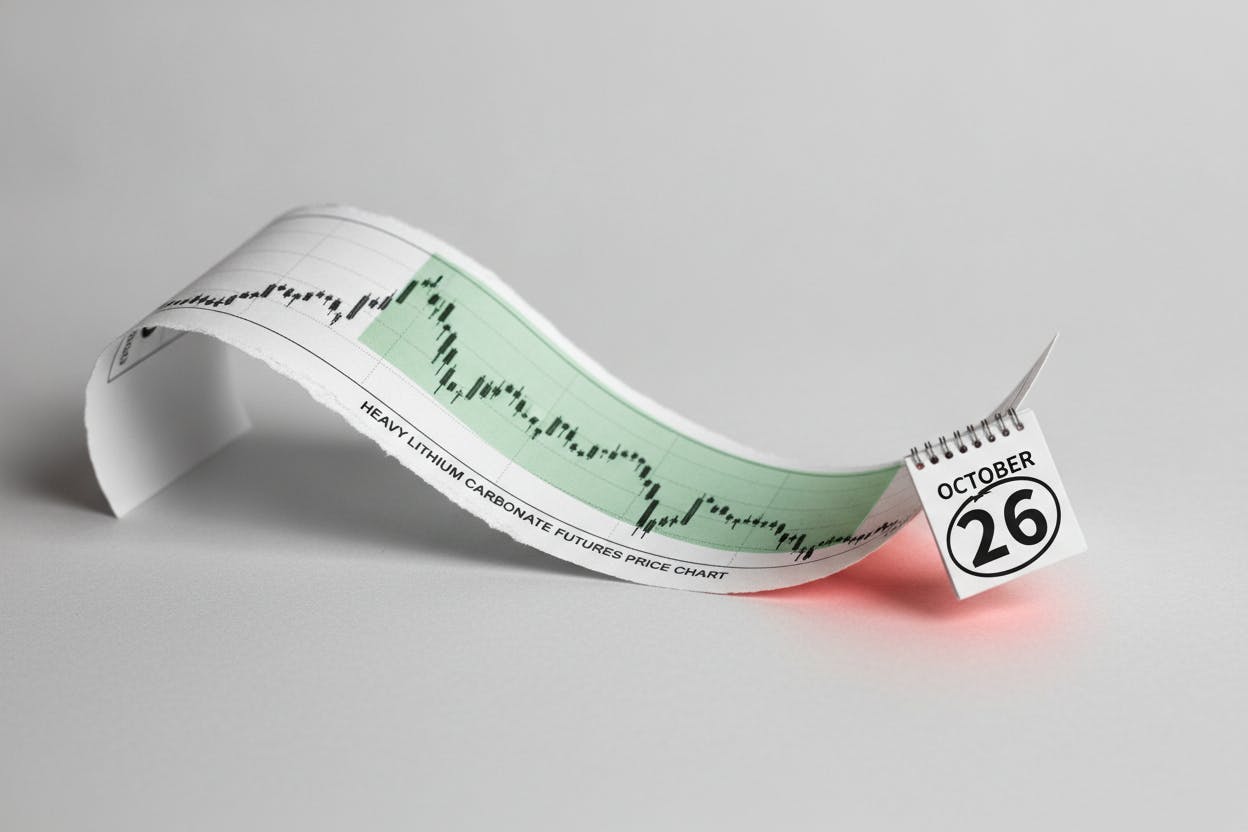
Lithium prices in China have taken a sharp turn downward, with futures hitting a five-month low this week as traders looked past current demand and focused on a potential supply glut in 2027. The move underscores the market's growing anxiety about the long-term balance between battery metal supply and the pace of electric vehicle (EV) adoption.
What happened?
On the Guangzhou Futures Exchange (GFEX), the most-traded lithium carbonate futures contract fell to 136,800 yuan per metric ton — its lowest level since February. That's a drop of about a third from the contract's recent high of 209,800 yuan on May 13th.
The sell-off was driven by two main factors. First, traders are increasingly pricing in expectations of more lithium supply hitting the market in 2027. Haitong Futures, a Chinese brokerage, noted that the market's attention has shifted from near-term demand to the prospect of a flood of new material in a few years' time.
Second, a new battery tax in China — currently set at 2% — is scheduled to rise to 4% on September 1st, 2027. That increase would raise costs for battery manufacturers and could dampen demand for lithium, adding to the bearish outlook.
Why does this matter?
Lithium is a key ingredient in the batteries that power electric vehicles and energy storage systems. China dominates both lithium processing and battery manufacturing, so price moves on the GFEX are closely watched by investors worldwide.
The current sell-off suggests that the market is becoming more skeptical about the pace of EV adoption and the ability of demand to keep up with rapidly expanding supply. Major producers have been ramping up output in recent years, and new mines in Australia, Chile, and Africa are expected to come online over the next few years.
Meanwhile, Contemporary Amperex Technology (CATL), the world's largest battery maker, is expected to restart some of its production lines, which could add to the supply overhang. CATL's moves are closely watched because the company accounts for a significant share of global battery output.
What it means for investors
For everyday investors, the slide in lithium futures is a reminder that commodity prices can be highly volatile and driven by expectations far into the future. Even if demand for EVs remains strong today, the market is already looking ahead to a potential surplus.
Investors with exposure to lithium miners or battery manufacturers should be aware that falling lithium prices can squeeze profit margins for producers, but they can also lower costs for battery makers and EV companies. It's a mixed picture.
The broader context is that the energy transition is still in its early stages, but the path is not a straight line. Commodity markets often overshoot on both the upside and the downside as supply and demand adjust. The current pessimism could create opportunities for long-term investors, but it also highlights the risks of betting on any single commodity.
For those watching the broader commodity markets, the lithium story is part of a larger trend where supply fears are driving prices in different directions. While oil has been volatile due to geopolitical tensions, lithium is facing its own headwinds from expected oversupply.
What to watch next
Investors should keep an eye on several factors in the coming months:
- Production announcements from major lithium miners and battery makers like CATL. Any signs of output cuts could support prices.
- EV sales data from China, the world's largest EV market. Slower-than-expected growth would reinforce the bearish outlook.
- Policy changes — the battery tax increase is already priced in, but any adjustments to subsidies or regulations could shift the demand picture.
- Technological developments in battery chemistry that could reduce lithium usage or improve efficiency.
The lithium market is at a crossroads, and the next few months will be crucial in determining whether the current pessimism is justified or if it's an overreaction. For now, the message from the futures market is clear: traders are betting on a glut, and they're not afraid to act on it.



