China's industry ministry has opened a joint investigation into Maextro, the luxury electric vehicle brand backed by tech giant Huawei, after an online video appeared to show the brake pedal bracket of its V800 model fracturing during emergency-stop testing. The probe, which involves multiple regulators, marks the latest sign of Beijing's tightening scrutiny over new vehicle designs as the country's EV market becomes increasingly crowded and competitive.
What happened
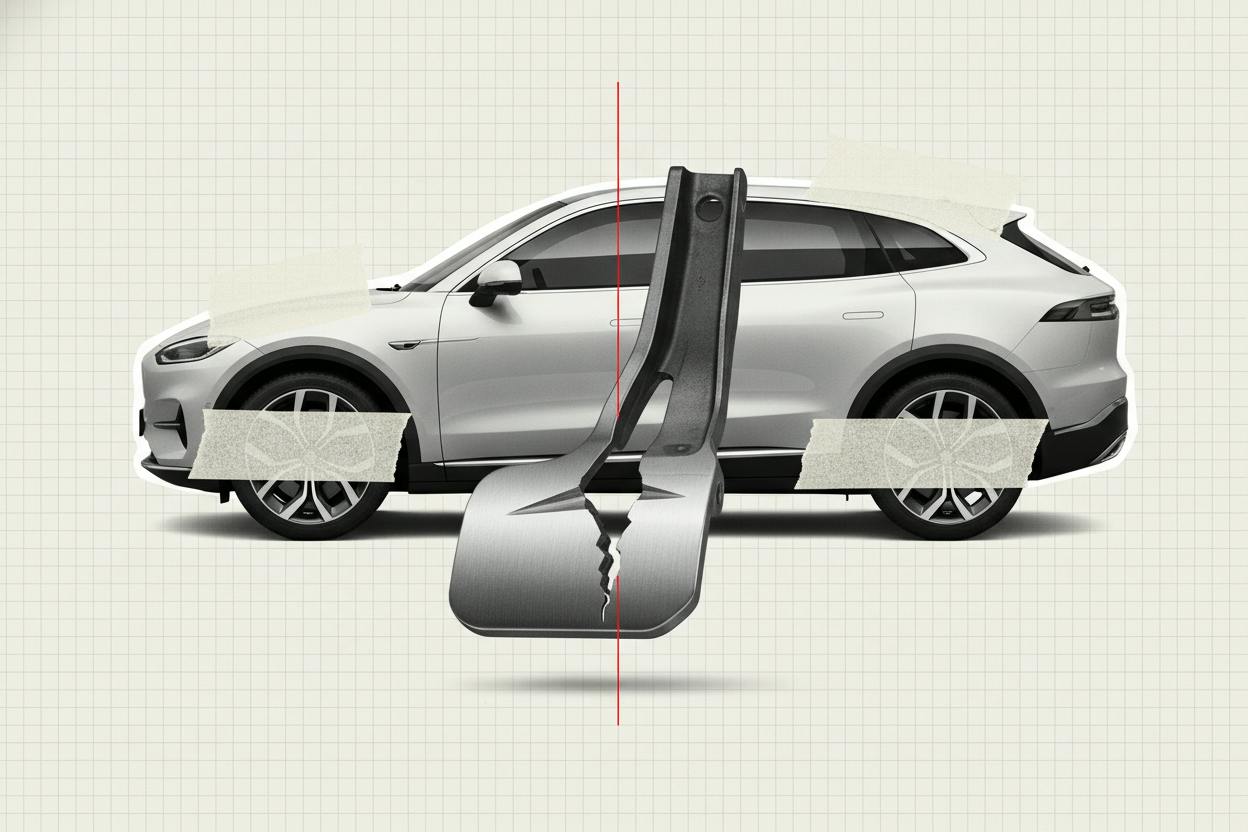
The controversy centers on a test video that surfaced online, reportedly showing the V800's brake pedal bracket breaking under the stress of repeated hard braking. Maextro, a premium brand launched through a partnership between Huawei and automaker JAC, has not yet issued a public statement on the incident. The company positions the V800 as a high-end electric SUV, competing with the likes of NIO, Li Auto, and even foreign luxury marques in China's fast-growing premium EV segment.
The probe comes as China's Ministry of Industry and Information Technology (MIIT) pushes for stricter oversight of new vehicle designs, particularly those involving advanced electronics and software. Regulators are increasingly focused on safety and quality as EV makers rush to bring new models to market, sometimes at breakneck speed.
Why it matters
For everyday investors, this story is about more than a single brake part. It highlights the regulatory risks facing China's EV industry, which has become a global powerhouse but also a source of concern over quality and safety. The MIIT's move signals that authorities are willing to step in when potential defects emerge, even for well-connected brands like Maextro.
Huawei's involvement adds another layer. The company has been expanding its automotive footprint, supplying software and components to a range of automakers under its 'HarmonyOS' ecosystem. A safety probe into one of its flagship partnerships could raise questions about the pace of innovation and the reliability of new technologies.
For investors holding shares in Chinese EV makers or suppliers, the investigation is a reminder that regulatory and safety issues can hit valuations quickly. Similar episodes in the past—such as recalls or probes into battery fires—have led to sharp sell-offs in individual stocks, even when the underlying issue was isolated.
Broader context
The probe arrives at a time when China's auto market is facing multiple headwinds. Domestic demand has been uneven, and competition has intensified, with many brands cutting prices to attract buyers. At the same time, Chinese tech stocks have been volatile, partly due to global interest-rate concerns. The EV sector, which is heavily tied to tech and consumer sentiment, is not immune to these broader market forces.
China's regulators have been walking a fine line: encouraging innovation and growth in the EV industry while ensuring safety and consumer protection. The MIIT's push for tighter oversight of new designs is part of a broader trend. Earlier this year, for example, authorities introduced new rules on data security for connected cars. And in a separate move, Apple's AI features received approval in China, showing that regulators are also engaging with new technologies in other sectors.
The investigation into Maextro also echoes other recent safety-related stories in China. For instance, Kimberly-Clark cleared a safety scare in China and went on to beat quarterly forecasts, a reminder that companies can recover from such episodes if they handle them well. But the outcome is never guaranteed.
What investors should watch
For now, the key questions are: Will the investigation find a systemic problem or a one-off defect? How will Maextro respond? And will regulators impose fines, recalls, or production halts? Any of these could have financial implications for the companies involved.
Investors should also keep an eye on how this affects Huawei's broader automotive ambitions. The company has been courting automakers to adopt its smart-driving and cockpit systems, and a high-profile safety issue could make some partners cautious.
In the near term, the story is likely to weigh on sentiment for Maextro and possibly other Huawei-linked EV names. But it also underscores a larger theme: as China's EV market matures, regulatory oversight is becoming a more important factor in investment decisions. Companies that can demonstrate robust safety and quality standards may be better positioned, while those that cut corners could face increasing scrutiny.
For everyday investors, the takeaway is to stay informed about regulatory developments in the sectors they invest in. Safety probes and recalls are not uncommon in the auto industry, and they can create both risks and opportunities. As always, diversification and a long-term perspective remain key.