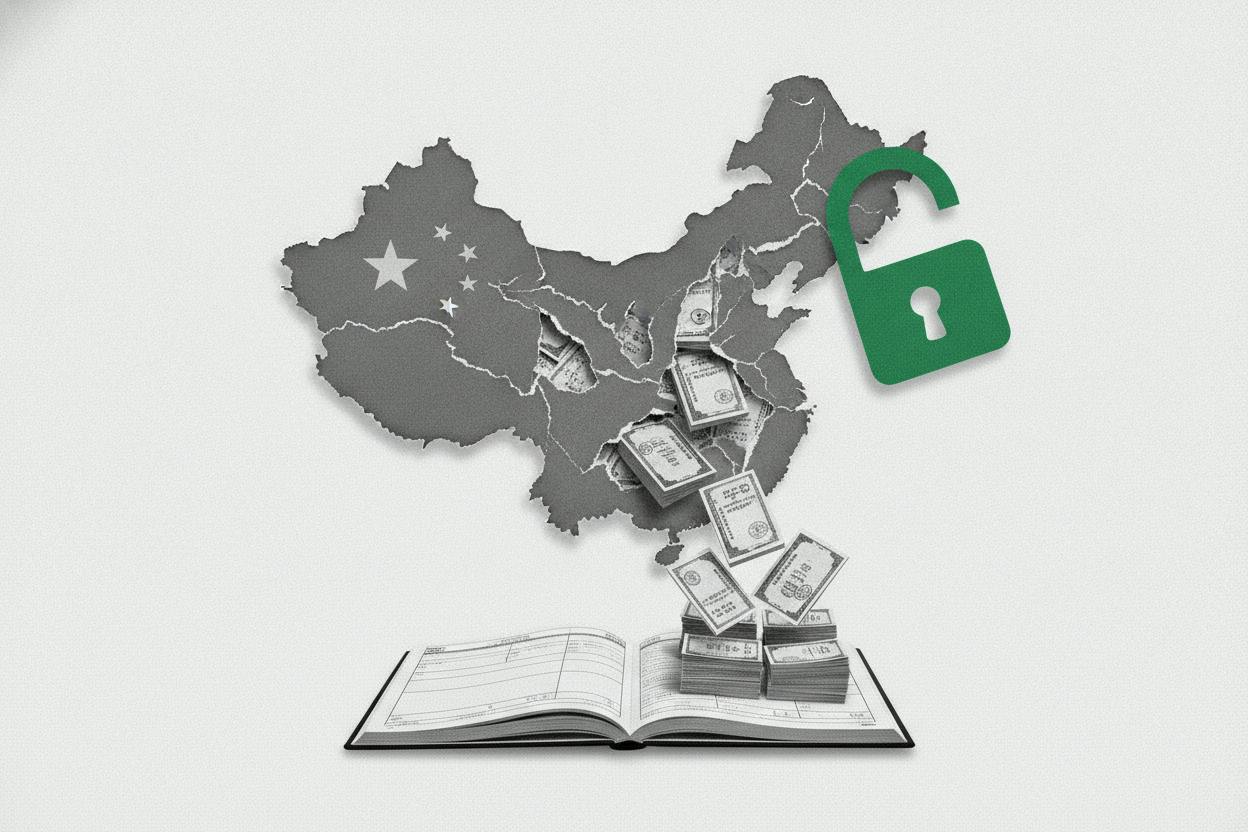
China's Ministry of Finance has reassigned 550 billion yuan (about $82 billion) of unused government borrowing quotas to local budgets, a move aimed at steadying county-level finances and accelerating infrastructure spending as the economy cools. The decision, reported by Reuters, comes as Beijing leans more heavily on fiscal policy to keep growth near its official target of 4.5% to 5%.
What's behind the move
The reassignment redirects borrowing capacity that had been allocated but not used, giving local governments fresh room to issue debt. Of the total, 300 billion yuan is earmarked for county- and district-level day-to-day operations, effectively providing cash to keep basic services running. The remaining 250 billion yuan is intended for infrastructure projects, which have long been a key tool in China's economic playbook.
This is not a new stimulus package but rather a reallocation of existing quotas. It reflects a pragmatic approach: rather than letting unused borrowing capacity sit idle, Beijing is pushing it to where it can have a more immediate impact. Local governments in China have been under significant financial strain, with land sales—a major revenue source—declining sharply amid the property downturn.
Why the economy needs support
China's economy is wrestling with several headwinds. Consumer spending remains soft, with households cautious about big-ticket purchases. Business investment is also tentative, as companies hold back amid uncertain demand and trade tensions. The long-running property slump has weighed on construction, related industries, and local government finances, outweighing pockets of strength in exports and high-tech manufacturing.
The move is part of a broader pattern of Beijing using fiscal tools to cushion the slowdown. Earlier this year, authorities issued special treasury bonds and accelerated local government bond sales. This latest reallocation is another step in that direction, though analysts note that the scale is modest relative to the size of China's economy.
For investors, the news is a reminder that China's policymakers are actively trying to support growth, but the effectiveness of such measures remains uncertain. The country's stock markets have been volatile, with blue-chip indexes hitting eight-month lows recently, partly due to a sell-off in AI-related stocks. Trade barriers from the US and EU have also added pressure, as seen in recent market declines.
What it means for investors
For everyday investors, this development signals that Beijing is committed to supporting growth, which could provide a floor under Chinese assets. Infrastructure spending tends to benefit sectors like construction, materials, and heavy machinery. However, the impact may be gradual, as the funds are redirected to local governments that have been cautious about taking on new debt.
The focus on county-level operations suggests that Beijing is prioritizing stability over aggressive stimulus. This could mean slower but steadier growth, rather than a sharp rebound. Investors should watch for signs of whether the funds translate into actual spending and whether they help stabilize the property market.
China's currency has remained relatively firm, with the yuan holding steady despite a strong dollar, which may reflect confidence in the policy direction. Meanwhile, commodity markets have shown mixed reactions, with copper prices rising on hopes of Chinese restocking, though dollar strength has limited gains.
For those with exposure to Chinese equities or funds, the key question is whether this fiscal push will be enough to offset the drag from the property sector and weak consumer confidence. The answer may not be clear for several months, as the effects of infrastructure spending take time to ripple through the economy.
In the meantime, investors should keep an eye on upcoming economic data, including retail sales, industrial production, and fixed-asset investment, to gauge whether the stimulus is gaining traction. The reallocation of debt quotas is a positive step, but it is just one piece of a larger puzzle.